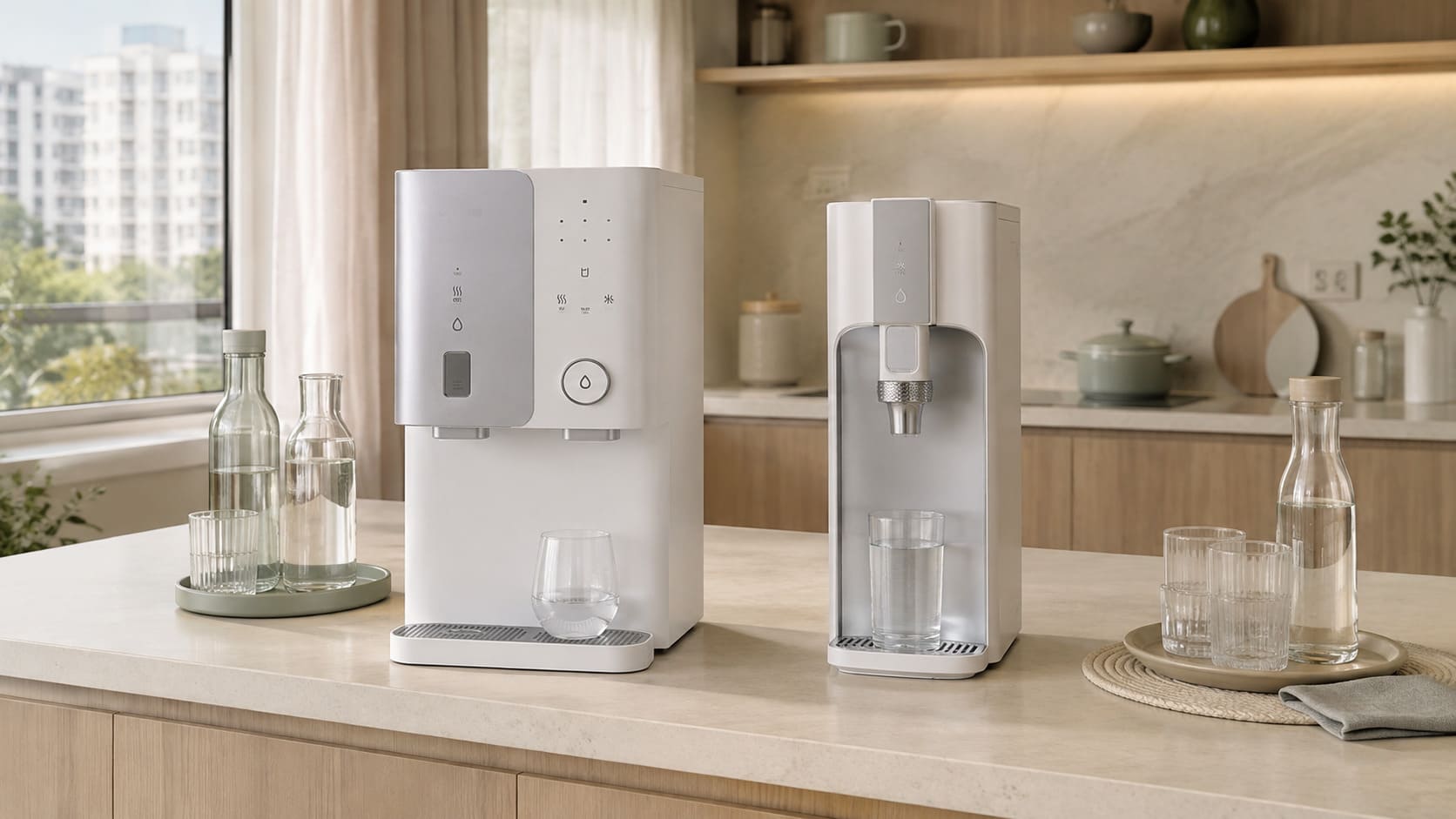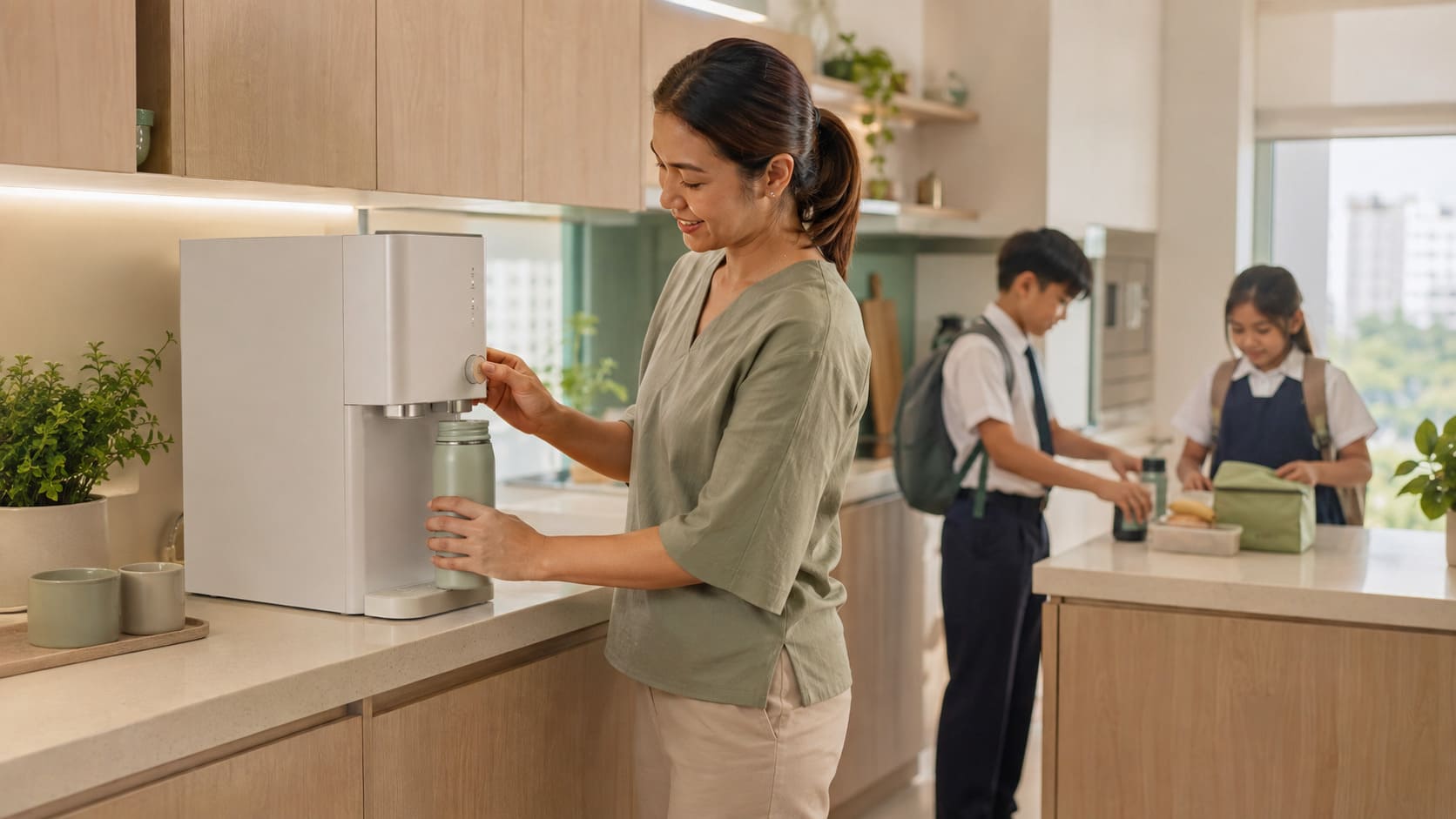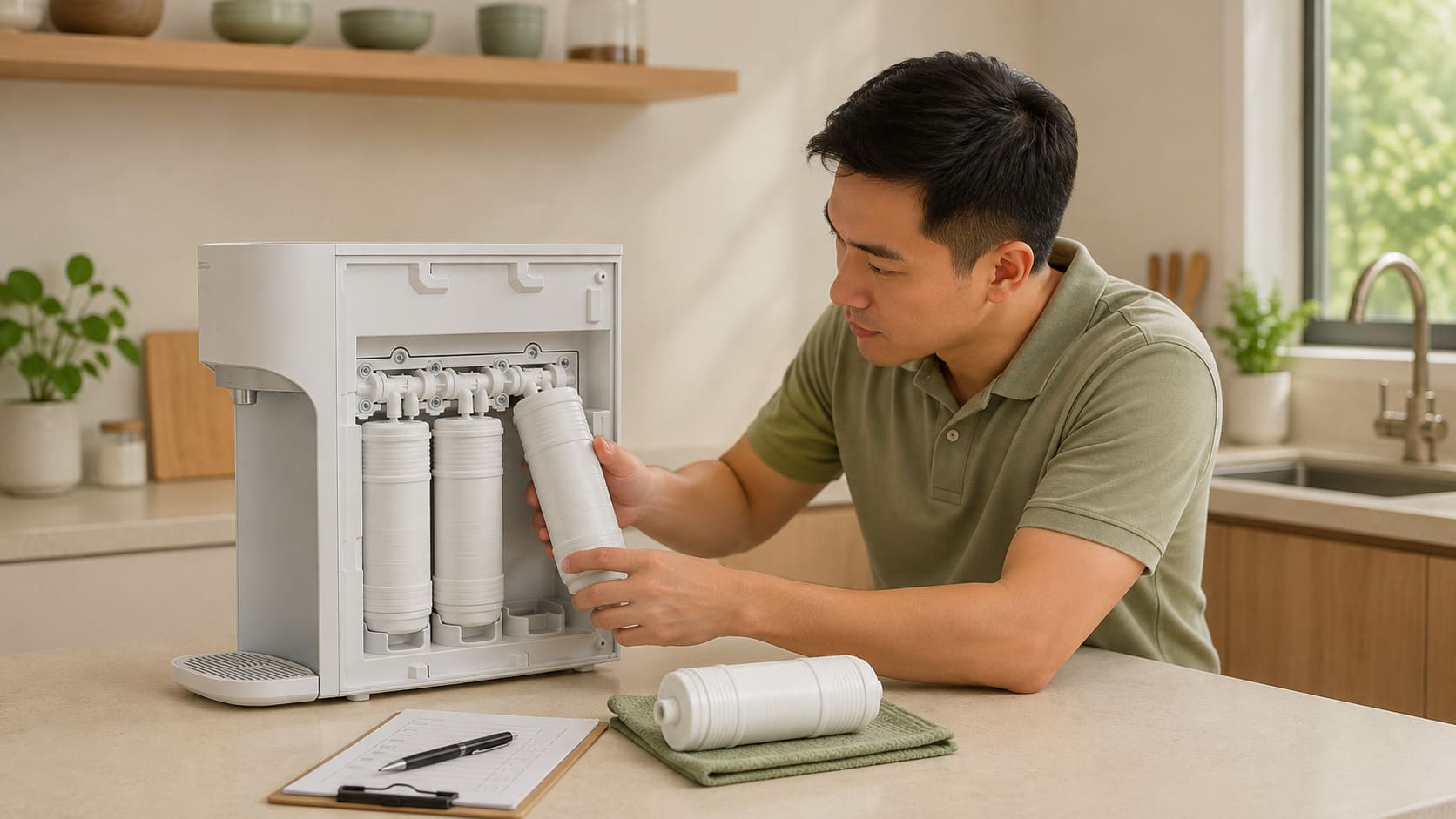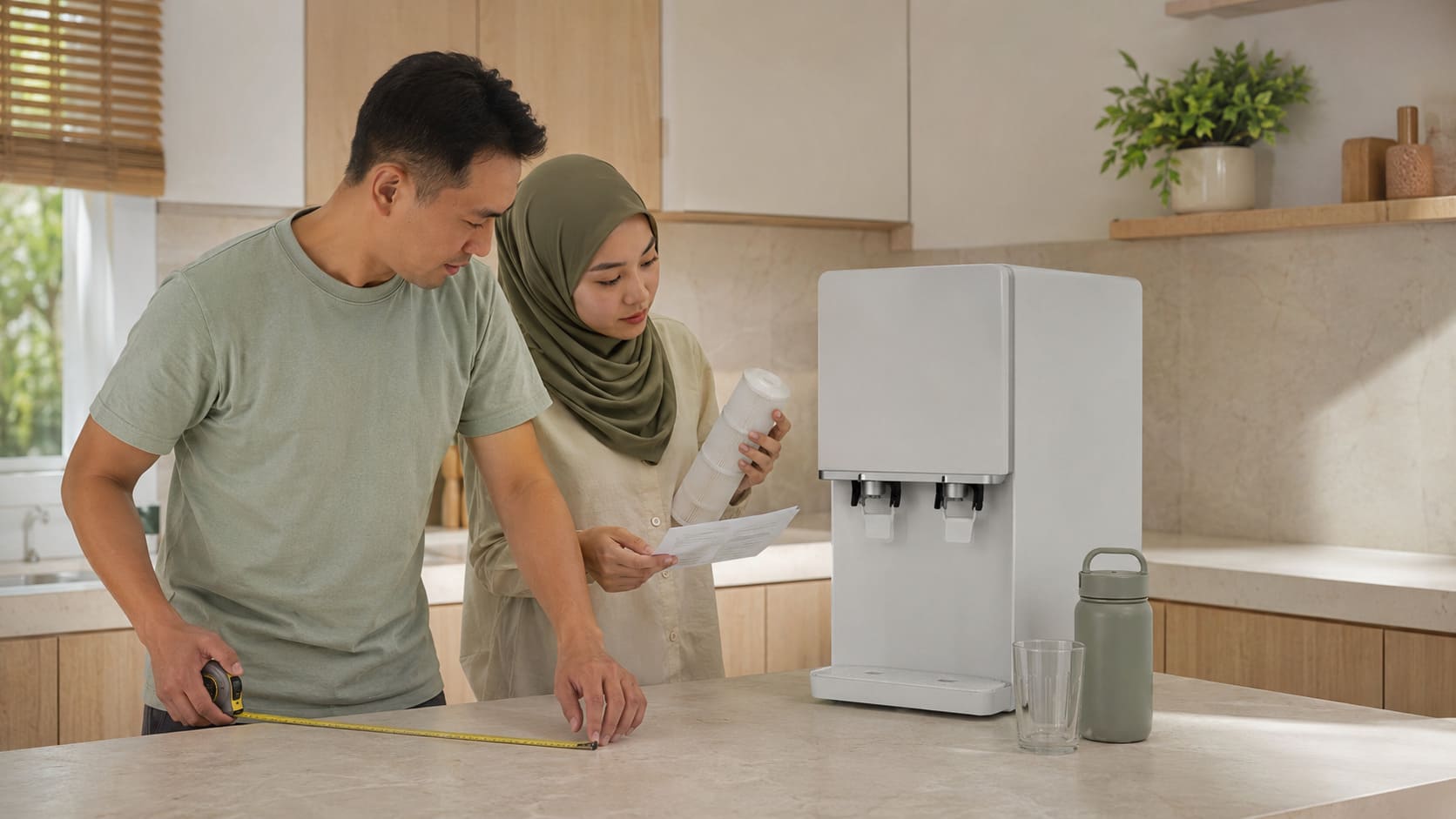
Water purifiers can differ in treatment method, dispensing format, temperature options, installation and service arrangements. Start by defining the problem you want to solve, then check whether each claim and feature is relevant to that need.
Identify your household’s water source and daily routine, understand what each treatment stage is intended to do, confirm installation and service requirements, and compare the full cost over the same period.
1. Start with the need, not the machine
Decide whether the priority is drinking-water treatment, convenient dispensing, hot and cold water, easier bottle filling or a combination of these. A dispenser can be convenient without addressing every possible water-quality concern, while a treatment system may not include temperature control.
Malaysia’s drinking-water standards provide a regulatory reference for supplied water quality. Conditions inside a building can still be affected by storage tanks, plumbing, maintenance and local circumstances. Avoid diagnosing water from taste, smell or appearance alone; use suitable testing or official advice when there is a genuine concern.
2. Understand filtration claims carefully
Ask what each filter stage is designed to reduce, under what test conditions, and for how long. Sediment, carbon, membrane and ultraviolet stages perform different jobs. A longer list of stages is not automatically better if the media, capacity and evidence are unclear.
- Look for a clear description of the contaminant or characteristic addressed.
- Check whether performance is based on an identified standard or test.
- Confirm the filter’s rated life and the conditions that may shorten it.
- Do not assume one technology removes every particle, chemical or microorganism.
3. Match dispensing performance to your routine
| Household question | Why it matters | What to check |
|---|---|---|
| How many people use it? | Daily volume and busy periods can differ | Flow, ready volume and recovery |
| Are bottles filled? | Low cup clearance becomes frustrating | Outlet height and dispensing space |
| Is hot water needed? | Temperature and safety controls matter | Available settings, lock and recovery |
| Is space limited? | Doors and filters still need clearance | Installed dimensions and service access |
Tank models store a stated volume ready for use, while tankless models generally prepare water closer to dispensing. Neither format is automatically superior. Read the tank and tankless comparison for the practical differences.
4. Plan the complete installation
Measure width, depth and height, then add the clearances required for ventilation, filter changes and opening cabinets. Confirm the route to the water inlet, suitable socket and drainage point where required. Ask whether drilling, additional valves or cabinet work is included.
Condo households should also consider landlord or management requirements before altering fixed plumbing. Our condo-kitchen guide covers footprint, access and relocation in more detail.
Before confirming a model, use the Malaysian water-purifier installation checklist to verify measurements, connections, drainage, power and servicing clearance.
5. Treat maintenance as part of performance
A purifier only operates as intended when the correct filters are changed, user-accessible parts are cleaned and faults are handled properly. Ask for the name and schedule of every filter stage, the replacement price, who performs the work and what happens when a visit is missed.
Keep a simple record rather than relying only on an indicator light. The maintenance checklist explains filter records, cleaning, flushing and warning signs.
6. Compare service and total cost
Calculate installation, equipment or rental payments, filters, scheduled service, electricity, repairs, relocation and any termination or removal charge. Compare the same number of years and the same service assumptions.
If you are deciding between a contract and outright ownership, use the rental-versus-buying guide. Family households can also use the family water-purifier guide to map peak demand and child-safety needs.
For two focused comparisons, read RO versus non-RO systems and learn how to estimate water-purifier electricity use.
7. Shortlist with a written checklist
- The water need and intended outcome are clear.
- Filtration claims identify what is treated and how performance is supported.
- Flow, ready volume and temperature suit busy periods.
- The installed unit fits with service clearance.
- Electrical, plumbing and drainage requirements are confirmed.
- Every filter and service cost is listed.
- Warranty, repair and response arrangements are written.
- The complete cost is compared over the same period.
For an older family member, controls, reach and hot-water handling may deserve greater weight. See the guide to an easy-to-use purifier for elderly parents.
Compare the cost of the supply arrangement with the bottled-water versus purifier calculator, keeping treatment evidence as a separate decision.
Frequently asked questions
Which water-purifier type is best for a Malaysian home?
There is no universal best type. The suitable option depends on the water need, household demand, installation, maintenance and the evidence supporting its treatment claims.
Does more filter stages mean cleaner water?
Not automatically. The purpose, media, capacity, test evidence and replacement condition of each stage matter more than the number alone.
Should I choose a tank or tankless purifier?
Compare ready-water volume, sustained flow, temperature performance, footprint, cleaning and electricity use against your busiest household period.
What costs should I compare?
Include installation, purchase or rental payments, every replacement filter, scheduled service, electricity, repairs, relocation and end-of-contract charges where relevant.