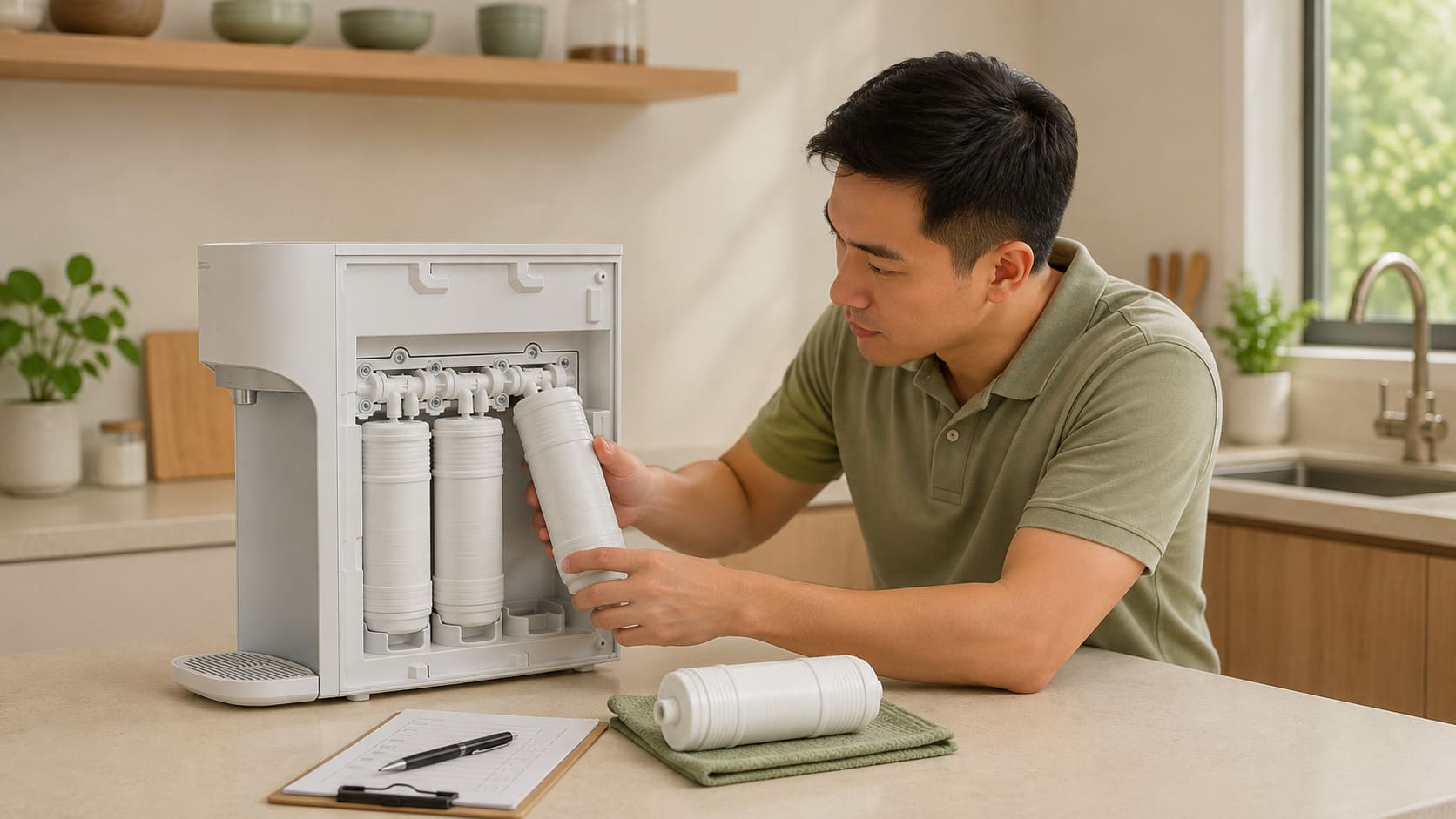
Maintenance is more than changing one cartridge. The outlet, drip tray, external surfaces, internal waterways and different filter stages may follow separate instructions. Start with the manual for the exact model.
Record every filter and service date, clean the parts the user is instructed to clean, follow flushing directions and respond early to leaks, unusual smells, warning lights or a sudden change in flow.
If you are still selecting a system, use the complete Malaysian water-purifier guide before comparing long-term upkeep.
1. Use the model-specific schedule
Purifiers use different filter media and configurations. A sediment stage, carbon stage, membrane or other treatment component may not share the same replacement interval. Usage and incoming water conditions can also affect practical maintenance.
Do not copy a schedule from another model. Keep the manual, filter names, service contact and purchase or contract details in one place.
2. Keep a simple maintenance record
| Record | What to note | Why it helps |
|---|---|---|
| Filter change | Date, stage, part number and person who changed it | Avoids guessing which cartridge is due |
| Service visit | Work completed and next due date | Clarifies what was inspected |
| Problem | Leak, noise, taste, smell, flow or warning message | Helps a technician understand the pattern |
| Cost | Filters, labour, parts and call-out fee | Shows the real ownership cost |
3. Clean user-accessible parts regularly
Wipe the exterior with the method recommended by the manufacturer. Empty and wash the removable drip tray before residue builds up. Keep the dispensing outlet clean without inserting unsuitable objects or chemicals.
Do not dismantle sealed areas or electrical sections unless the instructions specifically allow it. Disconnect power and water only as directed. A leak near electrical parts needs prompt professional attention.
4. Treat every filter correctly
Use the correct replacement part and orientation. A cartridge described as disposable should not be washed and reused. A washable pre-filter should be cleaned only with the stated method and dried or refitted as instructed.
After replacement, follow the required flushing volume or time. Initial air or fine particles may clear during this process. If an unusual taste, smell or colour continues after correct flushing, stop and arrange suitable service.
5. Do not rely on taste alone
- A service or filter indicator appears.
- Flow becomes noticeably slower without another clear cause.
- Water leaks from a connection, tray or internal area.
- An unfamiliar noise repeats during heating, cooling or dispensing.
- The outlet or drip area develops residue that normal cleaning does not resolve.
- Water develops a persistent unusual smell, taste or appearance.
These signs do not identify the cause by themselves. Avoid making health conclusions from appearance or taste alone; use current official guidance and competent service where needed.
6. Check what a service plan includes
Ask whether the visit includes every filter stage, sanitisation where applicable, functional checks, replacement parts and a written record. Confirm whether missed visits are rescheduled and whether service continues after relocation.
For an outright purchase, check filter availability before the original set expires. For a rental arrangement, compare the service promise with the written contract. Daniel’s rental-versus-buying guide explains how to include maintenance in the total-cost comparison.
7. Household maintenance checklist
- Keep the exact manual and filter list.
- Record installation, filter and service dates.
- Clean the outlet, drip tray and accessible surfaces as instructed.
- Use correct cartridges from a reliable source.
- Complete the full flushing procedure after replacement.
- Check hoses and the surrounding cabinet for moisture.
- Keep ventilation openings clear.
- Arrange service for persistent leaks, smells, noises or warnings.
For supply interruptions, use the household water-disruption checklist alongside your exact model instructions.
Frequently asked questions
How often should filters be changed?
Follow the exact model and filter-stage schedule. There is no universal interval for every purifier.
Can I wash and reuse a filter?
Only when the manufacturer identifies it as washable and provides the method. Do not wash a disposable cartridge.
Why does water taste different after a filter change?
The new filter may require flushing, and trapped air can affect the first dispensing cycles. Follow the instructions and seek service if the change continues.
Is service needed when flow still seems normal?
Yes, if the written schedule says it is due. Normal flow does not confirm that every filter or component is within its service interval.
Sources and further reading
- Ministry of Health Malaysia: Drinking Water Quality Standards and Frequency of Monitoring
- World Health Organization: Guidelines for drinking-water quality
- Energy Commission Malaysia: regulated household water dispensers

Nur Aisyah Hassan
Everyday Home Contributor
Nur Aisyah focuses on cleaning, maintenance and whether a household product remains practical after months of daily use. View Nur Aisyah’s profile.