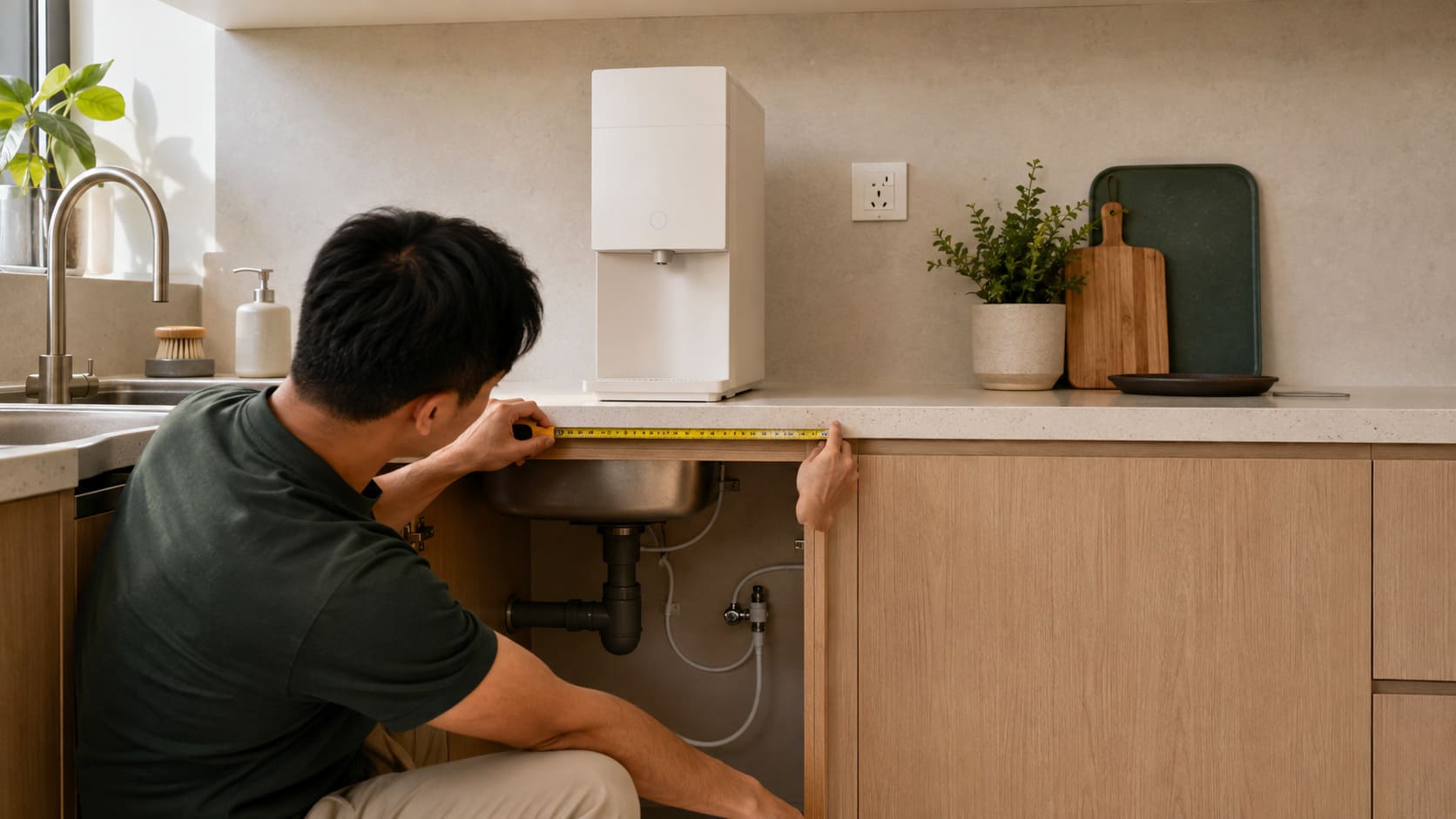
Good installation planning starts before a technician arrives. A purifier may need more than an empty patch of counter: water, drainage, power, ventilation and future filter access can all affect whether the final setup is practical.
Confirm the exact dimensions, water inlet, drain route, electrical socket, ventilation and servicing clearance for the shortlisted format. Photograph the proposed area, measure it carefully and ask who is responsible for drilling, plumbing, testing and making good.
1. Identify the installation format
A refillable countertop unit may only need a stable surface and suitable socket, while a connected countertop purifier needs a water feed and may require drainage. An under-sink system can require cabinet space, a dedicated faucet opening, tubing routes and room to change cartridges.
Do not assume two machines with similar outer dimensions install in the same way. Read the current manual or installation drawing for the exact unit before changing a cabinet or worktop.
2. Measure the full working space
Measure width, depth and height, then add the clearance required for ventilation, opening lids, removing tanks and changing filters. Check whether a cabinet door, window, wall shelf or overhead cupboard restricts normal use.
| Check | What to record | Common oversight |
|---|---|---|
| Footprint | Width and depth of the appliance | Controls or drip tray extend beyond the body |
| Height | Body plus lid or filter-removal movement | Overhead cabinet blocks access |
| Service space | Clearance needed around cartridges and panels | Unit must be moved for every visit |
| Walking route | Cable, tubing and door movement | A line crosses a busy kitchen path |
3. Check the water connection
Ask which cold-water line will supply the purifier, whether an isolation valve is required and how the tubing will be protected from heat, crushing and sharp edges. The installer should confirm that the proposed connection and local conditions suit the appliance.
A purifier does not correct an unsafe installation or every possible water-quality issue. Malaysia’s drinking-water standards provide the public-health reference for supplied water; treatment claims should still be checked carefully and matched to a genuine need.
4. Confirm drainage before drilling
Some systems produce reject water or need a drain connection. Confirm where that water goes, whether the route has a suitable fall and how leaks or blockages will be noticed. A loose tube placed into a sink can be inconvenient and easy to dislodge.
Ask whether drilling is required in the worktop, sink, cabinet or wall. In a rented home or stratified property, obtain any necessary owner or management approval before work begins.
5. Plan a safe electrical supply
Powered hot-and-cold dispensers need a suitable socket placed away from splash risk and without a stretched cable. Avoid treating a multi-plug adaptor or extension lead as a permanent installation solution unless the manufacturer and a qualified electrical professional confirm it is suitable.
Malaysia’s Energy Commission regulates categories of consumer electrical equipment, including water dispensers. Check that the exact appliance is approved for sale and use in Malaysia where the rules apply.
6. Keep maintenance practical
The installation should allow filters, tanks and drip trays to be removed without dismantling a kitchen. Ask how much front, side or vertical access the service procedure requires and who will move the appliance if access is restricted.
Use the water-purifier maintenance checklist to plan filter records, cleaning and warning-sign checks after installation.
7. Complete a proper handover
- Check every connection for leaks while the unit operates.
- Confirm the flushing procedure has been completed.
- Test ambient, hot and cold dispensing where provided.
- Learn how to isolate the water and power safely.
- Record filter types and the next service date.
- Keep the installer’s report, warranty and contact details.
- Ask what changes in taste, flow, temperature or drainage should be reported.
If space is limited, also read the condo-kitchen purifier guide. It covers footprint, relocation and shared-living constraints in more detail.
Keep the handover instructions accessible for future interruptions. The water-disruption guide covers household preparation.
Frequently asked questions
Does every water purifier need plumbing?
No. Refillable countertop units may not need a direct water connection, while connected countertop and under-sink systems generally do. Confirm the exact requirements before purchase.
Can a water purifier share an extension lead?
A permanent extension arrangement may create overload, cable or splash risks. Follow the appliance instructions and obtain suitable electrical advice for the proposed socket.
Do I need a drain connection?
Some systems do and others do not. Ask whether the unit produces reject water or requires a drain for normal operation, flushing or cleaning.
What should I photograph before installation?
Photograph the full counter or cabinet, nearby socket, cold-water connection, drain route and access path. Include measurements so the installer can identify obvious constraints.
Sources and further reading
- Ministry of Health Malaysia: Drinking Water Quality Standards and Frequency of Monitoring
- Energy Commission Malaysia: appliances and regulated electrical equipment
- Energy Commission Malaysia: categories requiring a Certificate of Approval

Jason Lim
Tech & Appliance Contributor
Jason translates appliance specifications, connections and maintenance requirements into practical household decisions. View the contributor information.