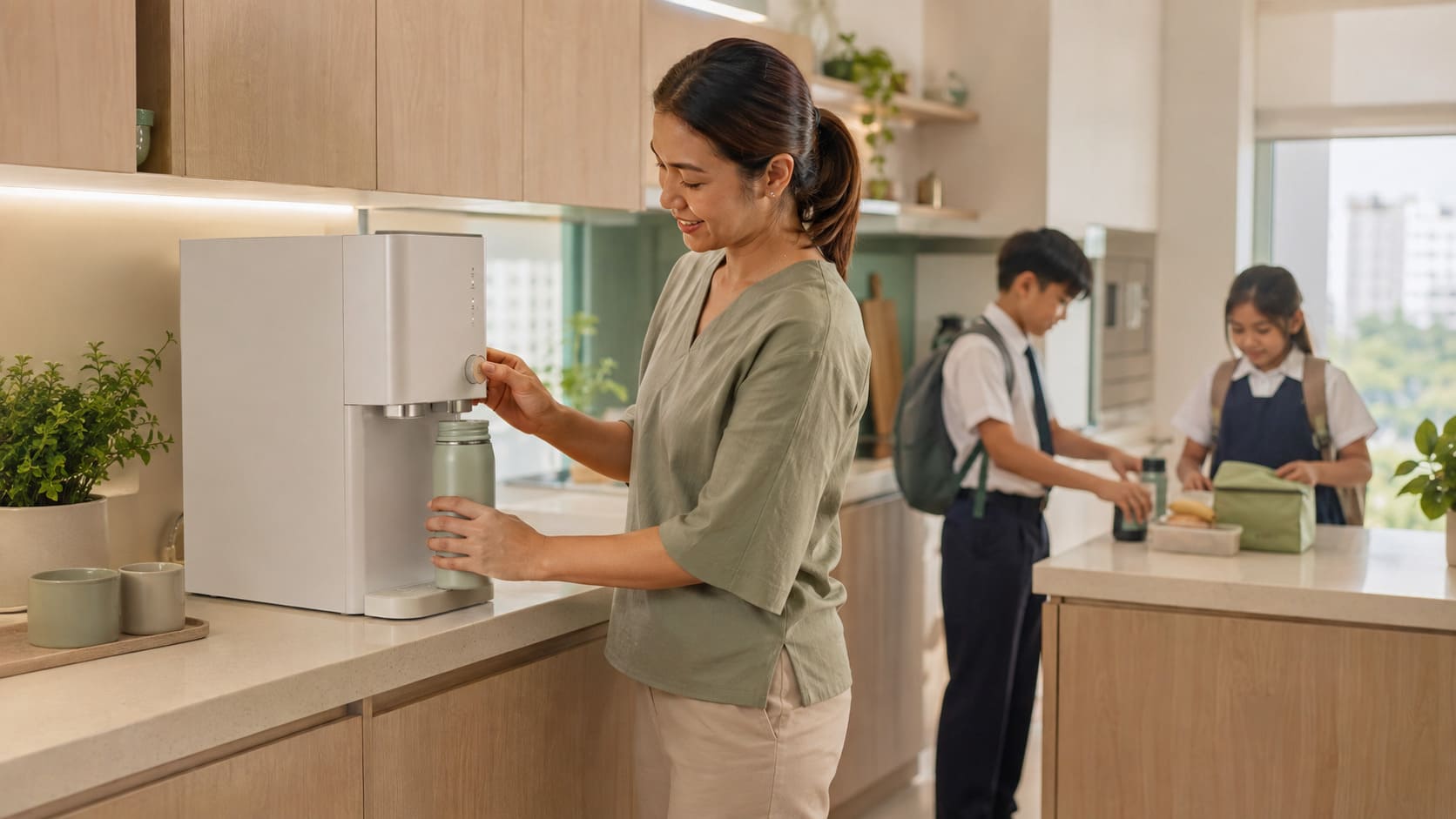
A family of two adults who mainly drinks ambient water has different needs from a household with young children, grandparents and several people filling bottles before leaving home. Capacity, controls and maintenance can feel unimportant in a showroom but become noticeable after weeks of daily use.
This guide explains the family questions worth asking before choosing a water purifier. It does not rank brands or assume that one filtration method, payment plan or machine format is suitable for every Malaysian home.
Count the regular users, identify the busiest times of day and decide which temperatures your family genuinely uses. Then compare safety controls, installation needs, cleaning, filter servicing and the full cost of keeping the machine for several years.
For the broader questions on filtration, installation and service, start with our complete Malaysian water-purifier guide.
1. Begin with your family’s water routine
Think about what happens during breakfast, after school, dinner and bedtime. Does everyone fill a bottle at the same time? Do you prepare infant formula, hot drinks or chilled water regularly? Does a parent or older relative need controls that are simple to read and reach?
A useful shortlist starts with these real habits. A feature that saves a few seconds several times a day may be genuinely helpful. A feature that nobody uses can add cost, cleaning or complexity without improving family life.
2. Check demand at the busiest time
Manufacturers may state tank capacity, dispensing flow or heating and cooling performance in different ways. Compare figures in the same units and ask what happens when several family members use the purifier one after another.
| Family pattern | Question to ask | What to examine |
|---|---|---|
| Several bottles filled in the morning | Can it supply enough water without a long wait? | Ready-water volume, flow rate and recovery time |
| Frequent hot drinks | How quickly is hot water available again? | Hot-water capacity, heating method and temperature choices |
| Young children at home | Can hot water be dispensed accidentally? | Child lock, two-step control and outlet position |
| Older adults using it | Are the controls and cup area comfortable? | Readable labels, simple sequence, reach and cup clearance |
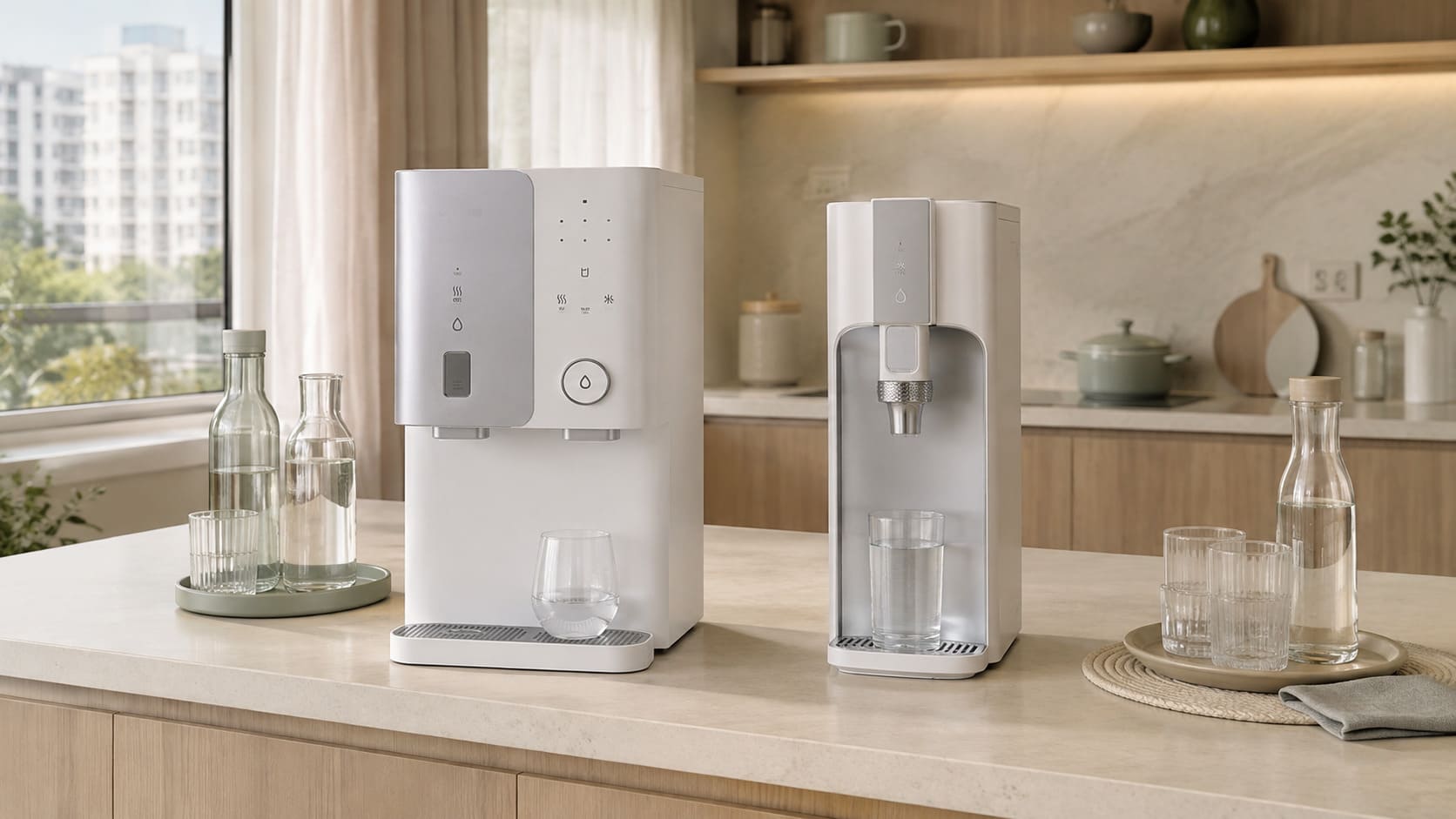
Do not assume that a larger machine always performs better. Extra stored water may require more space, while a compact on-demand design may be suitable if its flow and temperature performance match your busiest period.
3. Choose temperatures your family will actually use
Ambient-only models are simpler and may use less electricity than machines that heat and cool water. Hot and cold options can be convenient, but they add controls, internal components and operating considerations.
For homes with children, look at the complete hot-water sequence rather than the words “child lock” alone. Check whether the lock resets automatically, whether the hot outlet is easy to reach and whether a cup can sit securely below it. A safety control reduces risk only when the household understands and uses it correctly.
4. Read filtration claims carefully
The number of filter stages does not by itself tell you how well a purifier addresses a particular substance. Look for clear descriptions of what each stage is designed to reduce, the test method behind important claims and the conditions under which the result applies.
Malaysia’s Ministry of Health publishes drinking-water quality standards, while the World Health Organization provides broader drinking-water guidance. These references help explain why water quality involves specific physical, chemical and microbiological parameters—not a single marketing phrase.
If your concern comes from a private supply, unusual taste, recurring discolouration or a known building issue, obtain suitable local advice rather than assuming that a general household purifier will solve every cause.
5. Compare tank and tankless formats separately
Tank and tankless describe how a machine stores and dispenses water; they do not prove that one has better filtration. A tank model may deliver ready water quickly until its stored volume is used. A tankless model may take up less space, but its continuous performance depends on its flow, heating and cooling design.
See our tank versus tankless water-purifier guide for a focused comparison of footprint, back-to-back demand, cleaning and electricity behaviour.
6. Measure the real installation space
Measure width, depth and height, then include the space needed to open covers, change filters and move the appliance for cleaning. Check the route to the water inlet, the location of a suitable socket and whether drainage is required.
Keep controls and dispensing outlets comfortable for the people who will use them. Avoid placing a hot-water outlet where a small child can reach it easily. In a rented home or condominium, confirm any drilling, plumbing or management requirements before installation.
7. Decide who will handle maintenance
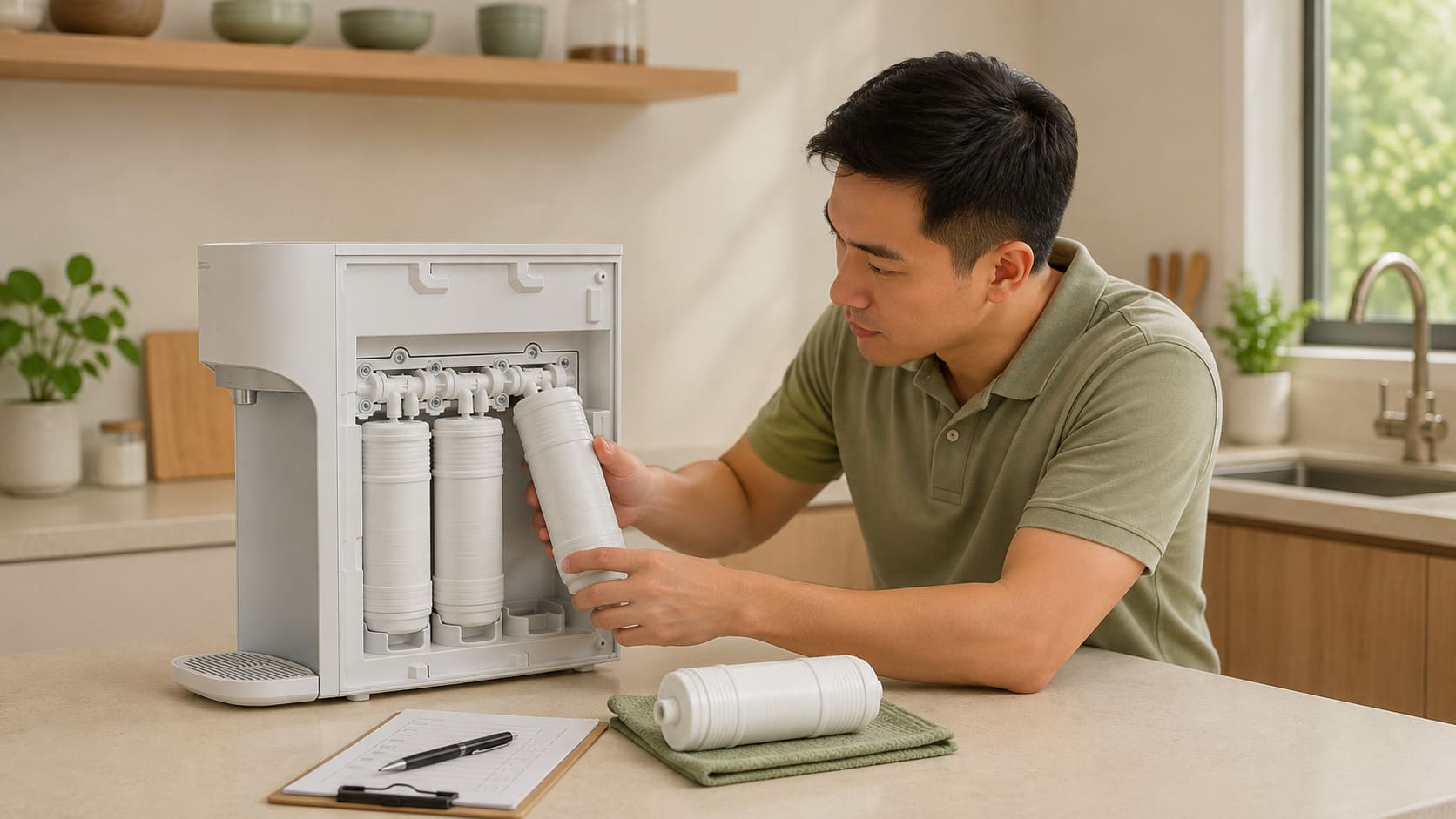
Every purifier needs some form of upkeep. Ask who changes the filters, cleans the outlet and drip tray, sanitises internal parts where required, and arranges repairs. Read the instructions for the exact model because schedules and procedures vary.
- Confirm the filter names, replacement intervals and current prices.
- Ask whether servicing is included, optional or charged separately.
- Check how quickly replacement filters and technicians are available locally.
- Find out what happens if the family moves home.
- Keep service records and follow any flushing instructions after a filter change.
A convenient service plan can reduce household work, but it should be compared with the full contract commitment. An outright purchase may offer more control while leaving the owner responsible for arranging upkeep.
8. Compare the complete cost
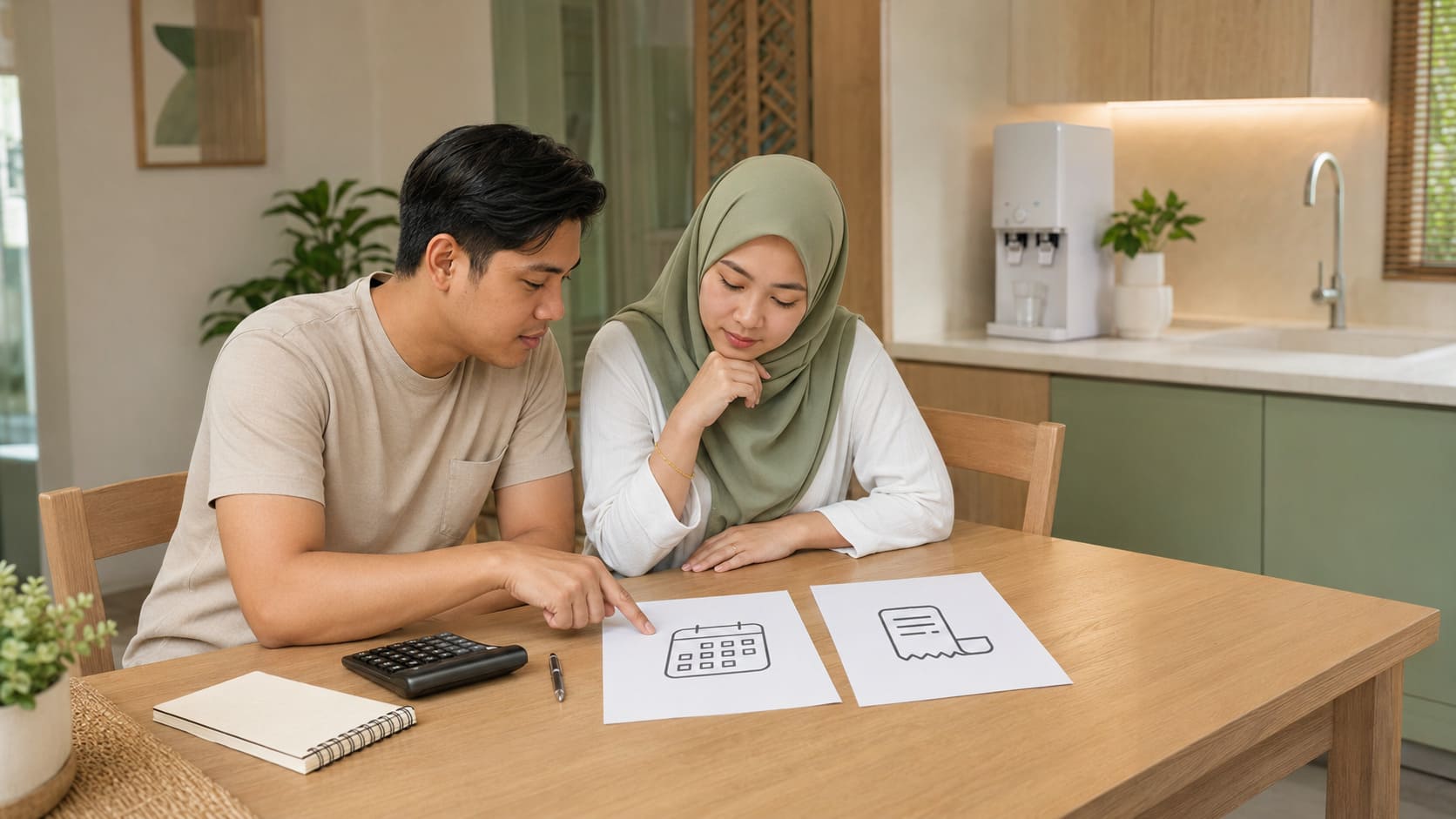
Look beyond the advertised monthly amount or purchase price. Include installation, filters, scheduled servicing, repairs, electricity, contract length, early termination terms and whether ownership transfers at the end.
Do not assume the cheaper option is automatically better value. A useful comparison asks whether the appliance meets the family’s routine reliably and whether the maintenance arrangement is realistic for the household.
9. Family buying checklist
- How many people use the purifier every day?
- When is the busiest dispensing period?
- Which temperatures will the family use regularly?
- Are hot-water controls suitable for children or older adults?
- Does the stated capacity or flow match back-to-back demand?
- Will the appliance fit with enough room for servicing?
- Who changes filters and cleans the machine?
- What is the full cost over the intended ownership or contract period?
- Are important filtration claims explained with suitable evidence?
- Is local servicing and replacement-filter supply clear?
Frequently asked questions
What size water purifier does a family need?
There is no universal capacity. Count regular users, note busy periods and compare the stated ready-water capacity or continuous dispensing performance with your actual routine.
Is a hot-water dispenser suitable for a home with children?
A child lock or two-step control may reduce accidental dispensing, but it does not replace supervision or safe placement. Follow the manufacturer’s instructions and keep the hot outlet and controls out of easy reach where practical.
Is a tank or tankless purifier better for a family?
Neither is automatically better. Compare ready-water volume, continuous flow, waiting time, footprint, cleaning and electricity behaviour with your family’s peak demand.
How often should the filter be changed?
Follow the schedule for the exact model and filter stages. Water conditions, household use and service requirements can affect the practical replacement interval.
Should a family rent or buy a water purifier?
Compare contract length, servicing, filter replacement, repairs, ownership at the end of the term and the total amount payable. The monthly figure alone does not show the full commitment.
Sources and further reading
- Ministry of Health Malaysia: Drinking Water Quality Standards and Frequency of Monitoring
- World Health Organization: Guidelines for drinking-water quality
- Energy Commission Malaysia: regulated household water dispensers

Mei Ling Tan
Family Living Contributor
Mei Ling considers how household products fit busy family routines, with attention to safety, cleaning, convenience and long-term ease of use. View Mei Ling’s profile.