A purifier can fit on a floor plan yet remain awkward in daily use. Condo kitchens often have limited worktop space, fixed cabinetry and shared management rules, so measure the complete installation before comparing decorative finishes.
Measure the installed footprint and service clearance, confirm water, power and drainage routes, check any landlord or management requirements, and choose capacity around the household’s busiest period.
1. Measure the usable space
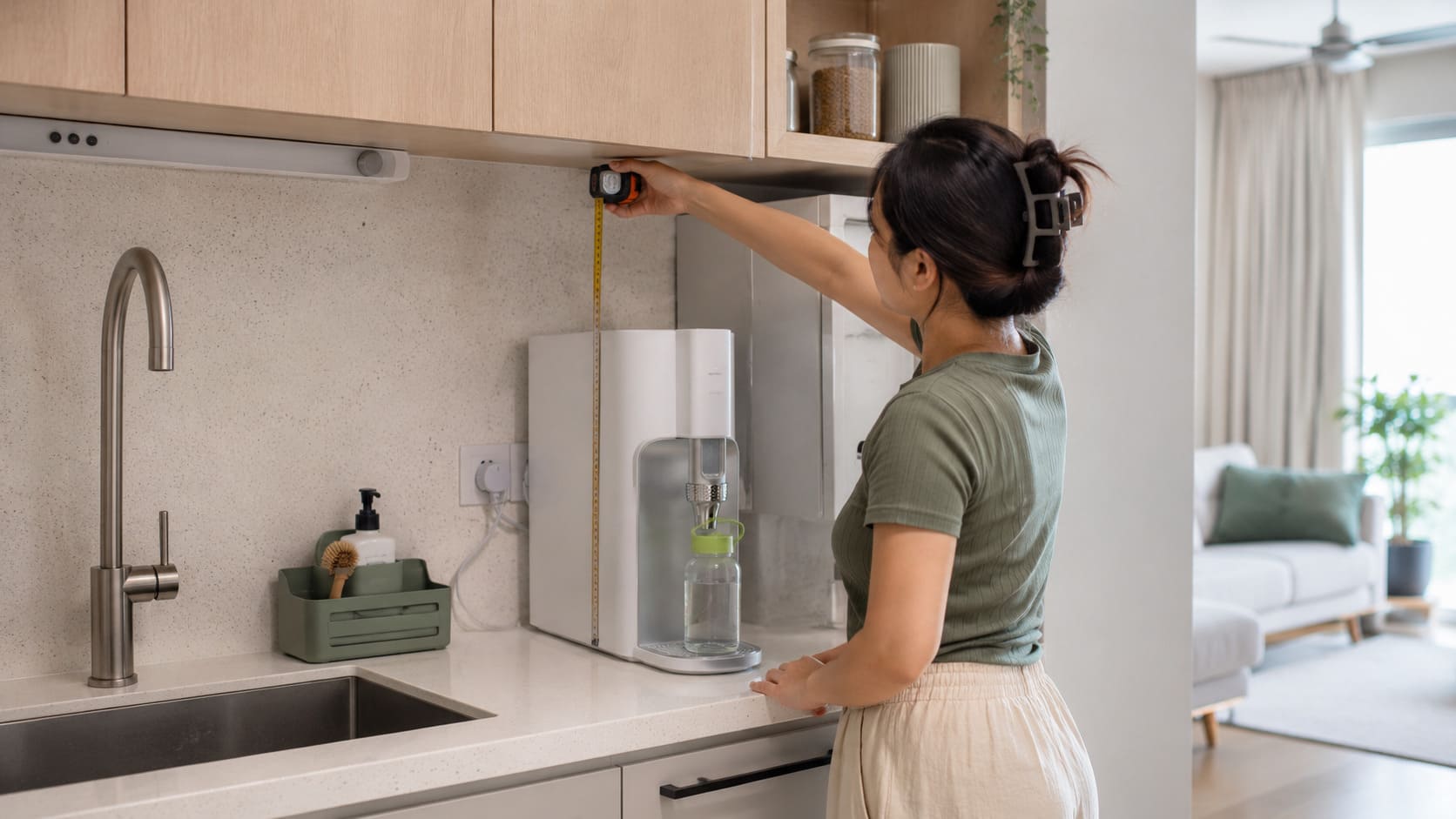
Record the available width, depth and height in centimetres. Then check how far doors, filter covers and drip trays open. A unit that technically fits beneath a cabinet may still be impossible to service without moving it.
Allow a practical route for bottles and cups. Check whether the outlet is high enough for the containers your household actually uses and whether water can be wiped up without reaching electrical connections.
2. Confirm every connection before ordering
| Item | Condo question | Common oversight |
|---|---|---|
| Water inlet | Where will the connection be made? | Long visible hose across a cabinet |
| Power | Is a suitable socket within the approved reach? | Relying on an extension lead |
| Drainage | Does the model require a drain connection? | No suitable route or fall |
| Service access | Can filters and panels be removed? | Cabinet door or wall blocks access |
Ask for the installation requirements in writing. Electrical and plumbing alterations should be handled by suitable personnel, and the exact appliance should have the appropriate documentation for its category.
3. Check landlord and management requirements
If the home is rented, obtain the owner’s approval before drilling, cutting cabinetry or altering fixed plumbing. In a strata property, management rules may affect work in shared service areas or the timing and conduct of contractors.
Keep photographs of the original condition and written details of any reinstatement required when moving out. A portable-looking product can still involve fixed hoses, valves or holes.
4. Compare format with the kitchen layout
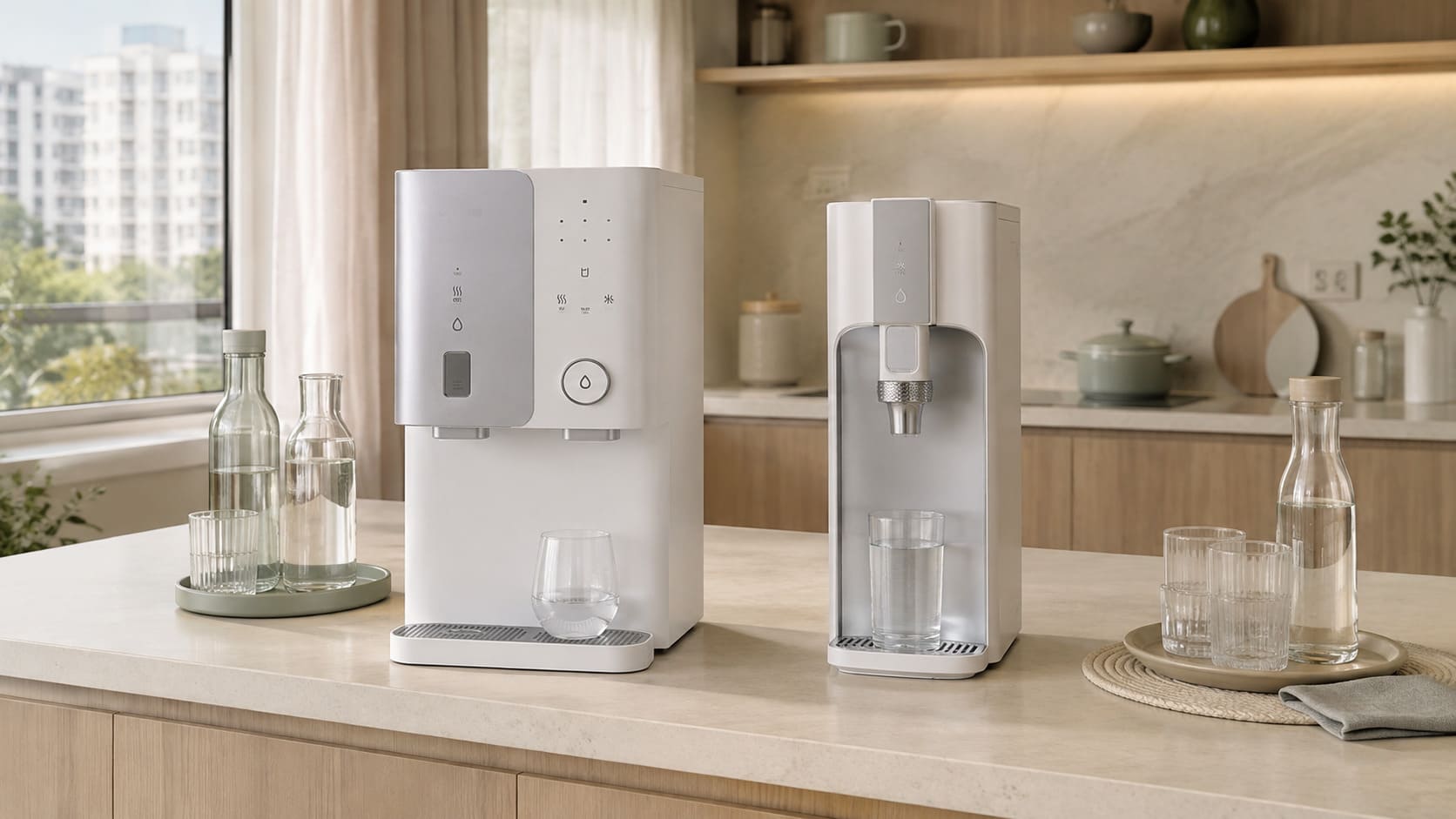
A tankless design may have a smaller body, but it still needs ventilation, filter access and suitable power. A tank model may be larger yet offer ready hot or cold volume that suits a busy household. Compare the actual installed dimensions rather than relying on category labels.
Our tank-versus-tankless guide explains dispensing and storage trade-offs. Use the broader Malaysian water-purifier guide for filtration, service and total-cost questions.
5. Fit the machine to the household routine
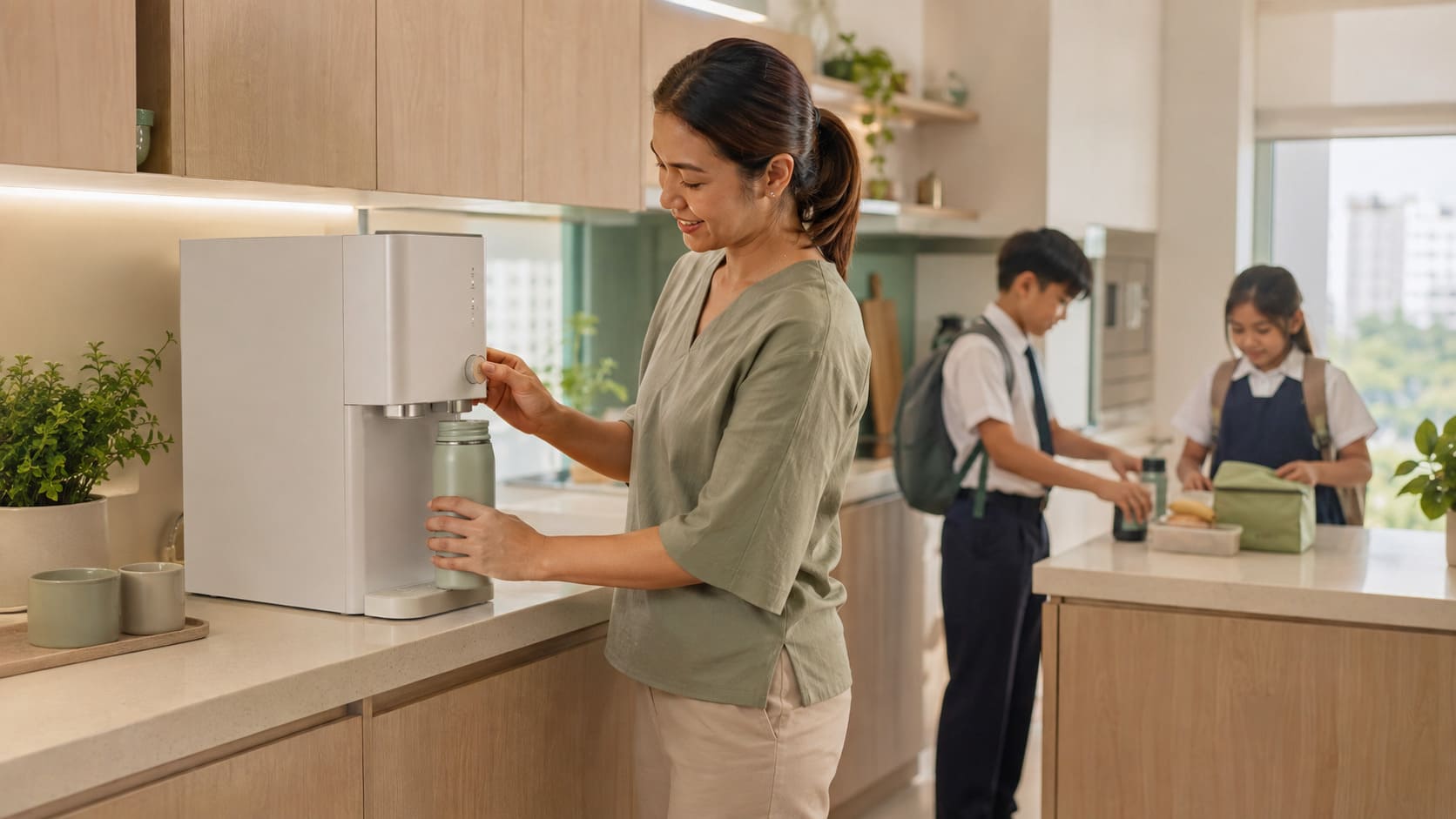
Count users and note peak moments such as school mornings, meal preparation and bottle filling. A narrow unit is not convenient if the flow is too slow or the cup area cannot accept the household’s normal containers.
For homes with children, consider hot-water controls and whether the outlet can be reached accidentally. For older family members, check visibility, cup stability and control sequence.
6. Consider heat, noise and nearby storage
Compressors, pumps and heating cycles can be more noticeable in an open-plan condo. Ask to hear the unit operating rather than judging only from a sound figure without test conditions.
Keep ventilation openings clear and avoid trapping heat inside a cabinet unless the product is designed for built-in installation. Do not place food, cleaning chemicals or moisture-sensitive items where servicing or a leak could affect them.
7. Plan servicing and relocation
- Confirm how technicians reach the unit and filters.
- Ask whether furniture or stored items must be removed before every visit.
- Record filter names, replacement dates and service contacts.
- Check whether the service plan covers a change of address.
- Understand disconnection, removal and reinstatement costs.
- Keep enough access to notice a leak early.
A compact kitchen rewards simple decisions: a correctly placed, serviceable unit is usually more useful than a smaller machine that becomes difficult to maintain.
Frequently asked questions
Can a water purifier fit under a condo kitchen cabinet?
Only when the full installed dimensions, ventilation and filter-removal clearances fit. Measure doors and service panels, not only the main body.
Do I need permission to install one in a rented condo?
Ask the owner before drilling, cutting cabinetry or altering fixed plumbing. Management requirements may also apply to contractor work or shared service areas.
Is a tankless purifier always better for a small kitchen?
No. It may reduce body size, but power, ventilation, flow, temperature performance and service clearance still need to suit the home.
What should I check before the installer arrives?
Confirm the water connection, suitable socket, drainage requirement, hose route, drilling permission and enough space for future servicing.
Sources and further reading
- Ministry of Health Malaysia: Drinking Water Quality Standards and Frequency of Monitoring
- Energy Commission Malaysia: regulated household water dispensers

Alicia Lee
Condo & Lifestyle Contributor
Alicia looks at footprint, installation, noise and how household products fit a real modern condo. View Alicia’s profile.