Confirm the notice with your utility, prepare drinking water separately from cleaning water and plan for everyone at home. When supply returns, follow the utility’s advice and the exact purifier instructions. Water flowing again does not automatically end a water-quality advisory.
Check the notice and building arrangements
Start with your utility’s official channel. Save the affected-area notice, expected start and latest recovery information. An old screenshot in a chat group may describe another incident. Air Selangor customers can use its official water-updates service; elsewhere, check your own state utility.
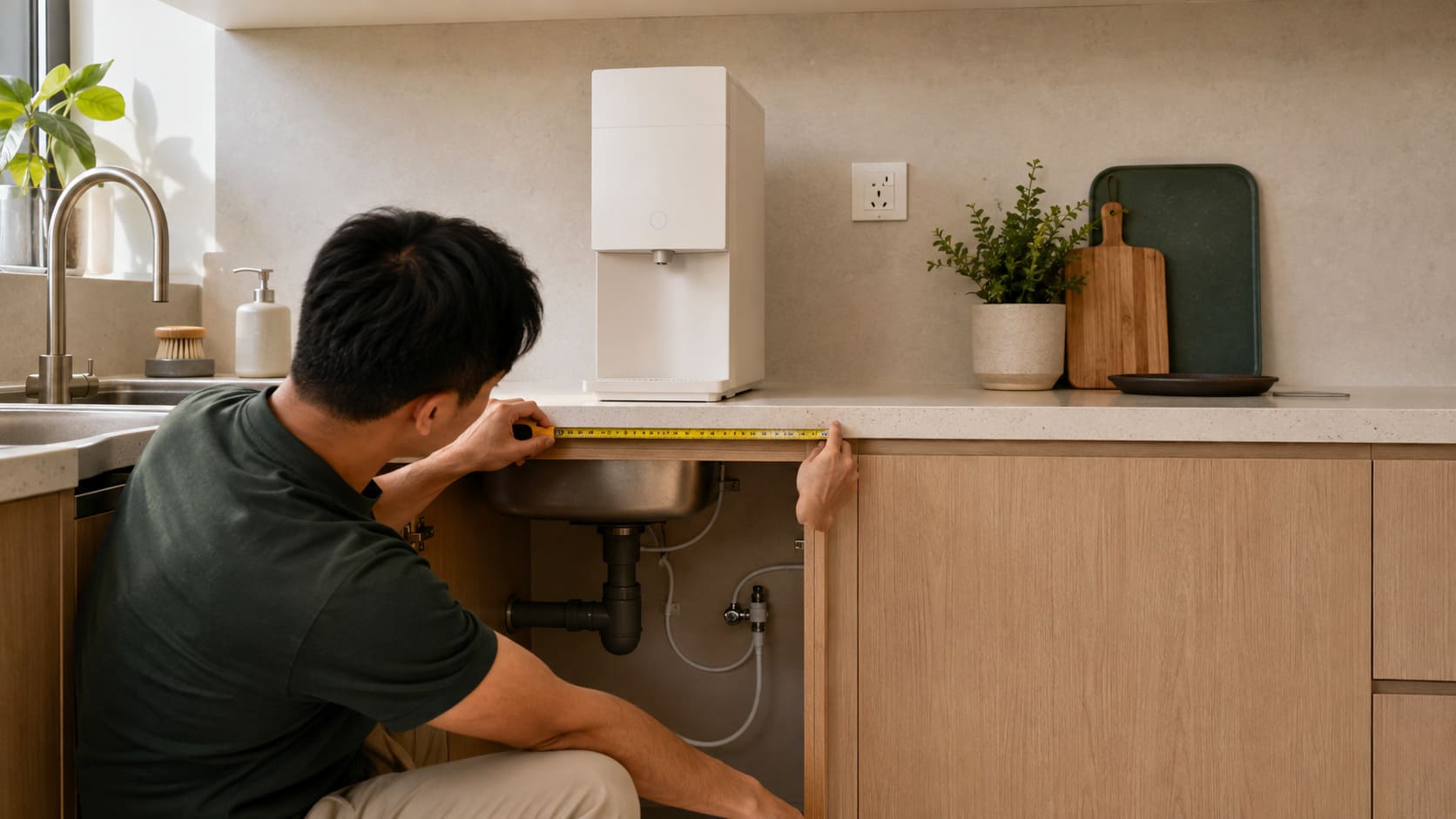
In a condo, ask management how the interruption affects building tanks, pumps and individual units. The utility’s recovery estimate and the time water reaches your tap may differ. Keep the management contact available rather than relying on another building’s experience.
Arrange help early for relatives unable to carry containers. If someone needs water for medical care, follow their care provider’s continuity advice rather than relying on a general household quantity.
Separate drinking water from other uses
CDC emergency guidance uses at least one US gallon, about 3.8 litres, per person per day for three days as a baseline for drinking and basic uses, with extra needs in hot conditions and for some people. This is international preparedness guidance, not a Malaysian utility allocation or a complete allowance for bathing and laundry.
For four people, the baseline is about 45.6 litres over three days. Treat it as a planning reference and consider actual household needs, pets and the expected disruption. Plan separately for toilets and cleaning. Make it clear which stored water is intended for consumption.
Use suitable containers
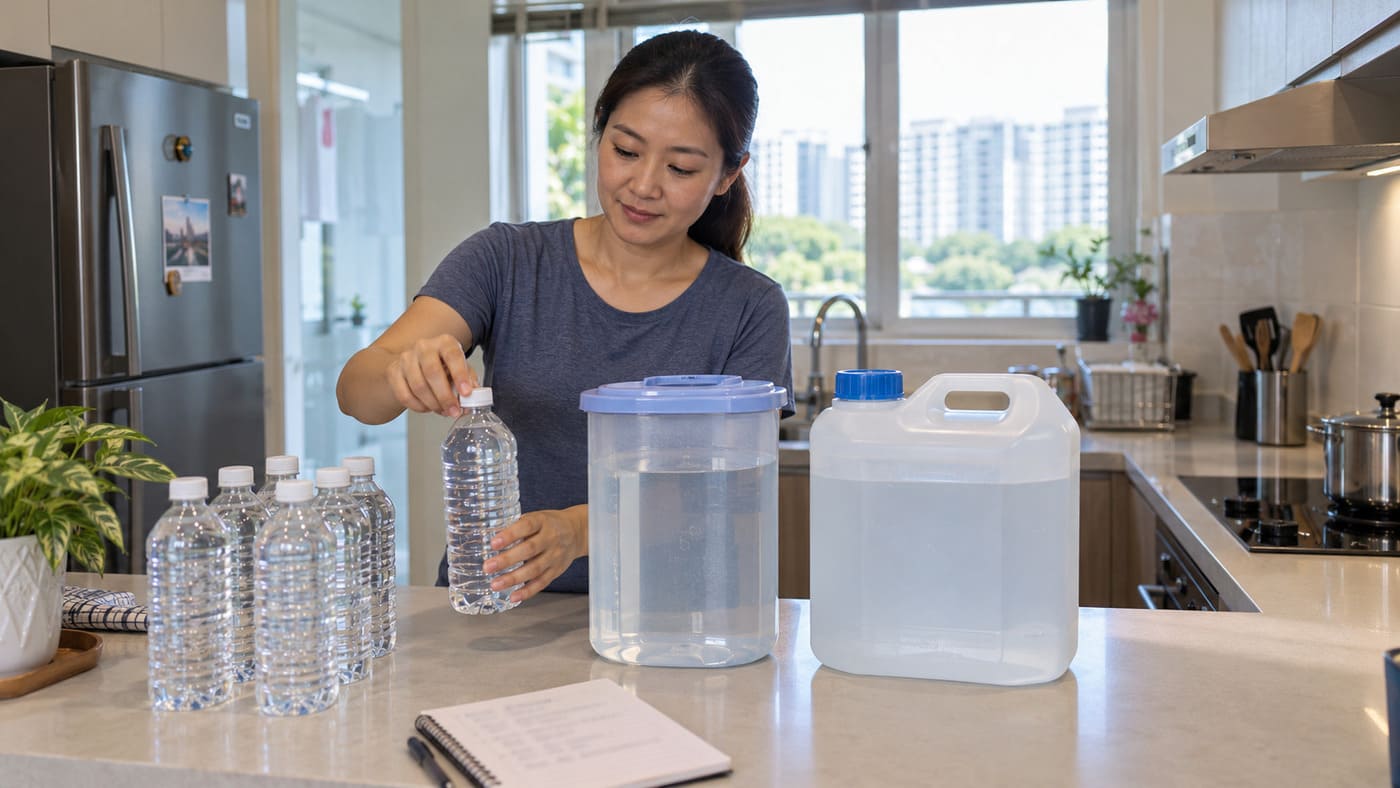
Unopened commercial bottled water is a reliable emergency drinking-water option. If storing water yourself, use suitable food-grade containers with secure lids; never reuse containers that held toxic chemicals. Follow official cleaning and storage instructions, label contents and date, and protect drinking water from heat, sunlight and chemicals.
Smaller containers can be easier to carry and pour than one large container. Keep them accessible without blocking exits or creating trip hazards. Store cleaning water separately and make its purpose unmistakable.
Check that lids seal properly before filling. A full container that one household member can lift comfortably may be unmanageable for someone else.
Before and during the interruption
| Before the cut | During the cut |
|---|---|
| Save the official notice and update channel | Check the latest information, not just the first recovery estimate |
| Prepare labelled drinking and cleaning supplies | Use the correct supply for each purpose |
| Finish essential water-dependent tasks if practical | Postpone non-essential washing and cleaning |
| Check water-connected appliance instructions | Do not run equipment without the supply its manual requires |
| Plan help for children, older adults and pets | Keep containers secure and supervise access |
Air Selangor explains that scheduled-maintenance notices give customers time to prepare and that alternative supplies may be arranged during disruptions. Check the actual incident’s arrangements; do not assume a tanker time or collection point from an earlier event.
Follow the specific advice when supply returns
Distinguish a supply interruption from a water-quality advisory. If officials issue a boil-water, do-not-drink or do-not-use instruction, follow it. Boiling is not a universal solution to chemical contamination, and a household purifier cannot be assumed to remove the problem.
CDC advises against using water from supply-connected appliances during a drinking-water advisory. Wait for relevant clearance and follow official flushing or cleaning instructions. If colour, odour or another concern remains, contact the utility rather than treating appearance or a purifier display as proof of safety.
Local incident-specific advice takes priority. International guidance explains the distinction but does not replace the notice for your supply.
Restart the purifier according to its manual
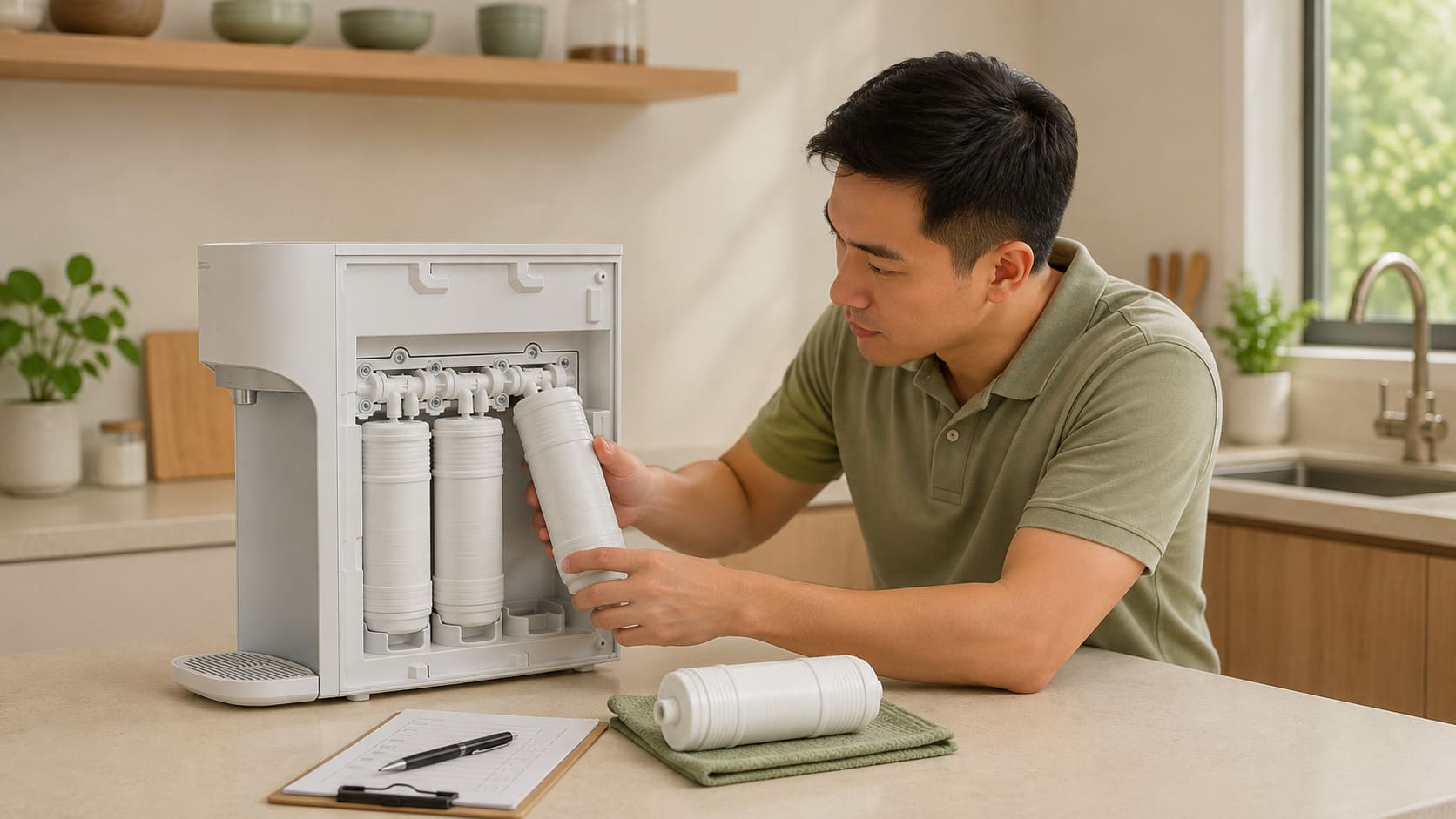
Find the model’s instructions before the interruption where possible. Water-pressure, flushing, tank, filter and restart requirements vary. There is no universal flushing duration, and every water cut does not automatically require every filter to be replaced.
If contamination is suspected, the device ran without its required supply or the restart procedure is unclear, contact the manufacturer or service provider. Use appropriate alternative drinking water while the issue is resolved.
The maintenance checklist helps organise routine service records. The installation checklist identifies connection and handover information worth keeping with the manual.
Make the next interruption easier
After the event, record how much drinking water was used, which containers worked and whether anyone needed extra help. Replenish supplies appropriately and keep official contacts easy to find. A short record prevents repeated guessing.
Check your utility’s latest notice for affected areas, water-quality instructions and restoration updates.
Frequently asked questions
Can a purifier supply water during a water cut?
It depends on the design and remaining usable water. A plumbed system cannot replace an interrupted supply indefinitely. Prepare backup water and follow its manual.
Must every filter be replaced after a disruption?
Not automatically. Follow the incident guidance and exact system instructions; ask the service provider if contamination or restart requirements are uncertain.
Is this a current outage notice?
No. This page explains household preparation. Use the official utility channel for current affected areas and recovery updates.
Sources and further reading
Sources checked on 11 September 2026.
- Air Selangor: official water updates
- Air Selangor: maintenance notices and preparation
- CDC: emergency water storage
- CDC: drinking-water advisories