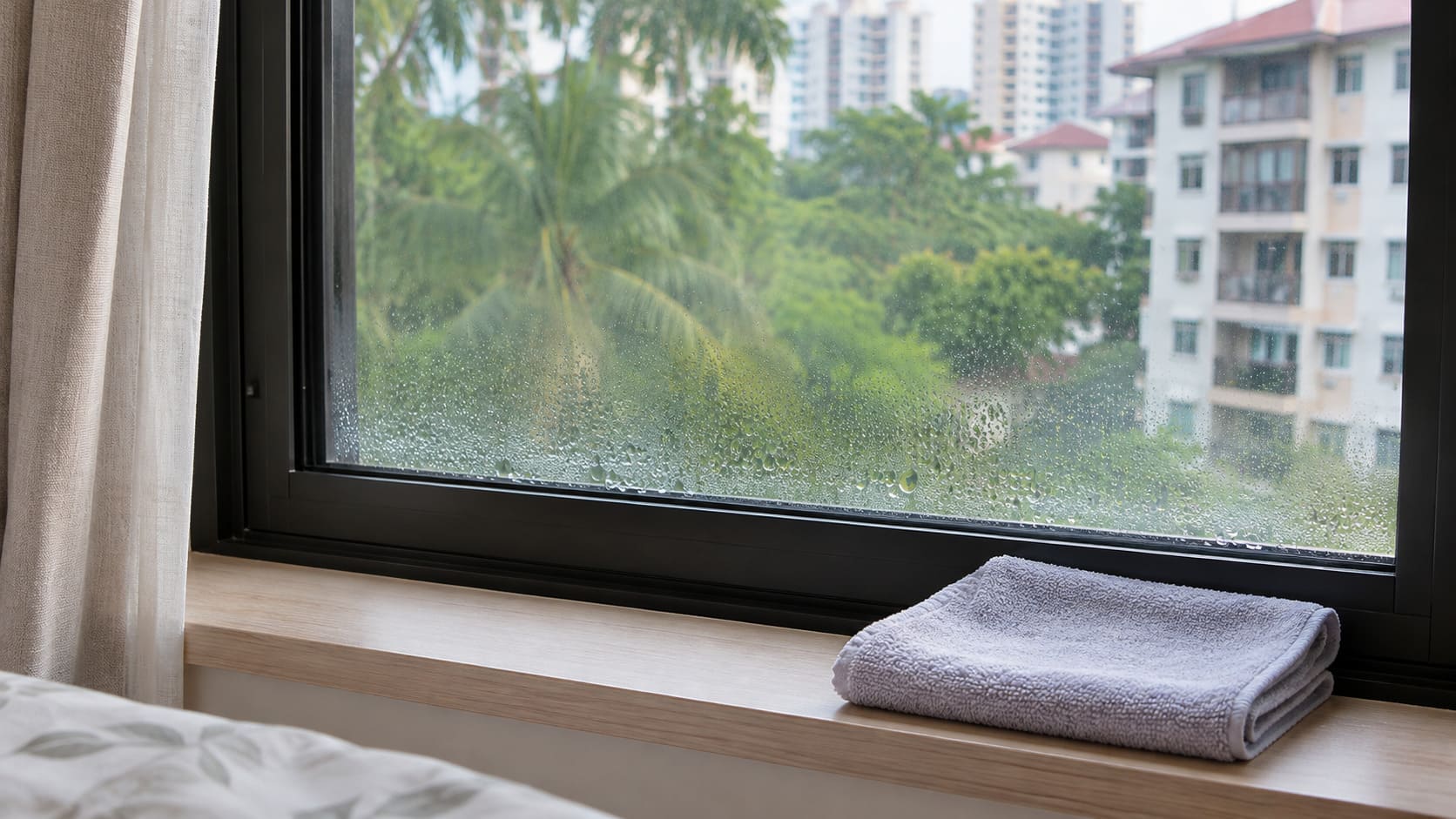
Record the pattern before wiping it away
Take a photograph and note the time, weather, aircond use and which room is affected. Is the wetness on the room-facing glass, outside, between panes or on the wall below? Does it appear on several windows or just one corner?
Check only what is safely accessible indoors. Do not lean out of a high-rise window, remove glazing or climb onto furniture to inspect an external seal. A clear indoor photograph and a description of when water appears are enough to start a report.
Use clues without jumping to a conclusion
Moist air can form droplets when it meets a surface below its dew point. That is condensation. EPA guidance identifies wet windows and other surfaces as a reason to investigate moisture rather than just repeatedly wipe them.
A film of droplets across accessible glass may point towards condensation. Water entering at a joint during wind-driven rain raises a different question about the frame, seals or surrounding wall. Mist that appears trapped between sealed glazing panes should be referred to the glazing provider.
More than one issue can exist at the same time. Avoid telling a contractor that the cause is definitely the aircond or definitely a failed seal before they have examined it.
Protect nearby items while arranging a check
Wipe accessible moisture and dry the sill using a suitable cloth. Move curtains, books and furniture away from persistent wet contact where you can do so safely. Record swelling, flaking paint or recurring stains, including whether they grow after rain.
Do not drill drainage holes or cover frame openings with sealant. Window drainage arrangements vary, and a quick patch can hide evidence or affect the intended water path. If water reaches sockets or electrical equipment, keep away and obtain appropriate assistance rather than continuing the inspection.
Check room conditions without turning this into an appliance purchase
Note whether indoor laundry, cooking or bathing happens nearby and whether extraction is working as intended. Ventilating with outdoor air helps only when conditions are suitable; warm humid outdoor air may not dry an air-conditioned room.
If you use a hygrometer, follow a consistent measurement routine and record the temperature as well. Our humidity-measurement guide explains placement. A single reading elsewhere in the room cannot prove the cause of water on a particular pane.
A dehumidifier may help manage room moisture in appropriate circumstances, but it cannot repair a leaking frame. Do not buy one solely to avoid reporting water ingress. If the question is appliance choice, use the dry-mode versus dehumidifier guide.
Make the maintenance report specific
Send the landlord or building manager the room, window location, photographs and a short log. For example: “Water appears at the lower right joint during rain; the middle of the glass remains dry; this happened on two evenings.” Label this as an observation, not a diagnosis.
Ask who will inspect the glazing and surrounding building surface, what access is required and whether the repair needs management approval. Keep the case reference. After any work, observe the same area during similar weather before concluding the problem is resolved.
Persistent hidden dampness, damaged wall material or visible growth warrants further assessment. This checklist helps describe a problem; it is not a substitute for identifying concealed building defects.
Frequently asked questions
Does water on a window always mean a failed seal?
No. Condensation, water ingress and glazing problems can produce different wetness patterns. Record the location and timing and arrange an inspection when the cause is unclear.
Will a dehumidifier fix a leaking window?
No. It may reduce room moisture under suitable conditions, but it does not repair a frame, seal or surrounding building defect.
Sources and further reading
Sources checked on 7 November 2026.