Separate a storage problem from a room problem
Start with the affected shelf rather than emptying everything onto the bed. Notice whether the smell follows one bag, a stack of towels or a particular corner. Check clean clothing before it goes back inside; an item that already smells after washing needs a different investigation.
Look at accessible cupboard surfaces and the nearby wall without pulling apart fixed furniture. A pattern that returns after rain, swelling panels or a wet patch needs attention from the landlord, building manager or an appropriate contractor. Photograph the location and date instead of repeatedly covering it with perfume.
Only put away clothing that is dry throughout
A shirt can feel dry on its front while seams, cuffs and thick pockets remain damp. Let recently dried items cool before judging them and check thicker areas. Do not put a slightly damp towel into a closed stack just to clear the drying rack.
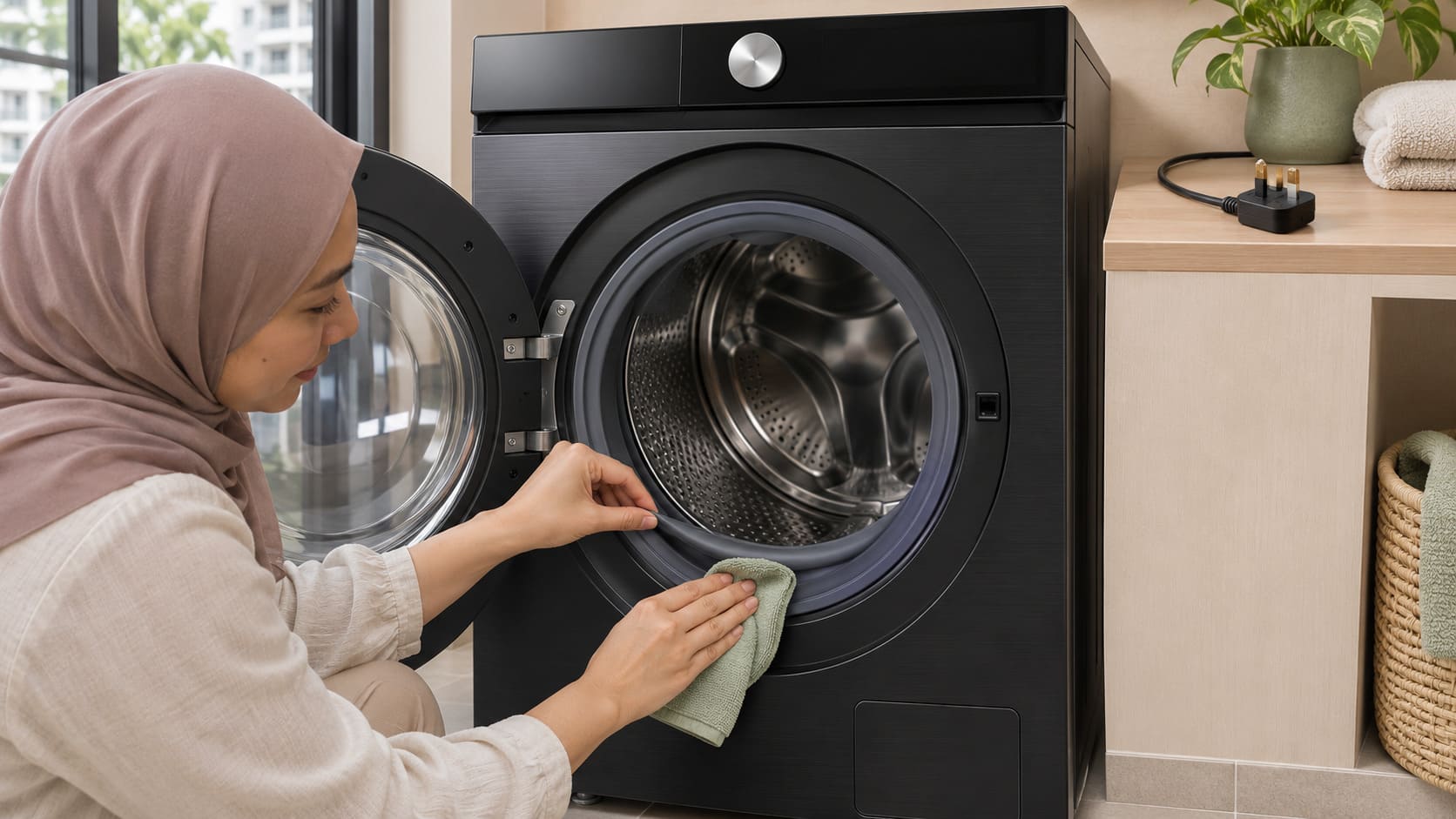
If the smell is already present at the end of washing, use the washing-machine odour checks first. If it develops while clothes wait on the rack, review your indoor drying arrangement. Storage changes cannot undo an unfinished drying routine.
Make the cupboard easier to inspect
Leave enough space to move hangers and see the back of shelves. Put frequently used items where you can remove them without compressing the whole row. Rotate stored bags and seasonal clothing so hidden corners are checked occasionally.
Do not move or unanchor a tall wardrobe just to create a gap. For fitted units, ask the installer or landlord about safe access and ventilation. In a room with an external wall, record whether the issue is limited to the cupboard or also appears elsewhere.
Opening cupboard doors can help inspection and air movement, but bringing humid outdoor air into the room is not automatically drying it. Consider actual conditions rather than leaving windows open during every rainy spell.
Treat absorbers and fragrance as different tools
A moisture absorber may collect water under the conditions specified by its manufacturer. It does not repair damp walls or establish that the whole cupboard is dry. Use it only as labelled, on a stable surface away from clothes, children and pets; liquid spills can create another problem.
Fragrance changes the smell without showing where moisture comes from. If you choose an absorber, record when it was placed and check it as directed. Do not interpret how quickly it fills as a calibrated humidity reading. For room measurements, use our separate hygrometer guide.
When the cupboard itself is affected
Visible growth, damaged porous panels or a persistent musty smell behind a fitted unit deserves more than a storage tidy-up. Avoid brushing suspect growth into the room or painting over a damp surface. Ask for an assessment if the source is hidden, damage is extensive or water may be contaminated.
EPA guidance emphasises correcting moisture sources rather than repeatedly cleaning the same patch. For visible mould or damaged cupboard panels, ask an experienced professional about suitable cleaning or replacement. Once the cause is addressed, recheck the same shelf after wet weather and before putting rarely used items back.
Frequently asked questions
Will scented sachets remove the cause of a musty wardrobe?
No. They may mask the smell. Check clothing dryness, cupboard surfaces and nearby damp sources instead.
Does a full moisture-absorber container prove the wardrobe is dry?
No. It shows collected moisture, not a calibrated reading of cupboard conditions or confirmation that a leak has been fixed.
Sources and further reading
Sources checked on 7 November 2026.