If wet washing is adding moisture to the room, try this indoor laundry routine to improve spacing and manage the drying area.
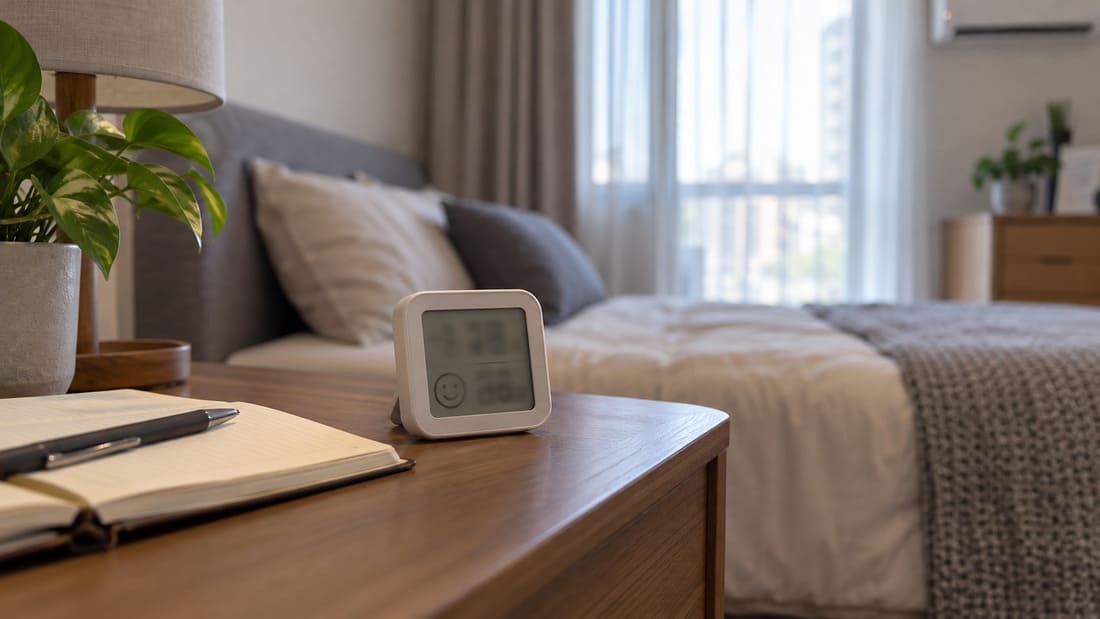
Use a hygrometer that shows relative humidity (%RH) and temperature. Put it in a representative part of the room, away from direct sun, splashes and appliance airflow. Let the reading settle, then record it at similar times over several days. One number is a snapshot, not a diagnosis.
Start with a humidity meter, not the weather app
A hygrometer measures humidity where its sensor sits. The percentage on a weather app usually describes outdoor conditions for a reporting location; it does not measure your bedroom.
Choose a meter with a clear %RH display and a temperature reading. Check its stated accuracy, operating range and instructions. A min/max memory can be useful, but a basic meter is enough to start a handwritten record. A screen showing decimal places does not necessarily mean the device is more accurate.
Relative humidity changes with temperature as well as moisture. Note both readings when comparing a warm afternoon with an air-conditioned evening. A percentage change alone does not tell you exactly how much water was added or removed.
Give the meter a fair place to measure
For a general room check, use a stable shelf or table in the area you normally occupy. Leave air space around the sensor rather than hiding it behind books. Avoid direct sunlight, a hot television, the aircond outlet and the immediate area beside an open window.
In a condo bedroom, a shaded bedside shelf away from the aircond's draught may be more useful than a sunny windowsill. If you want to investigate a wardrobe, take a separate reading there and label it clearly. A reading inside a cupboard should not be treated as the average for the whole room.
Follow the meter's mounting instructions. The placement principles here also appear in Vaisala's sensor guidance, though household meters and building-control sensors have different installation requirements.
Let it settle before writing down the result
After moving the meter, give it time to adjust to its new surroundings. Use the manufacturer's instructions rather than a fixed waiting time for every device. Do not compare the first reading from a cool bedroom with one taken immediately after carrying the meter into a warm kitchen.
Set it down and wait until the numbers stop drifting noticeably. Keep it out of steam and splashes, and do not hold it close to your face while taking the reading. If the sensor becomes wet, follow the manual before using the result.
Keep the location consistent for your routine checks. Moving the meter to a different corner each day makes it harder to tell whether the room changed or you simply measured a different spot.
Try a seven-day record
Pick two times that fit your routine, such as before leaving for work and before bed. Record temperature and humidity together. Note whether the aircond was on, a window was open, laundry was drying or someone had just showered nearby.
The seven-day period is a practical way to organise your observations, not a formal test standard. If you notice a leak or wet materials, address the problem rather than waiting for the week to finish.
Copy this sheet into a notebook. Use one sheet per room and write the sensor location at the top. Record the actual times if your routine changes.
| Day / date | Morning | Evening | What was happening? |
|---|---|---|---|
| Day 1 / ____ | ________ | ________ | ________ |
| Day 2 / ____ | ________ | ________ | ________ |
| Day 3 / ____ | ________ | ________ | ________ |
| Day 4 / ____ | ________ | ________ | ________ |
| Day 5 / ____ | ________ | ________ | ________ |
| Day 6 / ____ | ________ | ________ | ________ |
| Day 7 / ____ | ________ | ________ | ________ |
An entry might read: 8 pm, 28°C, 68%RH; windows closed, laundry drying, aircond off. That is an illustrative entry, not a measurement from a tested home. The notes help you decide what to compare next.
Look for a pattern before buying anything
EPA's household mould guidance recommends keeping relative humidity below 60%, ideally between 30% and 50% where possible. This is general US moisture-control guidance, not a Malaysian legal limit or a guarantee that a room is free of mould.
A short rise after showering tells a different story from consistently high readings through the day. Check recurring patterns alongside condensation, leaks and damp surfaces. A room-average reading cannot rule out moisture trapped behind furniture or within a wall.
If readings stay high, first look for sources such as drying laundry or water entering the room. Do not assume opening a window always lowers humidity: outdoor conditions matter too. Persistent dampness or recurring visible mould may need the attention of building management or a suitable professional.
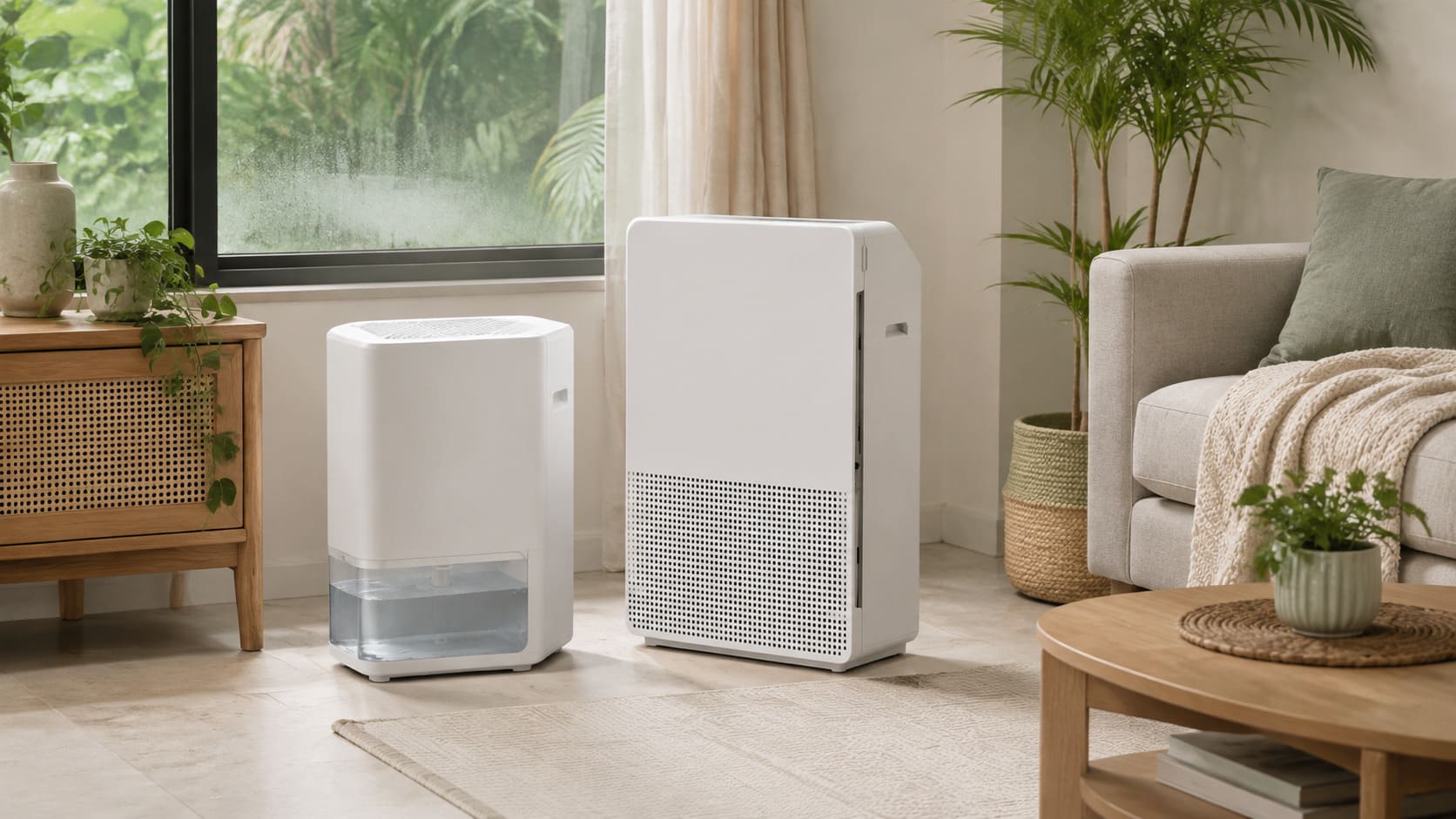
If the record points to excess room moisture, the dehumidifier buying guide explains capacity and drainage. If you are unsure whether the problem is moisture or airborne particles, start with dehumidifier versus air purifier.
What if two meters disagree?
Place them near each other in the same stable location, following both sets of instructions, and allow each to settle. Compare their stated accuracy and check batteries and sensor openings. A side-by-side check may reveal a persistent difference, but it does not tell you which meter is correct.
As an example, a specification of ±3 percentage points at the conditions being measured means a display of 60%RH could correspond roughly to 57–63%RH within that stated tolerance. This is an example specification, not a claim about your meter.
Do not average conflicting readings and call the result calibrated. If the difference affects an important decision, ask the supplier about checking the instrument against a suitable reference. Your most useful starting point is a repeatable record: the same meter, the same spot, and enough notes to explain what changed.
Frequently asked questions
Can I use the humidity reading on my aircond or dehumidifier?
It can help you follow that appliance's operation, but its sensor measures conditions at its own location. A separate meter in the occupied part of the room can give you another point of comparison. Neither reading automatically represents every corner.
Does a high reading mean I need an air purifier?
No. An air purifier is intended to reduce airborne pollutants; it is not a substitute for removing excess moisture. Check the moisture source before choosing equipment.
Sources and further reading
Sources checked on 11 October 2026.
- US EPA: A Brief Guide to Mold, Moisture and Your Home
- Vaisala: room-sensor placement principles
- Vaisala HM40 manual: stable conditions and measurement