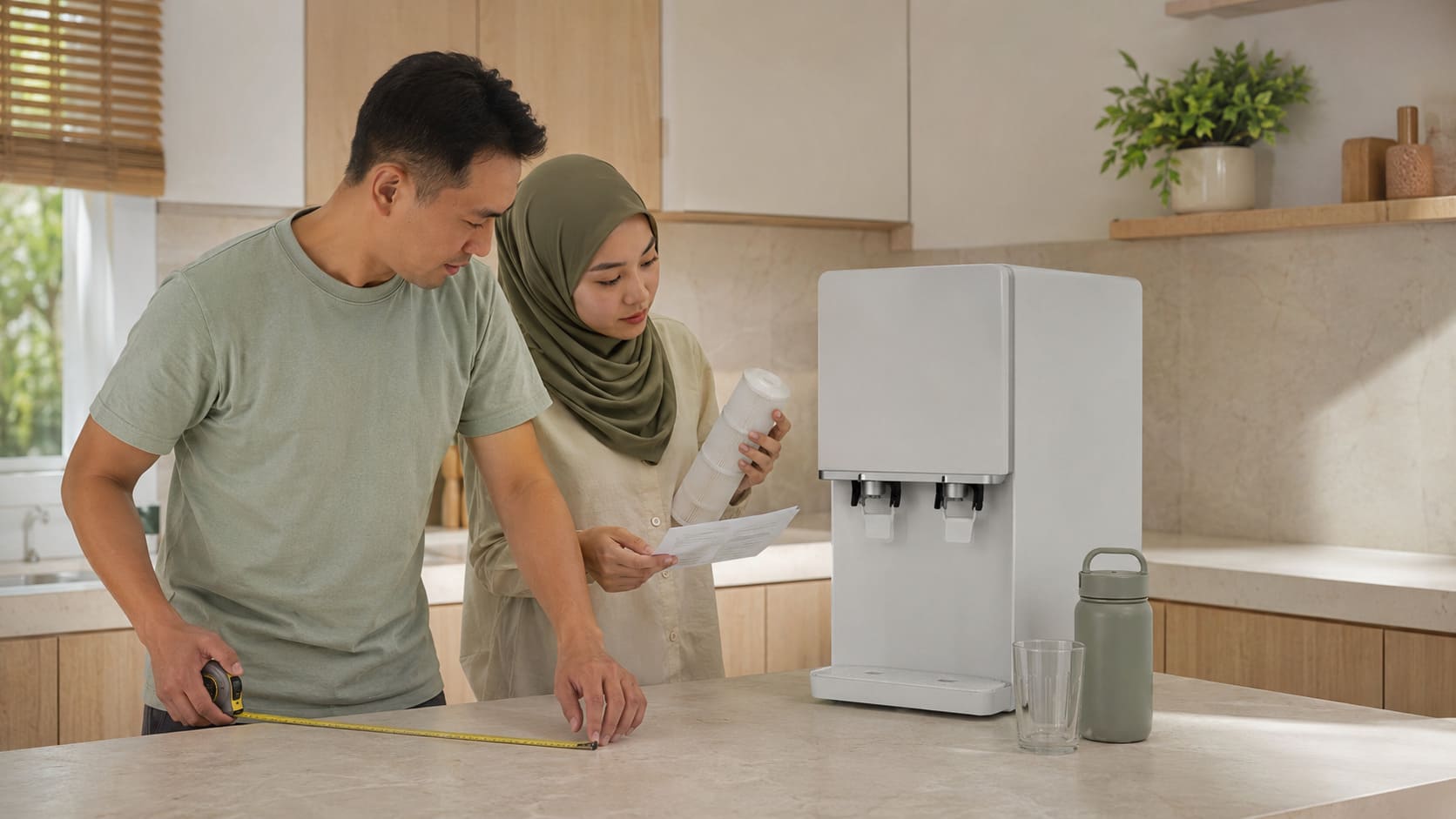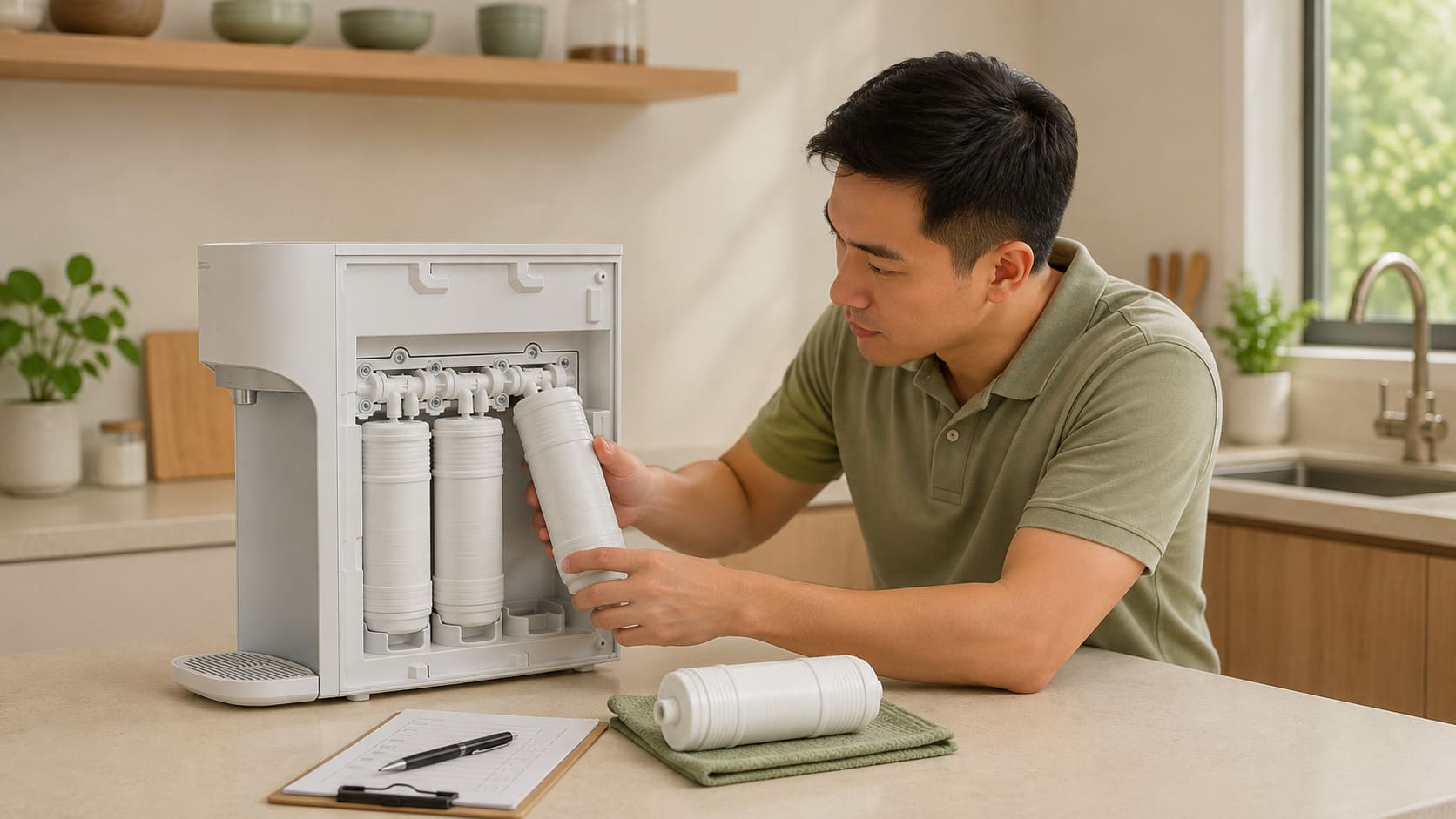
Check the rated input for each powered function, estimate how long it operates, then compare monthly kilowatt-hours rather than guessing from the purchase price or a single advertised wattage.
1. Start with the functions that use power
Electricity use depends on what the machine actually does. A simple non-electric filtration system is different from a dispenser that keeps water hot, chills a reservoir, produces water on demand or runs pumps, sensors and displays.
Before comparing two units, note which powered features your household will actually use. Hot-water heating and refrigeration usually matter more than indicator lights, but the balance depends on the design, settings, room temperature and how often water is dispensed.
2. Read the label without confusing watts and energy
Watts describe power at a particular moment. Kilowatt-hours describe energy used over time and are the figure shown on an electricity bill. A high rated wattage does not mean the appliance draws that amount continuously; heaters and compressors may cycle.
Estimated kWh = watts ÷ 1,000 × operating hours. For a cycling appliance, use measured energy or a realistic duty cycle rather than multiplying the maximum input by 24 hours.
3. Build a realistic monthly estimate
| Information | Where to find it | Why it matters |
|---|---|---|
| Rated power | Rating label or manual | Shows the maximum or stated input |
| Heating and cooling settings | Control panel and manual | Functions may be disabled when not needed |
| Daily dispensing pattern | Your household routine | Frequent use affects recovery cycles |
| Measured monthly kWh | Suitable energy monitor or smart socket | Captures cycling in the real room |
If you measure consumption, use equipment that is correctly rated for the appliance and keep electrical connections away from water. When in doubt, ask a qualified person rather than improvising around a wet kitchen area.
4. Understand why two homes may get different results
Ambient temperature, ventilation, set temperature, reservoir size, insulation and usage all affect cycling. A unit in a warm, enclosed cabinet may behave differently from the same unit in an open pantry. Repeatedly drawing hot or cold water also increases recovery work.
Do not compare a laboratory figure with a household estimate unless the test conditions are stated. The most useful comparison uses the same time period and the same functions for every shortlisted model.
5. Reduce waste without compromising safe use
- Disable heating or cooling only when the manual allows it and the function is not required.
- Use sensible temperature settings rather than the most extreme setting by default.
- Leave the ventilation clearance stated by the manufacturer.
- Maintain filters and clean accessible parts according to the instructions.
- Do not use timer plugs unless the appliance instructions allow interrupted operation.
6. Count electricity as part of the full ownership cost
Electricity is only one part of the commitment. Include filters, scheduled service, repairs, rental payments and possible end-of-contract charges. The rental-versus-buying guide explains how to compare those costs over the same period.
If you are building a shortlist, our guide to choosing a water purifier in Malaysia also covers treatment evidence, installation and servicing.
Use these running costs in the bottled-water versus purifier comparison. The TNB ToU guide covers household tariff suitability separately.
Frequently asked questions
Do all water purifiers use electricity?
No. Some filtration systems work from water pressure without powered heating or cooling. Dispensers with pumps, displays, ultraviolet treatment, heating or refrigeration require electricity.
Can I calculate the cost from the wattage label?
The label is a starting point, but a heater or compressor may cycle. Monthly kWh measured under your normal settings is more useful than assuming maximum power runs continuously.
Does tankless always use less electricity?
Not automatically. Tankless and tank formats manage heating, cooling and dispensing differently. Compare measured energy under similar demand and settings.
Should I turn the purifier off every night?
Follow the exact model instructions. Switching may affect heating, cooling, flushing or hygiene routines, and timer plugs are not suitable for every appliance.
Sources and further reading
- Energy Commission Malaysia: regulated household water dispensers
- Energy Commission Malaysia: appliance safety information

Daniel Wong
Budget & Value Contributor
Daniel compares household costs with clear assumptions, equal time periods and attention to the full ownership commitment. View the contributor information.