Start with the water concern, not the membrane name. Check the exact reduction claim, confirm pressure and drainage needs, then compare every filter stage and its replacement cost.
1. What RO and non-RO mean
Reverse osmosis uses pressure to move water through an RO membrane and commonly includes pre-filters and post-filters. Non-RO simply means the system does not use an RO membrane.
Non-RO is a broad group rather than one treatment method. It can include ultrafiltration, microfiltration, activated carbon, ultraviolet treatment or a combination of stages. Ultrafiltration uses a membrane with very small pores, but its treatment purpose differs from RO. The exact media, pore size, supporting stages, test method and operating conditions all matter.
2. Compare the specific treatment claim
Different systems reduce different germs, particles, dissolved substances or taste-and-odour compounds. A broad statement such as “advanced filtration” is not enough. Check the label or documentation for the exact substance, standard, test condition and rated life.
If there is a genuine water-quality concern, use suitable testing or official advice rather than selecting a technology from appearance, taste or online claims alone.
3. Understand the practical differences
| Question | RO system | Non-RO systems |
|---|---|---|
| Water pressure | May require adequate pressure or a pump | Requirements vary by technology and design |
| Reject water | Usually produces a reject stream | Many do not produce RO-style reject water, although some systems flush |
| Dissolved substances | May reduce selected dissolved substances | Depends on the technology; carbon, UF and UV do different jobs |
| Maintenance | Membrane plus supporting filter stages | Varies from simple cartridges to membranes, lamps and multiple stages |
Designs vary widely, so check the certified or tested claims for the exact product instead of assuming that every RO or non-RO system behaves the same way.
4. Check installation and drainage
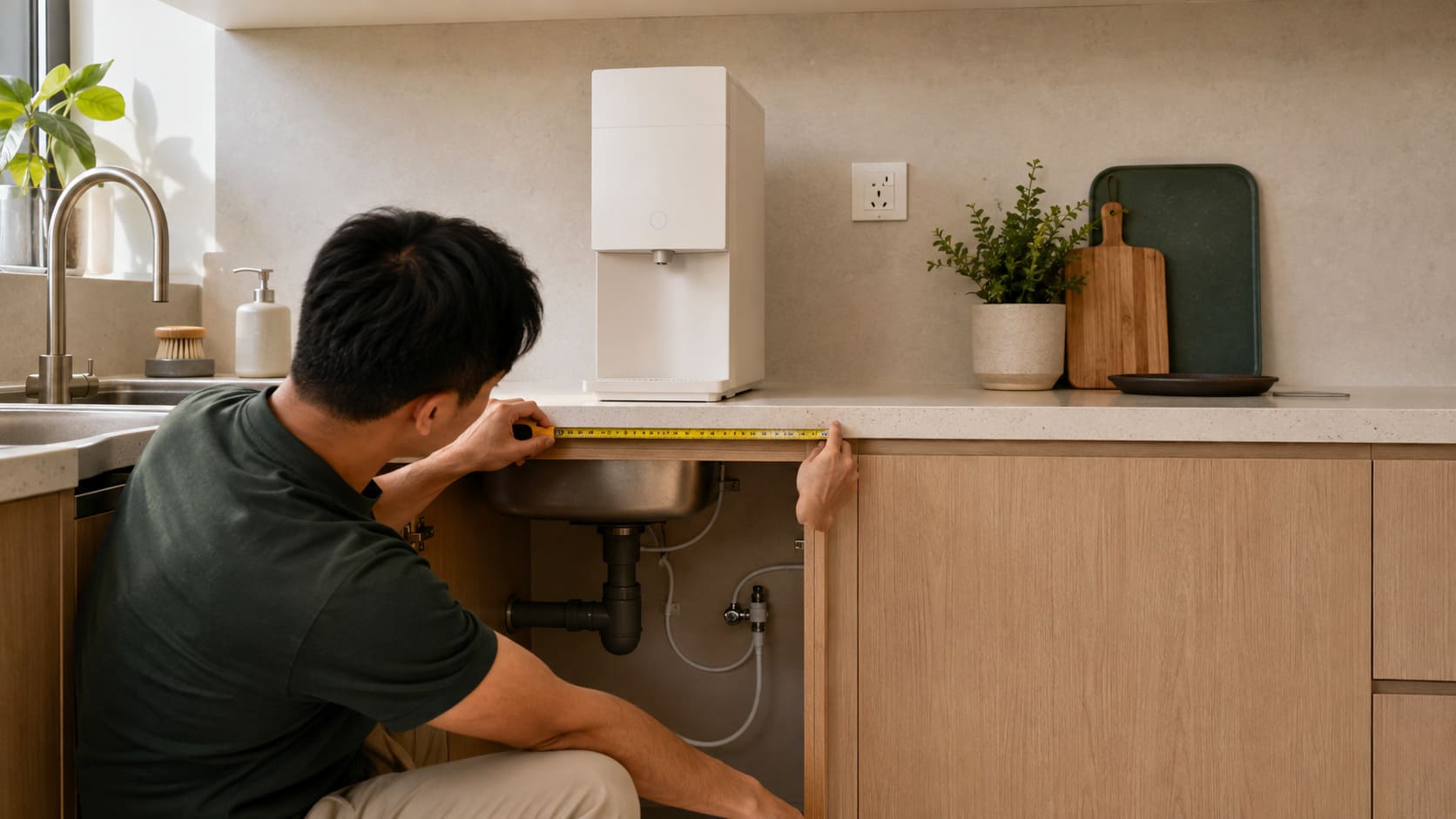
RO systems commonly need a route for reject water and may need a storage tank or pump. Non-RO systems range from passive inline filters to powered multi-stage units. Each still needs suitable connections, service clearance and a hygienic outlet.
Measure the complete installed arrangement and use the water-purifier installation checklist before confirming cabinet work or drilling.
5. Do not use taste as the only quality test
Treatment can change taste because selected dissolved substances or odour-causing compounds are reduced. Pleasant taste does not prove that every concern has been addressed, and a different taste does not automatically mean water is unsafe.
Ask what the post-treatment stages do and whether any mineral-related marketing claim is supported and relevant to your needs.
6. Compare every consumable and service step
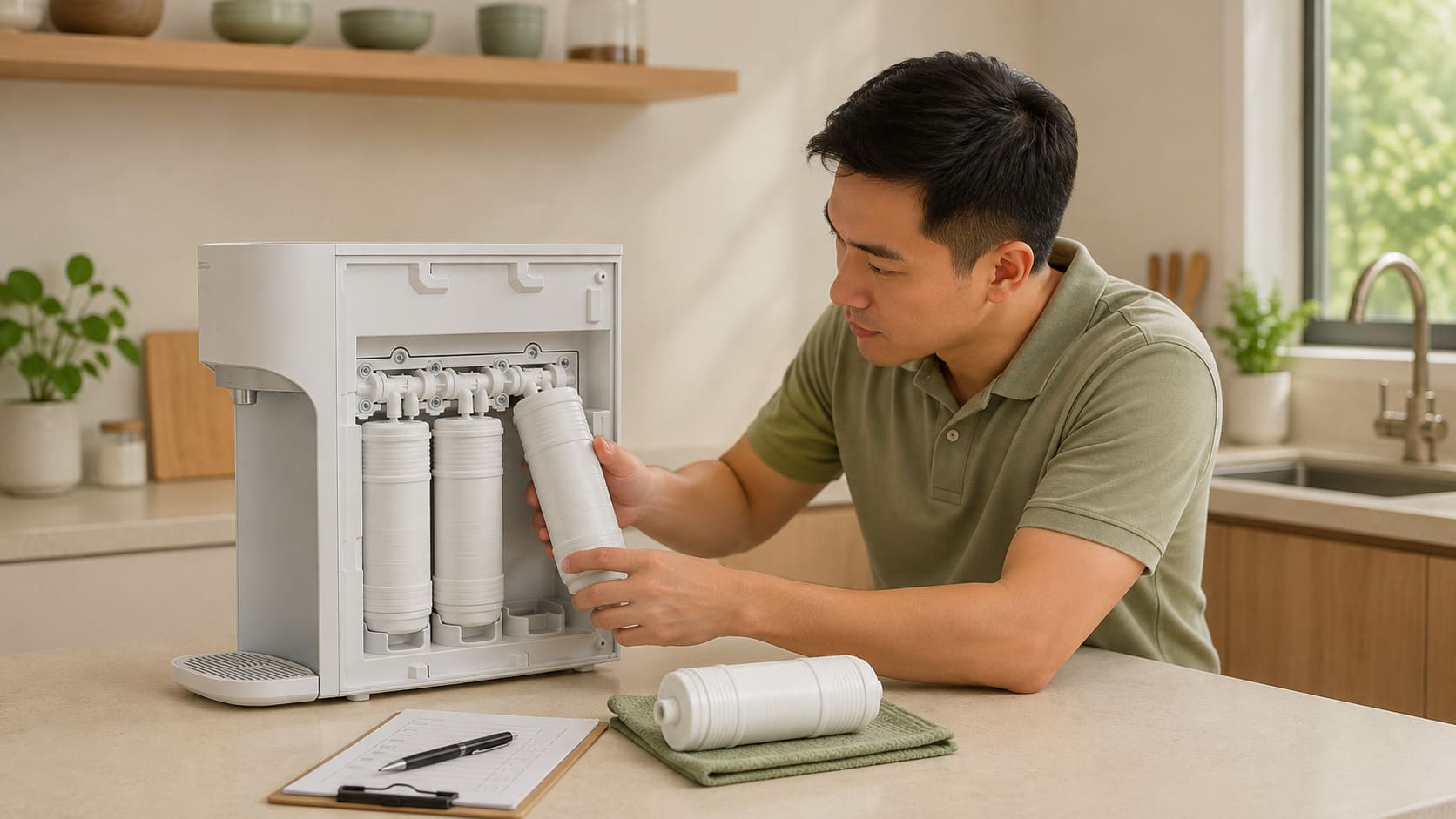
List each pre-filter, membrane and post-filter with its replacement interval, cost and service method. Ask how the system indicates membrane performance and what happens after a long period without use.
The maintenance guide provides a record format for filter changes, flushing, cleaning and warning signs.
7. Match the system to your water and household routine
- Identify the substance or water characteristic you want to address.
- Look for evidence supporting the exact reduction claim.
- Confirm pressure, drainage and reject-water arrangements.
- Compare flow and ready volume during busy periods.
- List every replacement stage and service cost.
- Choose a system your household can maintain consistently.
If you are still comparing the wider options, see how to choose a water purifier in Malaysia.
Frequently asked questions
Is RO always better than a non-RO purifier?
No. Suitability depends on the water concern, verified treatment claim, installation conditions and maintenance. RO is not automatically necessary for every household, while “non-RO” alone does not describe what a system can reduce.
What does “non-RO water purifier” mean?
It means the purifier does not use a reverse-osmosis membrane. It may use carbon, sediment filtration, ultrafiltration, ultraviolet treatment or other stages, so the exact specification and verified claims still need to be checked.
Does every RO purifier waste the same amount of water?
No. Recovery and reject-water ratios vary by design, pressure, temperature and membrane condition. Ask for a stated test method and realistic operating figure.
Which system needs more maintenance?
Both require maintenance. Compare every cartridge, membrane, lamp, flushing step and service requirement for the exact system rather than relying on the RO or non-RO label.
Sources and further reading
- CDC: About Home Water Treatment Systems
- CDC: About Choosing Home Water Filters
- Ministry of Health Malaysia: Drinking Water Quality Standards

Jason Lim
Tech & Appliance Contributor
Jason explains filtration and household-appliance specifications in practical terms, with attention to installation, maintenance and everyday use. View the contributor information.