Start with the spin setting allowed for the fabric, hang the load promptly and leave gaps between items. Give the drying area airflow and a way to deal with moisture. Check thick seams and waistbands before putting clothes away; a dry sleeve does not mean the whole shirt is ready.
Wash what your drying space can handle
A full washing machine is not always a sensible load for one small rack. Before starting, count the hanging space available. If every rail will carry several layers of wet fabric, split the wash or leave bulky towels for another load.
Put items you need tomorrow in the first batch. Towels, denim and bedding can occupy a rack long after lighter clothes are ready, so separate them when space is tight. This is a practical scheduling choice, not a promise that any fabric will dry within a set number of hours.
Rain patterns differ across Malaysia. METMalaysia identifies heavy northeast-monsoon rain in exposed areas including the east coast of Peninsular Malaysia, western Sarawak and the northeast coast of Sabah. Plan around your local forecast and actual balcony conditions rather than assuming the same drying season everywhere.
Remove more water before hanging
Check the garment label and the washing-machine instructions before changing the spin setting. Use a suitable spin cycle for the fabric; do not give wool, delicate items or clothes marked for special care the highest setting simply to finish sooner.
If ordinary machine-washable items come out unusually wet, check whether the selected programme uses a low spin speed or whether the machine reported an unbalanced load. Follow its instructions for redistributing and spinning. Repeatedly restarting a struggling machine is not a drying solution.
Bosch’s dryer-loading advice also recommends an extra spin for suitable laundry that is still dripping. Although that advice concerns tumble drying, removing water before hanging leaves less to evaporate indoors. Lift the finished wash out promptly instead of leaving it bundled in the drum.
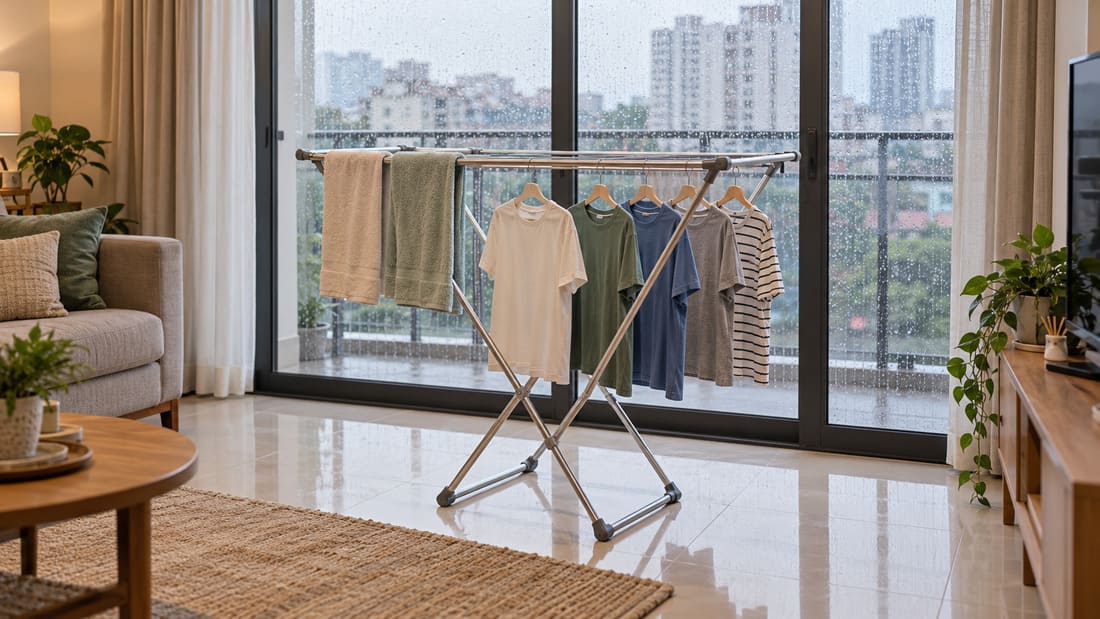
Arrange the rack so fabric can open out
Shake out each item and separate folds before hanging. Leave visible gaps between garments. Use hangers for shirts if the care label allows hanging, and open out sleeves rather than leaving them pressed against the body of the shirt.
Spread towels across enough space that wet surfaces are not packed against each other. Avoid covering a crowded rack with a bedsheet: it blocks access to the clothes underneath and makes checking them awkward. Dry bedding separately if that is the only way to give it room.
Check the rack’s load limit, especially with wet towels. Keep it stable and clear of walking routes, exits and doors. A laundry corner is useful only if you can still move through the home comfortably.
Give the moisture somewhere to go
A fan can move air between garments, but it does not collect water from the room. If the room stays closed and damp, stronger airflow alone may not solve the problem. Keep electrical equipment and plugs away from dripping laundry, following the equipment instructions.
When weather and outdoor air quality permit, ventilation may help carry moisture outside. Keep rain from blowing in. An open window is not automatically the best choice during humid weather, and a cool breeze does not prove that the room is becoming drier.
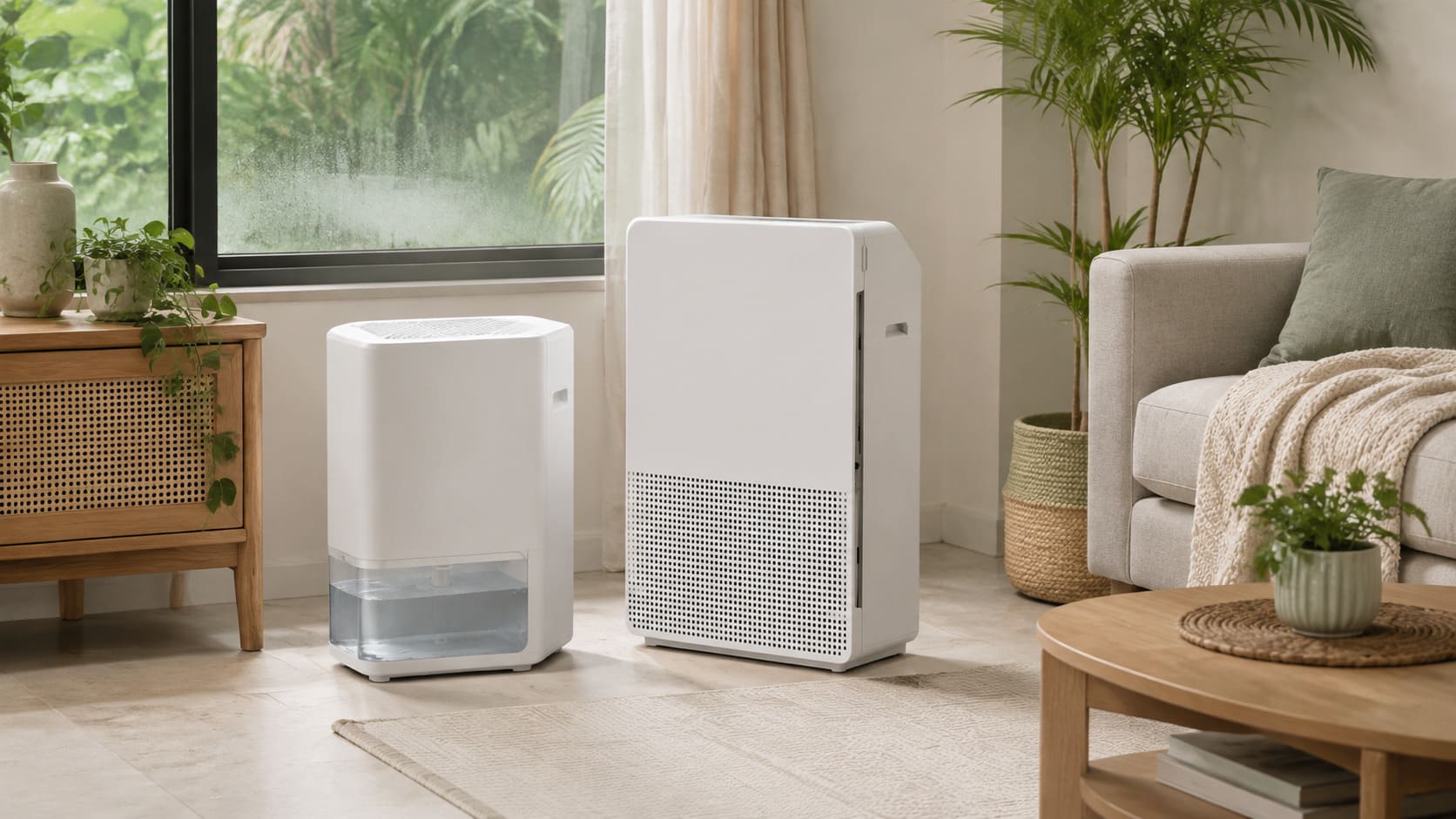
If you already use a dehumidifier, follow its instructions for room setup, clearance, drainage and any laundry setting. Keep clothes clear of its air inlet and outlet, and never drape fabric over the appliance. Closing external windows is commonly part of dehumidifier operation; check your model instead of running it beside a wide-open balcony door by habit.
For a room that repeatedly feels damp, record the indoor humidity alongside your laundry routine. If you are considering equipment, the dehumidifier buying guide covers capacity and drainage.
A workable setup for a small condo
Try one rack in a space where garments can hang freely, away from the kitchen’s cooking splashes and without touching curtains, furniture or walls. Keep thick items on the more open part of the rack. Leave room to reach both sides so you can check and rearrange the load.
For example, you might wash work shirts first, put them on spaced hangers, and leave towels for a separate batch once the rack clears. During an evening check, remove genuinely dry pieces and open out any remaining folds. This makes space for the slower items without adding another wet load.
If the room develops condensation or nearby surfaces become damp, change the arrangement and address the moisture. EPA guidance stresses moisture control and prompt attention to wet surfaces. Do not treat a permanently damp wall as an ordinary consequence of laundry day.
Check the slow parts before folding
Check waistbands, pockets, cuffs, collars and thick towel edges, not just the most exposed fabric. Turn out a folded pocket or reposition an overlapping section if it is still damp. Give those areas more time and space.
There is no reliable universal promise of “dry overnight”. Load size, fabric, remaining water, room conditions and airflow all affect the result. If a garment is needed urgently, use a suitable tumble-drying programme or a laundry service where the care label permits, rather than storing or wearing it damp.
If clothes smell musty, covering the smell with fragrance does not fix the wash-and-dry routine. Rewash as appropriate for the fabric, check the machine’s cleaning instructions, and give the next load more drying space. Put clothes in the wardrobe only when they are fully dry.
Frequently asked questions
Should I leave the window open while drying clothes?
It depends on rain, outdoor air quality and the moisture conditions. Ventilation can help, but opening a window is not a guarantee of faster drying. If using a dehumidifier, follow its room-setup instructions.
Can I dry clothes in the bedroom?
If that is your available space, keep the rack away from bedding and walls and pay attention to moisture. Avoid packing a small closed bedroom with wet laundry. Move the load or change the drying routine if nearby surfaces become damp.
Sources and further reading
Sources checked on 11 October 2026.
- METMalaysia: Malaysia’s climate
- Bosch: loading a tumble dryer and preparing wet laundry
- US EPA: moisture control in the home