Identify the source before buying a cleaner
With the cycle finished and laundry removed, note whether the smell is strongest at the open drum, detergent drawer or nearby floor drain. Record whether it happens before a wash, after draining or only after clothes sit overnight. This is more useful to a technician than simply reporting that everything smells.
A burning smell, smoke, unusual heat or an electrical fault needs a different response: stop using the machine and arrange service. Do not run a cleaning cycle to investigate those signs. A persistent sewage-like odour may also need a drainage assessment rather than more detergent.
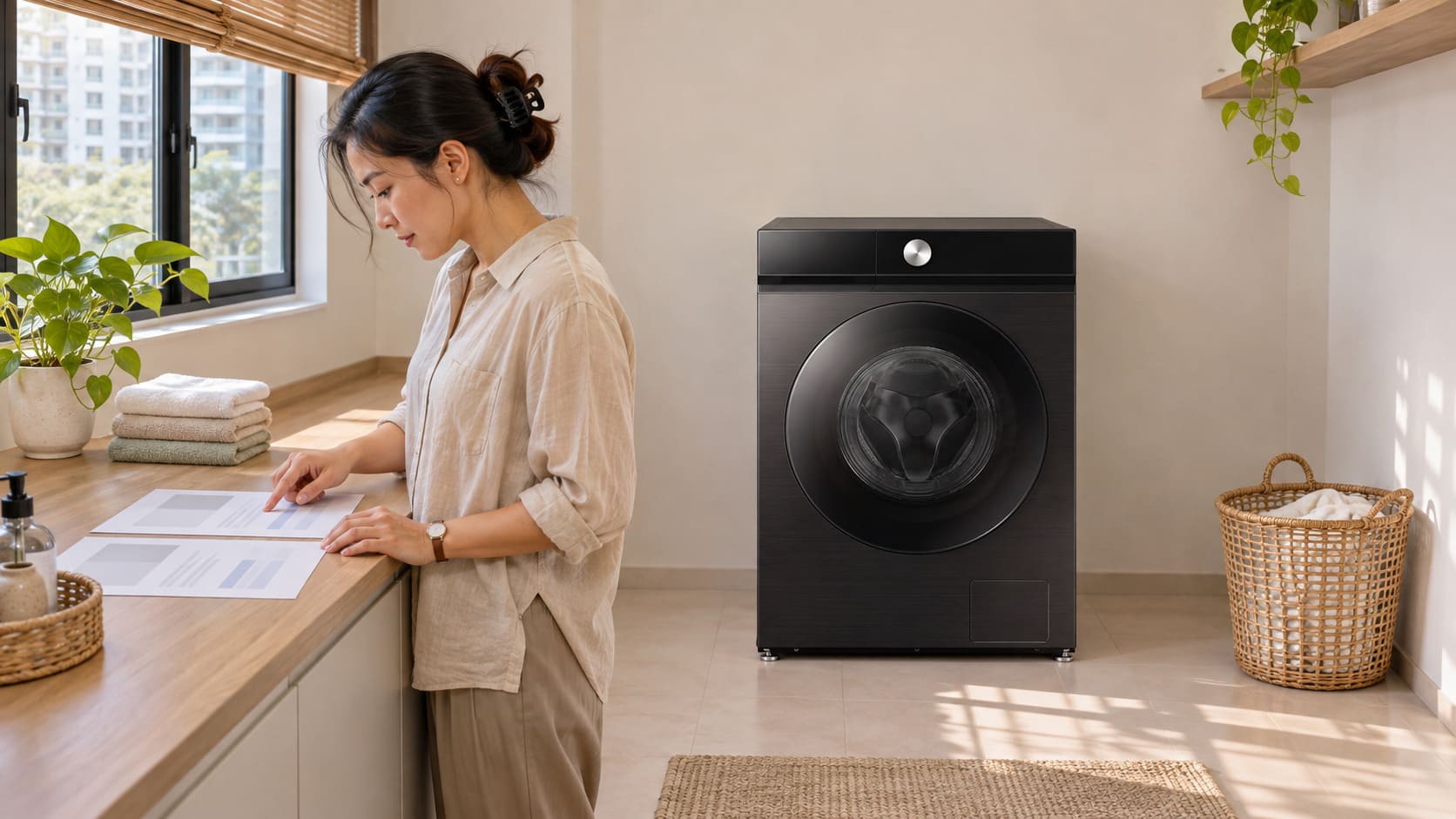
Find the instructions for your exact machine
Search using the full model code on the label. Look for drum clean, tub clean or the equivalent maintenance programme. Samsung’s Malaysia guidance shows why the details matter: its cleaning programme has specific instructions about an empty drum and cleaning agents. Those settings are not a universal recipe for other machines.
Use only the product and quantity allowed by your manual and the cleaner label. Do not put ordinary laundry detergent into a maintenance cycle unless instructed. Never combine bleach with vinegar, acids, ammonia or another cleaner. Extra chemicals are not a shortcut to removing a persistent smell.
Check the parts the owner is meant to clean
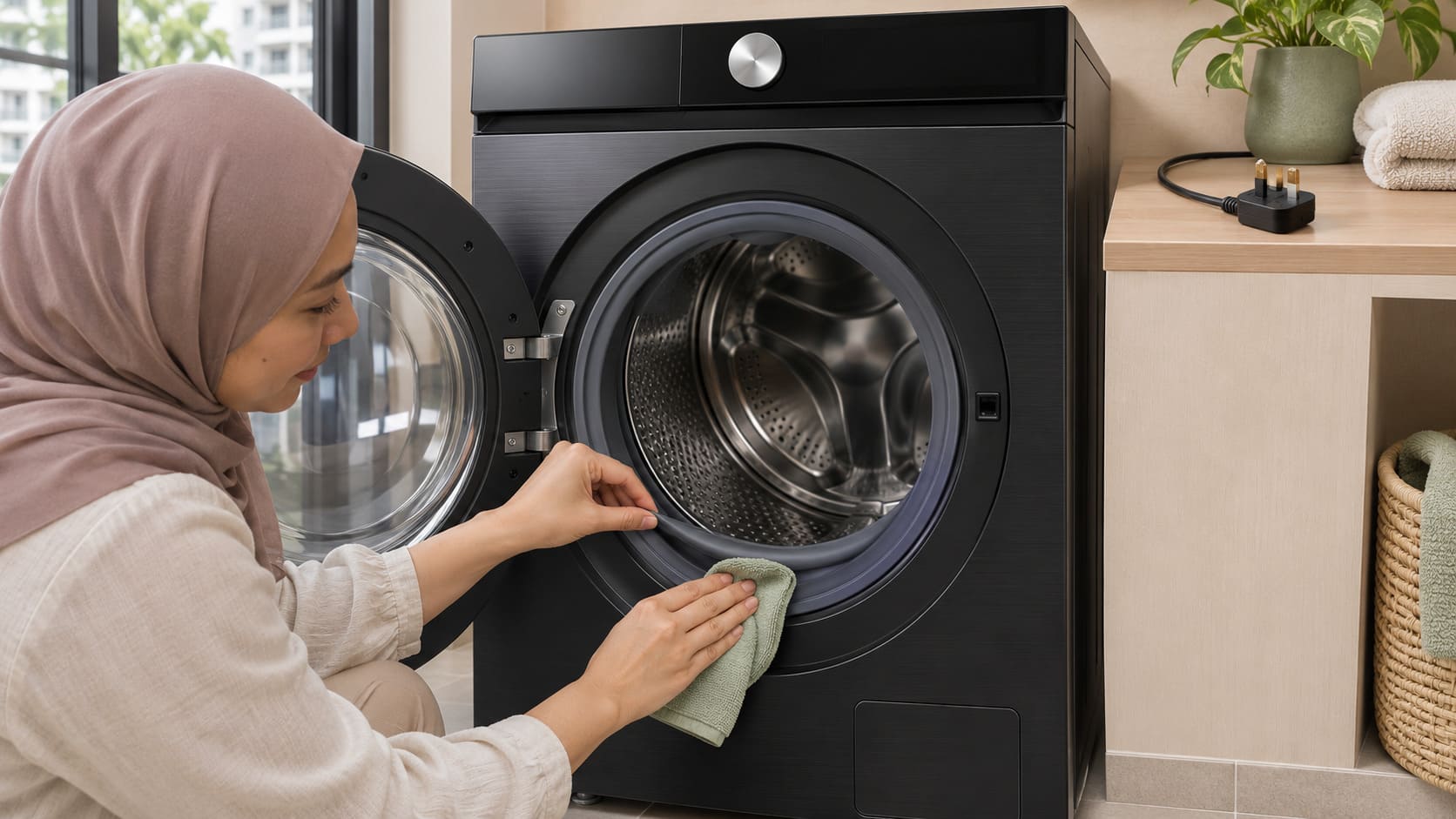
Follow shutdown and unplugging instructions before manual cleaning. Wipe accessible seal folds and remove trapped objects only as described in the manual. If the detergent drawer is removable, check the release method instead of pulling harder. Dry cleaned surfaces before putting components back.
Do not open a pump filter just because an online video shows it. Some machines release retained water, and hot water can cause injury. Use the model’s draining procedure, allow cooling where required and prepare for the specified water release. If there is no owner procedure, book service.
Change one habit at a time
Check that detergent type and dose match the load and machine instructions. Remove washed clothes promptly instead of leaving them until the next morning. After use, allow the drum and drawer to dry as the manufacturer advises, while keeping children and pets away from an open machine.
Keep a short record across a few normal washes: load, detergent dose, time unloaded and whether the smell returned. This avoids repeatedly changing detergent, programme and cleaner together without learning what helped. Once clothes leave the washer, use adequate spacing and airflow in your indoor drying routine.
Know when routine care has reached its limit
If the smell returns quickly after the prescribed maintenance, arrange a check of drainage and machine operation. Report error codes, standing water, leaks or clothes that remain unusually wet. Do not move a heavy machine or alter drain-hose height without the installation instructions and appropriate help.
Send the service provider the model, the location of the smell and the steps already completed. Ask whether the appointment covers the appliance, the drain connection or both. A clear handover is more useful than running repeated hot cycles while waiting.
Frequently asked questions
Should I add vinegar and bleach together?
No. Never mix bleach with vinegar, acids, ammonia or other cleaners. Use only the cleaning method permitted by the machine manual and product label.
Does every smell mean the machine needs replacing?
No. Odours can have different causes. Start with permitted routine care and seek service if the smell persists, drainage is poor or other faults appear.
Sources and further reading
Sources checked on 7 November 2026.