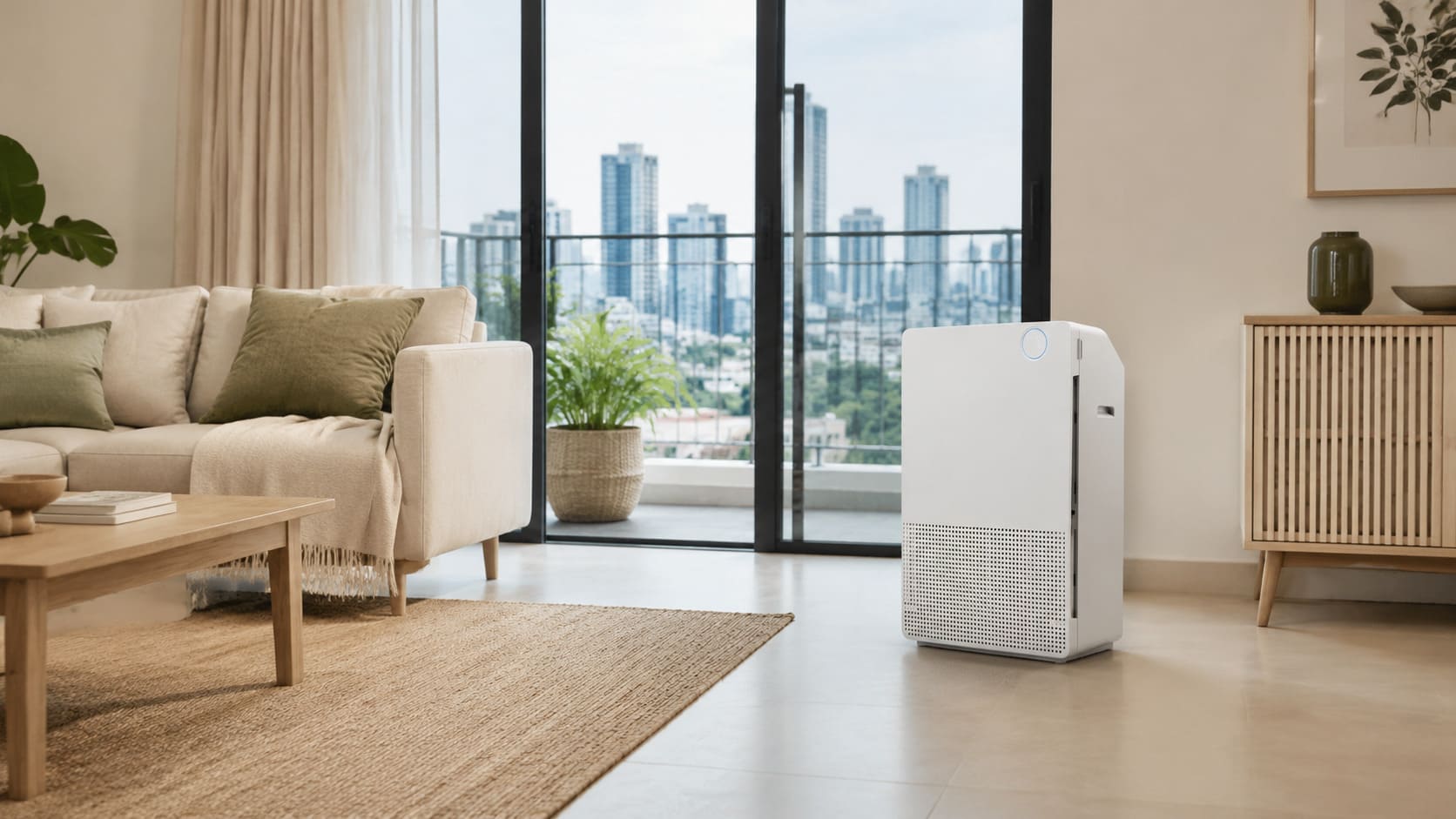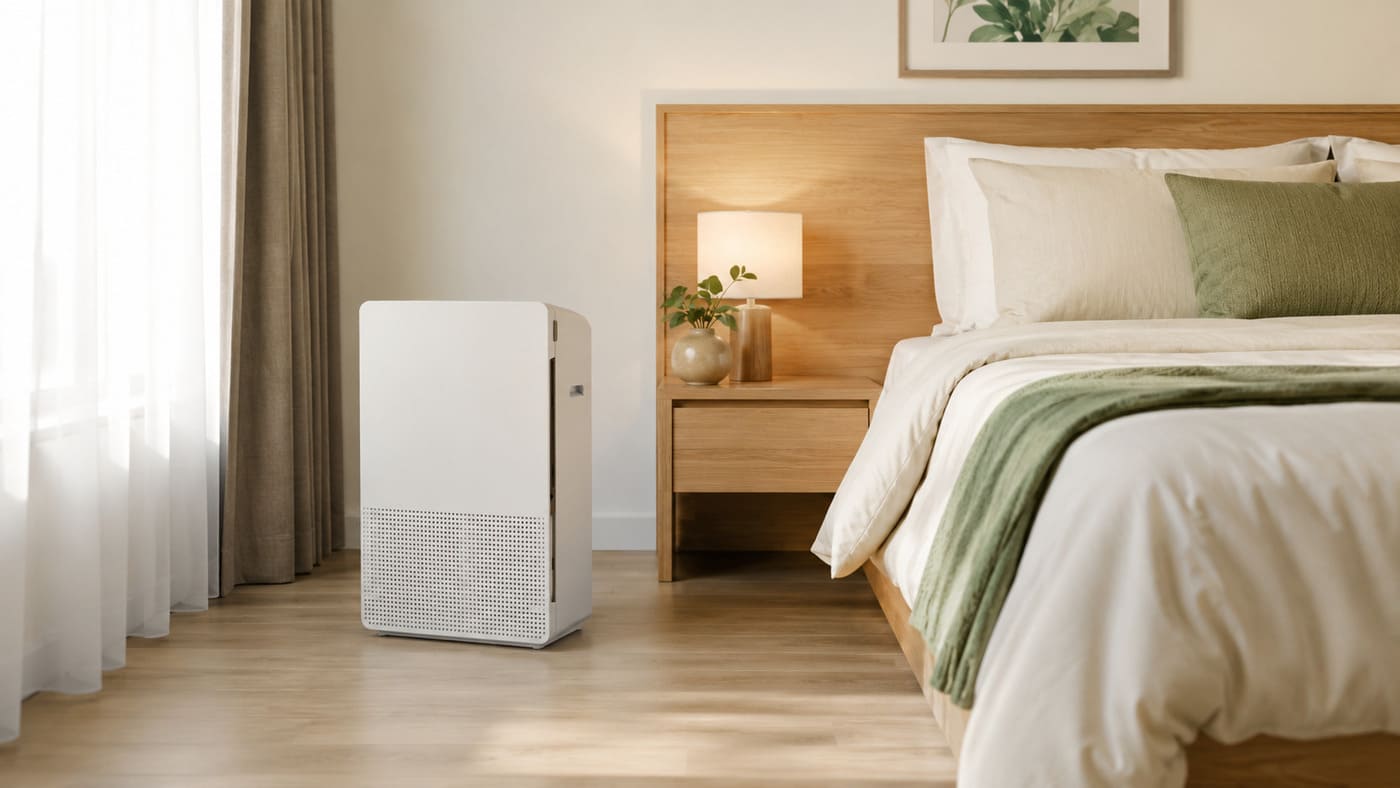
Choose enough clean-air delivery for the bedroom volume, check performance at a fan speed you can sleep with, and place the unit where air can move freely without blowing directly at the bed.
1. Measure the bedroom, including ceiling height
Floor area is a useful start, but room volume matters when ceilings are high. Measure the occupied bedroom rather than using the total condo size. A purifier intended for one closed room should not be expected to clean several rooms through doorways.
Check the manufacturer’s room-size recommendation or CADR figure, including the assumptions used to calculate it. For a full explanation of room sizing, see how to choose an air purifier for a Malaysian home.
2. Compare noise at the speed you will actually use
Maximum CADR is usually associated with a higher fan speed, while sleep mode moves less air. A very quiet setting is only useful if it still provides enough filtration for the room and your concern.
Look for noise information across several settings, not only the lowest figure. If possible, listen for changes in tone, rattling or sudden speed changes as well as the stated decibel value.
3. Check display lights and controls
- Can the display be dimmed or switched off without stopping filtration?
- Will a child lock or control lock prevent accidental changes?
- Does the unit return to the previous setting after a power interruption?
- Can the filter reminder be understood without a phone application?
These are small details during the day but can become irritating beside a bed.
4. Leave space for airflow and daily movement
Do not squeeze the intake against a wall, curtain, wardrobe or bedside table. Keep the outlet clear and avoid directing strong airflow at a sleeper’s face. The power cable should not create a trip route.
Placement also needs to work when doors, drawers and wardrobes are opened. For more detail, see where to place an air purifier in a condo, including practical clearances and shared-room compromises.
5. Plan a higher setting for haze periods
During haze, the comfortable overnight setting may be different from the setting used on clearer days. Start filtration before sleep where practical, reduce unnecessary outdoor air entry while following official advice, and check the filter more frequently after heavy particle exposure.
An air purifier does not remove every indoor pollutant and is not a substitute for controlling sources or following health guidance. Read the separate guide to using an air purifier during haze.
6. Budget for filters and cleaning access
A bedroom unit is easier to keep using when the pre-filter is accessible and replacement filters are available. Check the complete replacement schedule, cost and disposal process before purchase.
Keep the area around the unit clean, but do not wash or vacuum a filter unless the manual specifically allows it. Our filter replacement guide explains the distinction between reusable and replace-only parts.
Use the CADR calculator to check room volume before comparing quiet operating settings.
Frequently asked questions
What size air purifier do I need for a bedroom?
Match verified room-size or CADR information to the bedroom area and ceiling height. Allow extra capacity if you need useful filtration at a quieter, lower fan speed.
Should an air purifier run all night?
Longer run time generally filters more air, but use the exact appliance safely and choose a noise level you can tolerate. Follow the manufacturer’s operating instructions.
Where should I put an air purifier in a bedroom?
Leave the stated clearance around its intake and outlet, avoid curtains and corners, keep cables out of walking routes, and do not direct strong airflow at the sleeper.
Does sleep mode clean the air as well as maximum speed?
Sleep mode normally moves less air than a high setting. Check whether its airflow is still suitable for your room rather than assuming the quietest mode gives maximum cleaning.
Sources and further reading

Alicia Lee
Condo & Lifestyle Contributor
Alicia looks at how indoor-air appliances fit compact Malaysian homes, daily routines and real room constraints. View the contributor information.