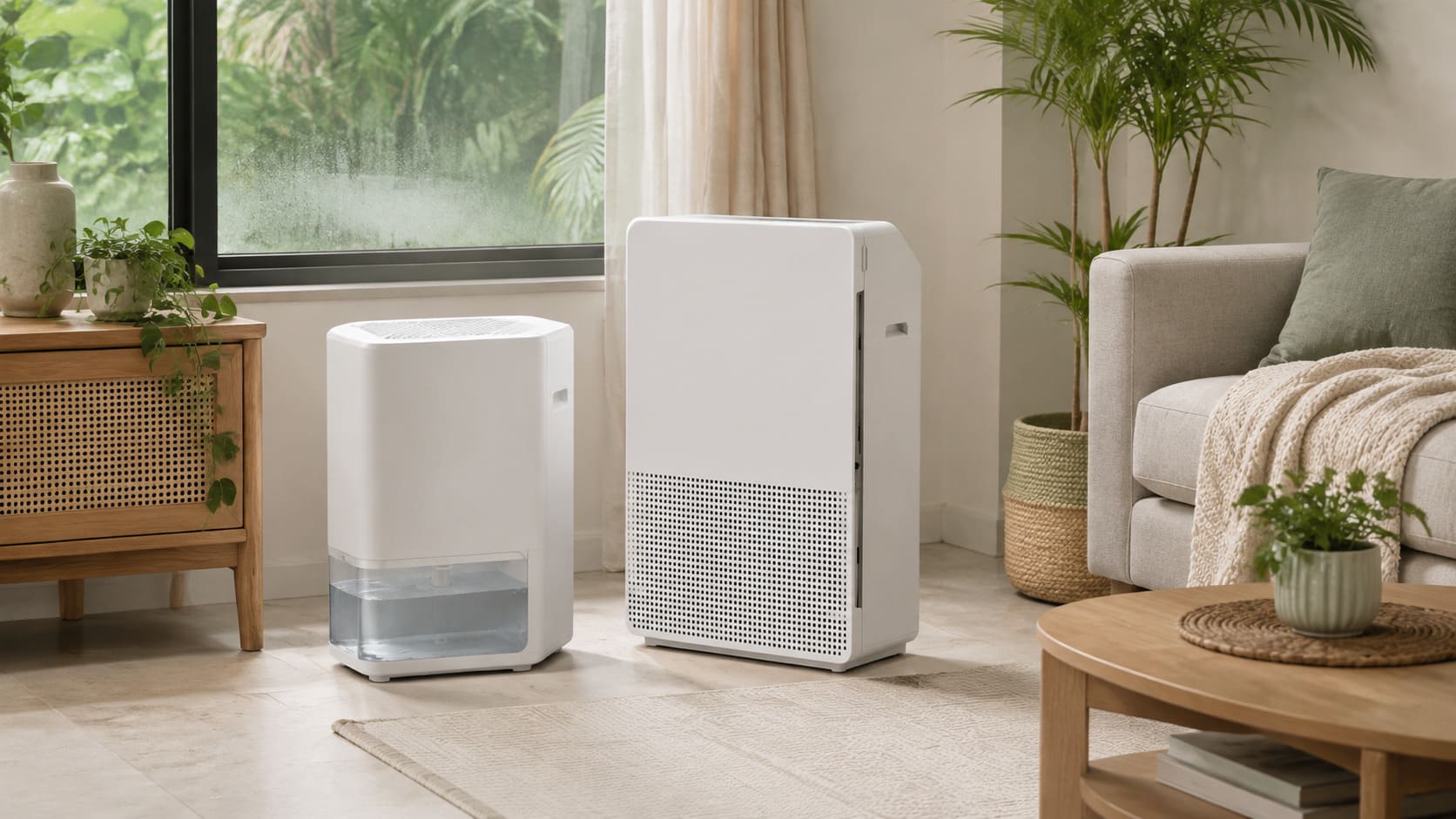
A room can feel stuffy for different reasons. Excess moisture, airborne particles, cooking fumes and limited ventilation are not the same problem, so one appliance should not be expected to solve all of them.
A dehumidifier removes moisture from the air. An air purifier passes room air through filtration intended for particular particles or gases. Measure humidity and identify the main problem before choosing; some homes may need source control, ventilation or both appliances rather than one substitute.
1. Understand the basic difference
| Question | Dehumidifier | Air purifier |
|---|---|---|
| Main job | Reduces moisture in room air | Filters selected particles or gases from circulating air |
| Useful measurement | Relative humidity | Room size, airflow and CADR for particles |
| Routine task | Empty tank or maintain drain; clean intake | Clean pre-filter and replace specified media |
| Does not replace | Leak repair or source ventilation | Moisture control, leak repair or fresh-air ventilation |
2. Start with humidity evidence
Use a separate hygrometer placed away from direct air-conditioning flow, windows and wet areas. Observe readings at different times for several days. Malaysia’s Ministry of Health residential guidance describes a recommended indoor relative-humidity range of 40% to 70%, alongside ventilation and clean filters.
A high reading is a clue, not a diagnosis. First look for roof, wall or plumbing leaks, wet materials, poor bathroom extraction and indoor clothes drying. A dehumidifier cannot repair the source of water.
3. Choose filtration for a particle problem
Dust, haze particles and some airborne allergens are particle concerns. A suitably sized purifier can reduce particles that pass through it, but it cannot remove every pollutant or replace source control and clean-outdoor-air ventilation.
Use the air-purifier buying guide to understand CADR, room size and filter stages. During haze, follow the Malaysian haze operating guide and current official advice.
4. Choose dehumidification for excess moisture
A dehumidifier may suit a persistently damp room, slow-drying laundry area or space with recurring condensation after leaks and ventilation problems have been addressed. Compare rated extraction conditions carefully: performance measured in a warm, very humid test environment may differ from normal room use.
Plan for tank size, automatic shut-off, drainage, noise, heat added to the room, electricity consumption and the effort required to keep the water container clean.
5. When both appliances may be useful
A home can have a moisture problem and a particle problem at the same time. For example, a humid bedroom may also be affected by outdoor haze. In that case, each appliance should have a clear job and enough electrical, floor and maintenance space.
Do not position the appliances so one outlet blows directly into the other intake. Follow both manuals and keep walking routes clear.
6. Do not forget ventilation and source control
- Repair water leaks and dry affected materials promptly.
- Use bathroom and kitchen extraction where suitable.
- Ventilate with clean outdoor air when weather and outdoor air quality allow.
- Reduce indoor particle sources such as smoking and unnecessary burning.
- Clean visible settled dust with an appropriate method.
- Seek professional assessment for persistent dampness, widespread mould or building defects.
7. Use a problem-first decision
Choose a dehumidifier when measured excess moisture is the main issue and source repairs are already being addressed. Choose an air purifier when the priority is suitable filtration for particles or specific gases. If neither description fits, investigate the room before buying another appliance.
Claims about health outcomes need particular care. Household appliances can support an indoor-air plan, but they do not diagnose or treat illness. Seek medical advice for persistent symptoms.
Frequently asked questions
Will an air purifier reduce humidity?
A standard portable air purifier is designed to filter circulating air, not remove meaningful amounts of water vapour. It should not be treated as a dehumidifier.
Will a dehumidifier remove haze particles?
Its main purpose is moisture removal. It is not a substitute for a suitably specified particle air purifier during haze.
Can I run both appliances in one room?
Possibly, when the room has separate moisture and particle problems. Follow both manuals, provide clear airflow and consider noise, heat, power and maintenance.
What humidity should a Malaysian home have?
Malaysia's Ministry of Health residential guidance describes a recommended range of 40% to 70% relative humidity. Measure the room and address leaks or ventilation problems rather than relying only on an appliance.
Sources and further reading
- Ministry of Health Malaysia: residential ventilation and indoor-air-quality guidance
- US EPA: Guide to Air Cleaners in the Home
- US EPA: Improving Your Indoor Environment

Alicia Lee
Condo & Lifestyle Contributor
Alicia looks at how indoor-air appliances fit compact Malaysian homes, daily routines and real room constraints. View the contributor information.