First, make sure the labels mean the same thing
Both types collect moisture from laundry as water. A conventional condenser model uses an electric heating element; a heat-pump model recirculates heat through a heat-pump system. LG’s buying guide identifies heat-pump models as a type of condenser dryer, which explains why shop filters sometimes seem contradictory.
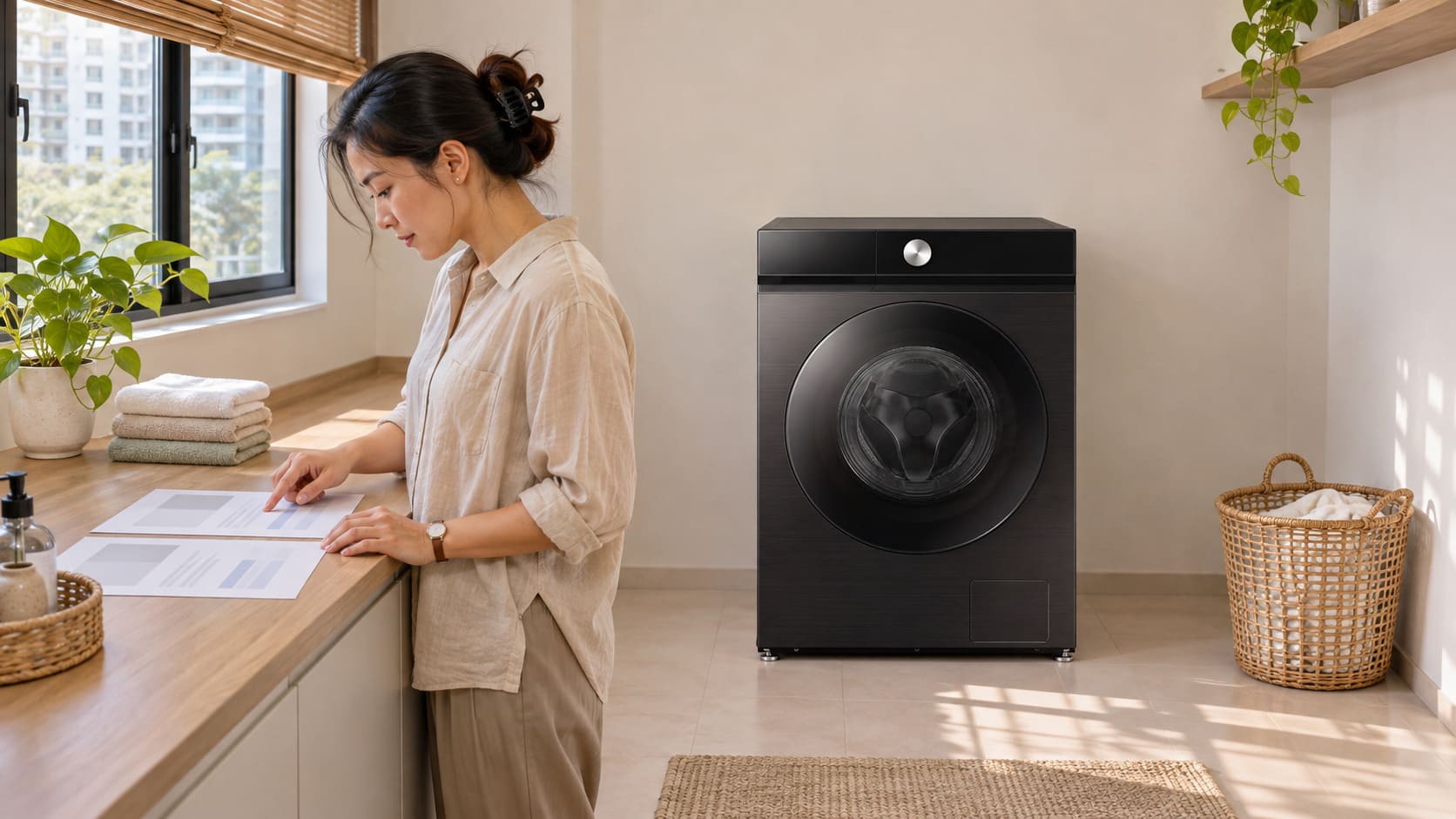
Ask the seller for the complete model code and its specification sheet. A listing that says only “condenser” does not answer the technology question. Do not confuse a separate dryer with a washer-dryer combination, where drying capacity and routines can be different.
Compare the laundry you need to finish
Write down how many loads you would dry in a normal week, not just during a particularly wet weekend. Separate everyday clothing from bulky bedding. Check the permitted load for the programme you will use; the headline kilogram capacity does not apply to every fabric or setting.
Cycle length depends on the programme, load and moisture left after spinning. Ask for comparable programme information instead of assuming one technology is always faster. If two consecutive loads must finish before bedtime, timing may matter as much as energy use.
Check garment care labels too. Buying a dryer does not make every item suitable for tumble drying. Keep a separate plan for items that need air drying.
Calculate a break-even estimate using real quotations
Use energy per cycle for comparable programmes and loads, plus the relevant electricity rate for your household. Monthly energy cost is kWh per cycle × cycles per month × RM per kWh. Do not substitute maximum rated watts for measured energy per completed cycle.
For an illustration only, suppose one dryer costs RM900 more and saves 1 kWh on each comparable cycle. At 12 cycles a month and an assumed RM0.40/kWh, the saving is RM4.80 a month. Recovering RM900 through that saving alone takes about 188 months. These illustrative figures are not a product quotation or a current tariff.
Frequent use or a different energy gap changes the result. Add installation, servicing and any finance charges before deciding whether a higher upfront cost fits your budget. If your household is considering a different electricity plan, read our ToU tariff guide before assuming off-peak savings.
Check the room before confirming delivery
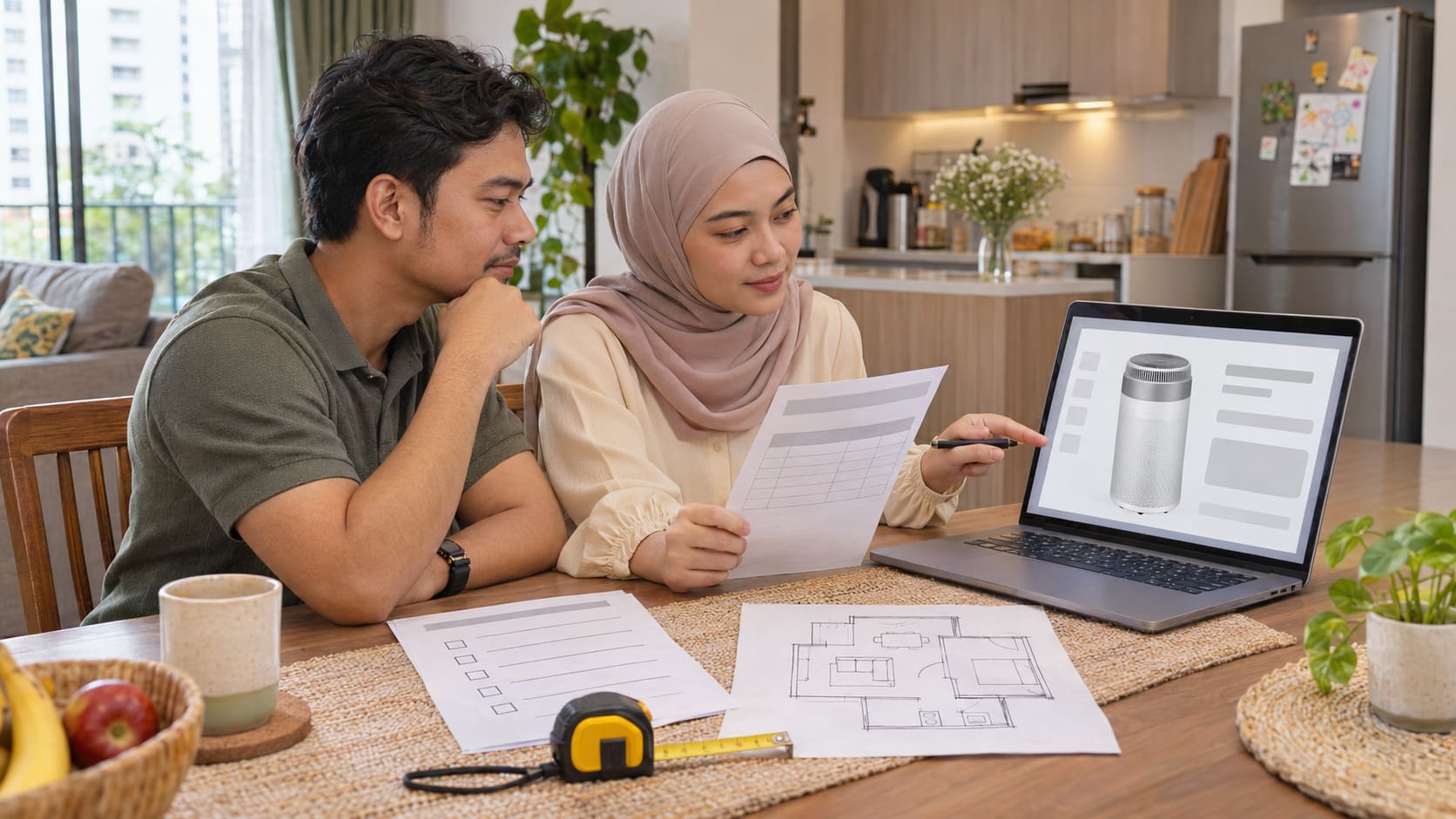
Measure the machine space, door opening and route through the lift or stairwell. Ask for the manufacturer’s ventilation clearances and acceptable operating conditions. “No external vent hose” does not mean the dryer can be sealed inside any cupboard.
Decide whether water will collect in a tank or use an approved drain connection. If stacking above a washer, obtain confirmation that both models and the specified stacking kit are compatible. Leave installation to the appropriate provider; do not improvise a shelf or extension-cord arrangement.
Choose a maintenance routine you will actually follow
Ask to see access to lint filters and any user-cleanable condenser parts. Maintenance requirements vary: a feature called self-cleaning does not necessarily remove every owner task. Use the exact manual, including the instructions for cleaning frequency and safe access.
Request two written quotations with the same delivery and installation scope. A practical shortlist records model, programme capacity, energy basis, cycle time, dimensions, maintenance and total price. For days when you do not use a dryer, our indoor laundry guide explains spacing clothes and managing airflow.
Frequently asked questions
Is a heat-pump dryer different from every condenser dryer?
No. Heat-pump dryers also condense moisture. The comparison here is with conventional condenser dryers that use an electric heating element.
Will the more efficient dryer always repay its higher price?
No. The result depends on actual price differences, comparable energy use, frequency of drying, tariffs and other ownership costs.
Sources and further reading
Sources checked on 7 November 2026.