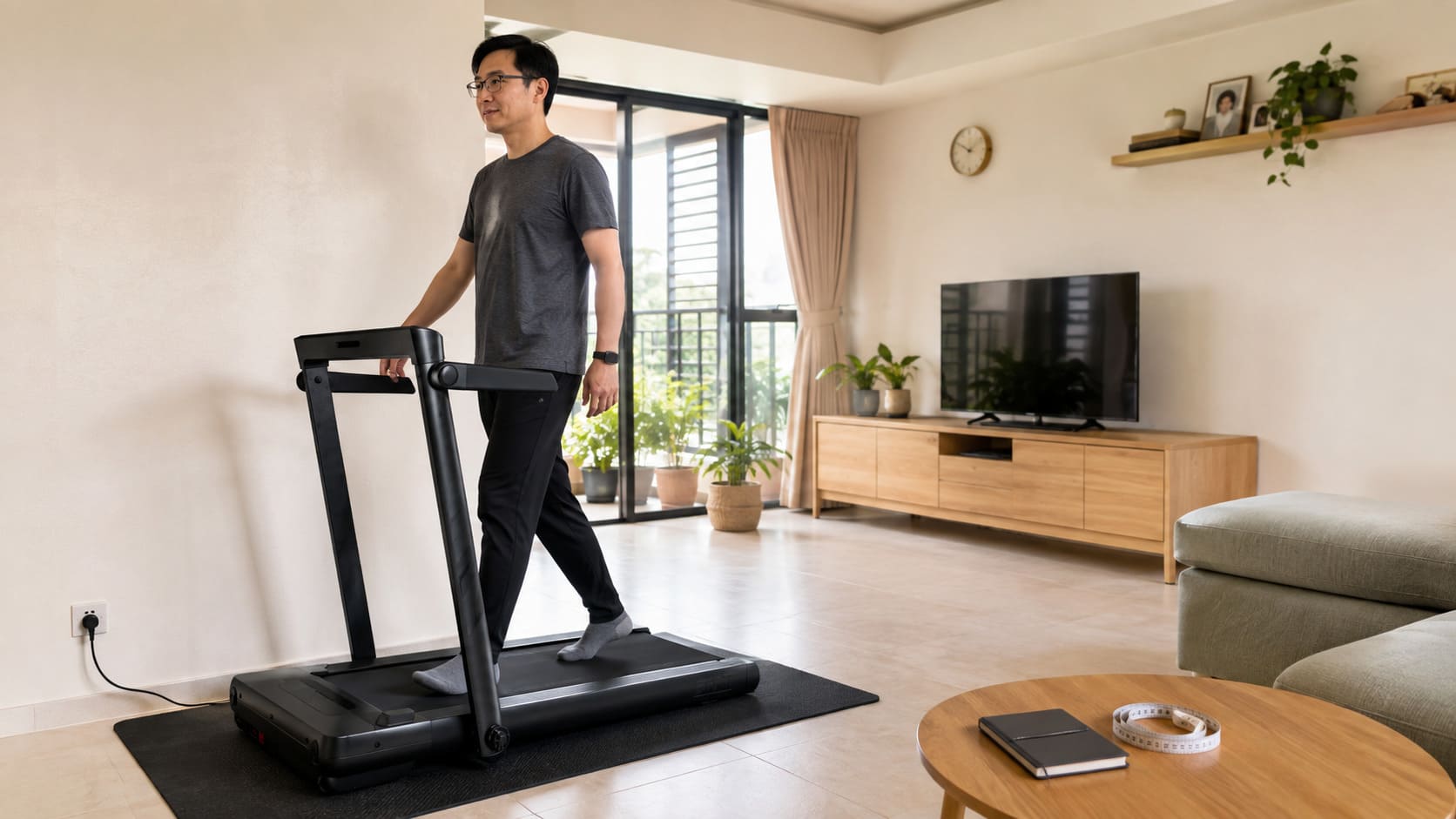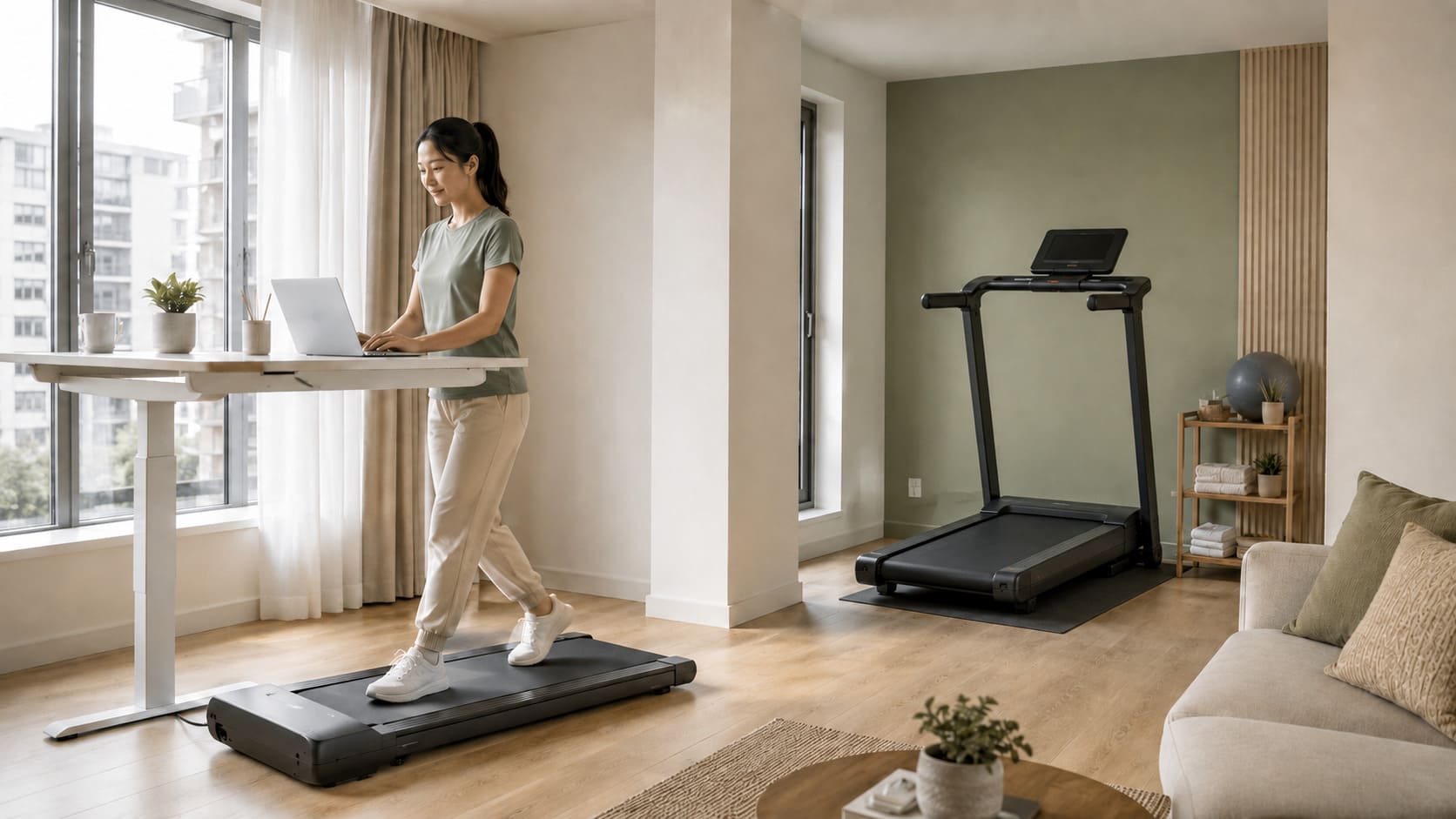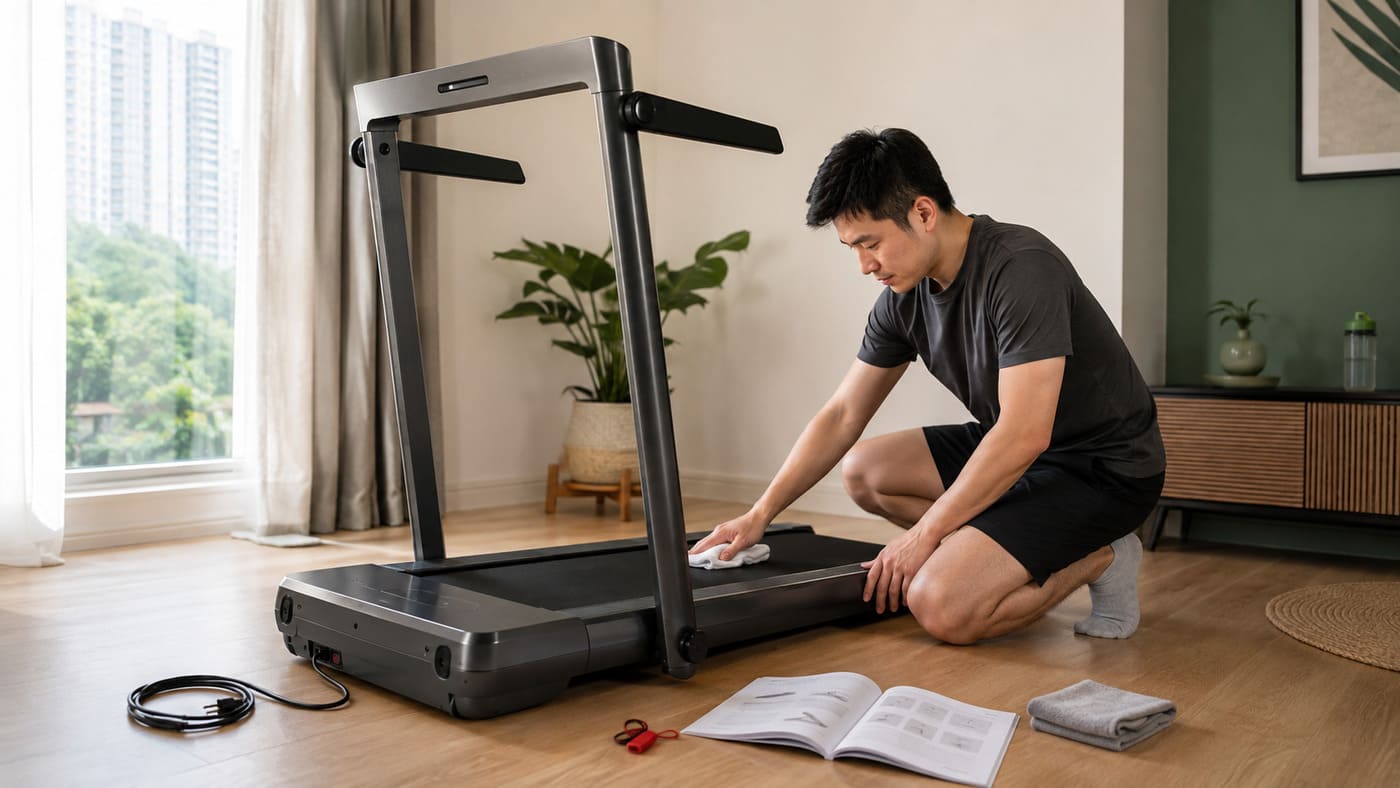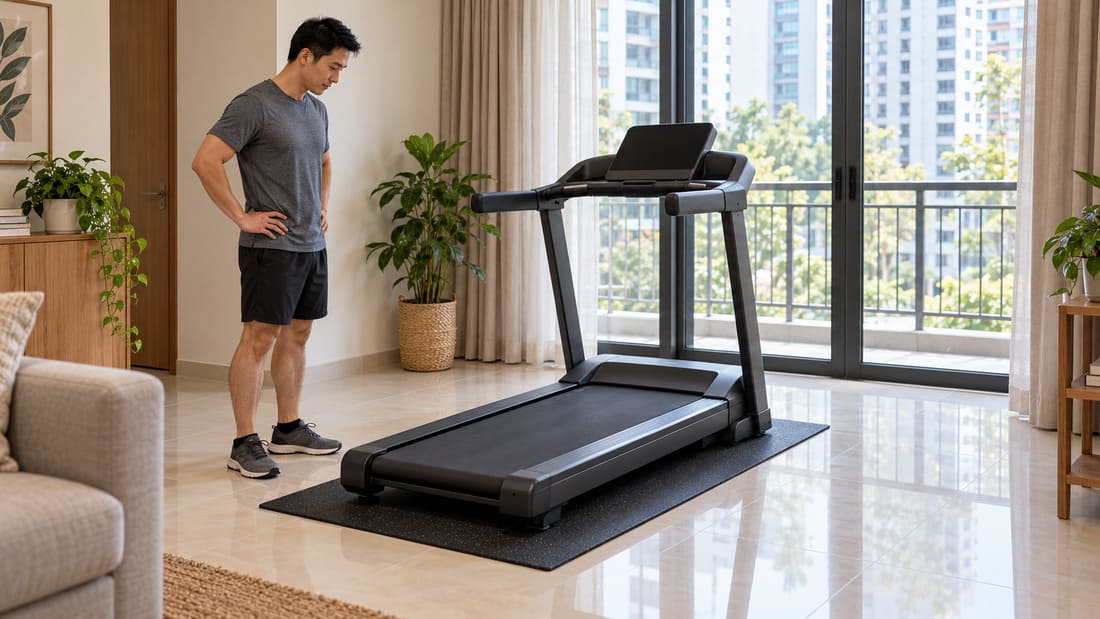
Use the stable floor setup and clearances specified for your treadmill, check whether the manufacturer permits an equipment mat, and arrange a short neighbour test at an agreed time. A mat may help, but it cannot guarantee that footfall vibration will disappear. Building rules, room location and workout intensity also matter.
Work out which sound you are hearing
Motor hum, belt movement and a loose rattle are different from the repeated thump of someone walking or running. Some sound travels through the air; footfall vibration can also travel through the floor and building structure.
Horizon Fitness notes that the surrounding floor and room affect how a treadmill sounds. A showroom demonstration is therefore not a reliable prediction of the experience in your condo, especially in the unit below.
Listen for when the problem happens: as the belt starts, with every step, at a particular speed, or during incline adjustment. Those observations help a technician investigate. They are more useful than simply describing the whole machine as noisy.
Check the building arrangements first
Ask management about equipment restrictions, noise expectations and any relevant house rules before delivery. If you rent, check with the landlord too. Keep the response so you can plan around the actual requirements for your building.
Do not assume that a particular daytime hour makes any level of disturbance acceptable. Neighbours may work shifts, have a sleeping baby or use the room below as a home office. Discuss a workable routine where possible.
For a heavy machine or an unusual floor arrangement, ask management or a qualified building professional about suitability. The treadmill’s user-weight limit is not a structural assessment of your floor. A quieter motor also says nothing by itself about that question.
Start with a stable installation
Follow the exact model’s manual for floor surface, levelling, electrical connection and clearance. Horizon’s placement guidance calls for a level, stable surface; use your own manual for the required dimensions rather than borrowing measurements from another treadmill.
Keep the rear escape area and other required clear space free of furniture and stored items. Do not push the deck into a tight corner just because it looks tidier. Make sure the machine is supported as designed and does not rock during normal use.
Have the supplier check a doubtful installation. Avoid improvised blocks, folded towels or makeshift platforms under the feet. If a different position is practical, confirm that it still meets all installation requirements before moving the machine.
Treat the mat as one part of the setup
Horizon says a heavy rubber mat can sometimes reduce reverberation through the floor. That is a possible improvement, not a promise that the downstairs unit will be silent.
Ask the treadmill supplier which mat type is suitable for the model and floor finish. Check that it supports the machine properly, stays flat and does not obstruct ventilation or moving parts. Do not assume a soft yoga mat or several stacked foam layers are equivalent to an approved equipment mat.
More cushioning is not automatically better if it makes the machine unstable. Avoid buying by thickness alone, and be cautious about a claimed decibel reduction unless the seller explains the test setup. Your floor, machine and footfalls may differ from that test.
Arrange a short test with the neighbour below
With their agreement, choose a convenient time and explain what you want to check. A simple message could be: “Could we try a short treadmill session and check whether you hear the motor or feel repeated thumping? I can stop between settings so we can compare.”
- Note the machine’s position, mat and starting setup.
- Begin with a brief, comfortable walking session using the treadmill as instructed.
- If appropriate and agreed, try the pace you normally intend to use. Keep someone available to stop the test if it causes disturbance.
- Pause between settings and ask what changed: a hum, rhythmic impact, rattling, or vibration felt in furniture.
- Change only one practical variable before repeating, such as location or an approved mat.
Do not ask the neighbour to decide whether the machine is mechanically safe. Their feedback answers a different question: what reaches their home. A phone recording can help document timing, but it is not a calibrated acoustic survey or proof of compliance with a noise limit.
Investigate new rattles and scraping
A sudden new sound, unstable movement or a slipping belt deserves attention. Stop using a machine that appears unsafe and follow the manufacturer’s troubleshooting or service process. Do not cover an emerging mechanical problem with a thicker mat.
Use only the maintenance procedures and products specified for the model. Belt lubrication and adjustment requirements vary; random oil or an unsupported tension change can create another problem. Our treadmill maintenance guide helps organise those checks.
Record the model, approximate age, when the noise started and which operation triggers it before contacting support. A short recording made from a safe position may help the technician, without reaching near a moving belt or opening a powered machine.
Choose a routine the building can accommodate
If walking is acceptable downstairs but running creates a repeated thump, consider keeping the home sessions to walking and using a suitable gym for runs. Recheck after a meaningful setup change rather than assuming a new mat has solved the problem.
Agree sensible session times and keep music or television volume in the discussion too. If disturbance persists, pause the problematic use and work with management, the equipment supplier or an acoustic professional. Some combinations of room, floor and workout will remain unsuitable despite small changes.
Before buying, use the home treadmill buying guide to check space and service support. If you are considering a smaller machine, the walking-pad comparison explains the trade-offs; smaller size is not a guarantee of silence downstairs.
Frequently asked questions
Will a treadmill mat stop all downstairs noise?
No. A suitable mat may help with some vibration or floor reverberation, but the result depends on the machine, use and building. Check compatibility and test the actual setup with the affected neighbour.
Can I judge condo suitability from a quiet showroom test?
Not reliably. The showroom floor, background sound and room differ from your home. Ask about installation and return conditions before buying, then assess the actual setup without assuming the same sound will be heard downstairs.
Sources and further reading
Sources checked on 11 October 2026.
- Horizon Fitness: normal treadmill noises and floor effects
- Horizon Fitness: treadmill placement guidance
- Horizon Fitness: care and maintenance