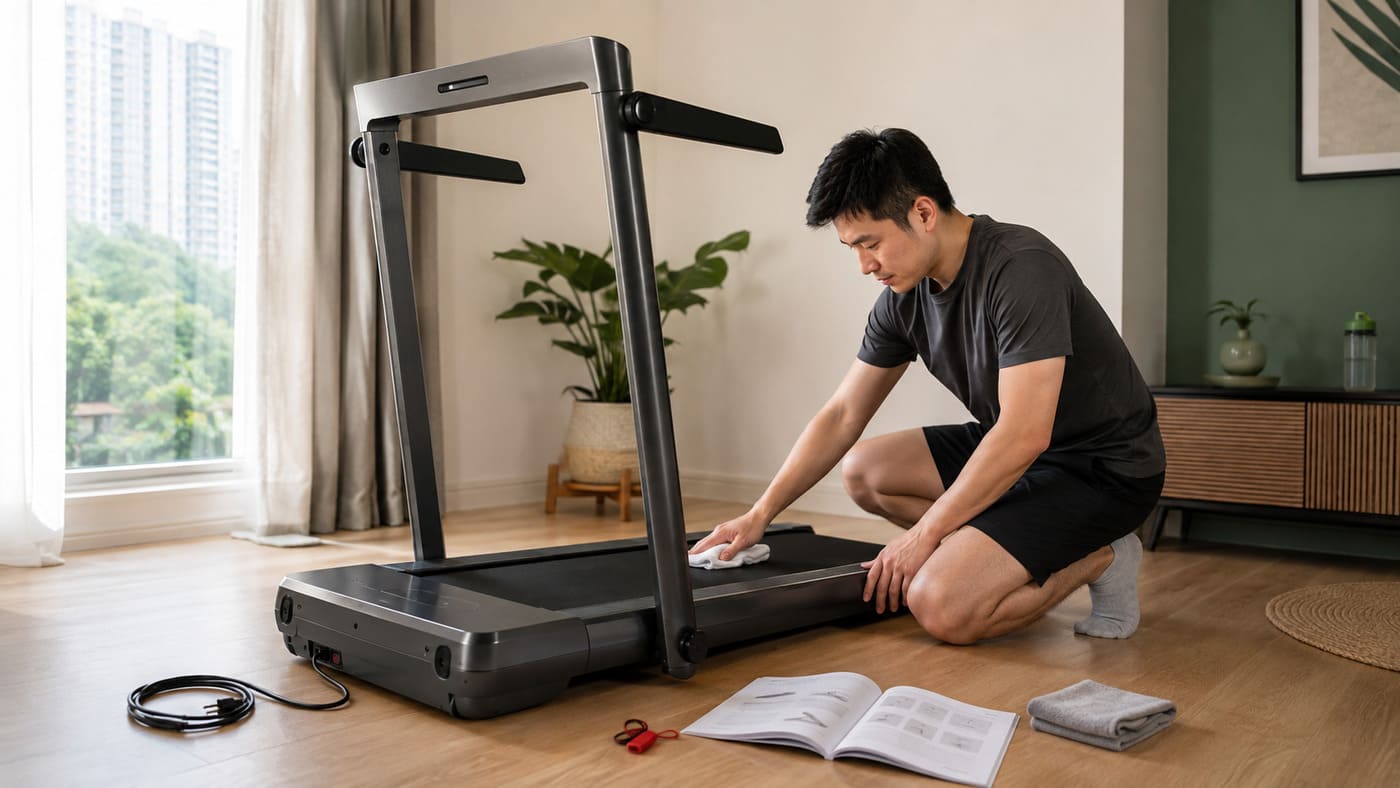
After use, keep the walking area clean and dry. At regular intervals, inspect the belt, deck, cable, plug, fasteners and safety key, then follow the manufacturer’s lubrication and adjustment instructions.
1. Start with the exact manual and model
Maintenance intervals, lubricant type and adjustment methods vary. Find the model number, keep the current instructions and record the purchase, service contacts and warranty terms.
Do not remove motor covers or reach into powered parts unless the manual explicitly allows the task and you are competent to do it. Internal electrical or mechanical work should be handled by a qualified technician.
2. Follow a quick routine after each use
- Stop the belt fully and remove the safety key where instructed.
- Wipe sweat from handrails, controls and accessible surfaces.
- Keep liquid away from the console, motor area, plug and socket.
- Check that the floor around the machine remains clear.
- Listen for a new scrape, knock or irregular motor sound.
3. Inspect the walking belt and deck
Look for fraying, cracking, unusual wear, slipping or movement to one side. Belt tension and alignment must follow the model instructions; over-tightening can create other problems.
Lubrication is not universal. Some decks require a specified lubricant and interval, while others have different maintenance arrangements. Never apply a household oil or spray without confirmation from the manual.
4. Check the cable, plug and operating behaviour
Stop using the treadmill if the cable or plug is damaged, the socket becomes hot, the machine smells burnt, speed changes unexpectedly or the belt stops abruptly. Switch it off, disconnect it safely and arrange an inspection by a qualified technician.
Avoid routing the cable beneath the treadmill or across a walkway. Use the electrical connection specified by the manufacturer rather than adding an unsuitable extension or adaptor.
5. Check accessible fasteners and moving parts
Vibration can loosen accessible parts over time. Follow the manual’s inspection points for handrails, console supports, folding locks and levelling feet. Use the stated tool and tightening method.
Do not continue using a folding model if its lock, hinge or support feels different. Keep children and pets away from the machine during inspection, folding and operation.
6. Manage dust, humidity and storage
Dust and fibres can collect around air openings and beneath the deck. Clean only the areas and method allowed by the manufacturer. Keep the machine in a dry, stable space with the stated ventilation clearance.
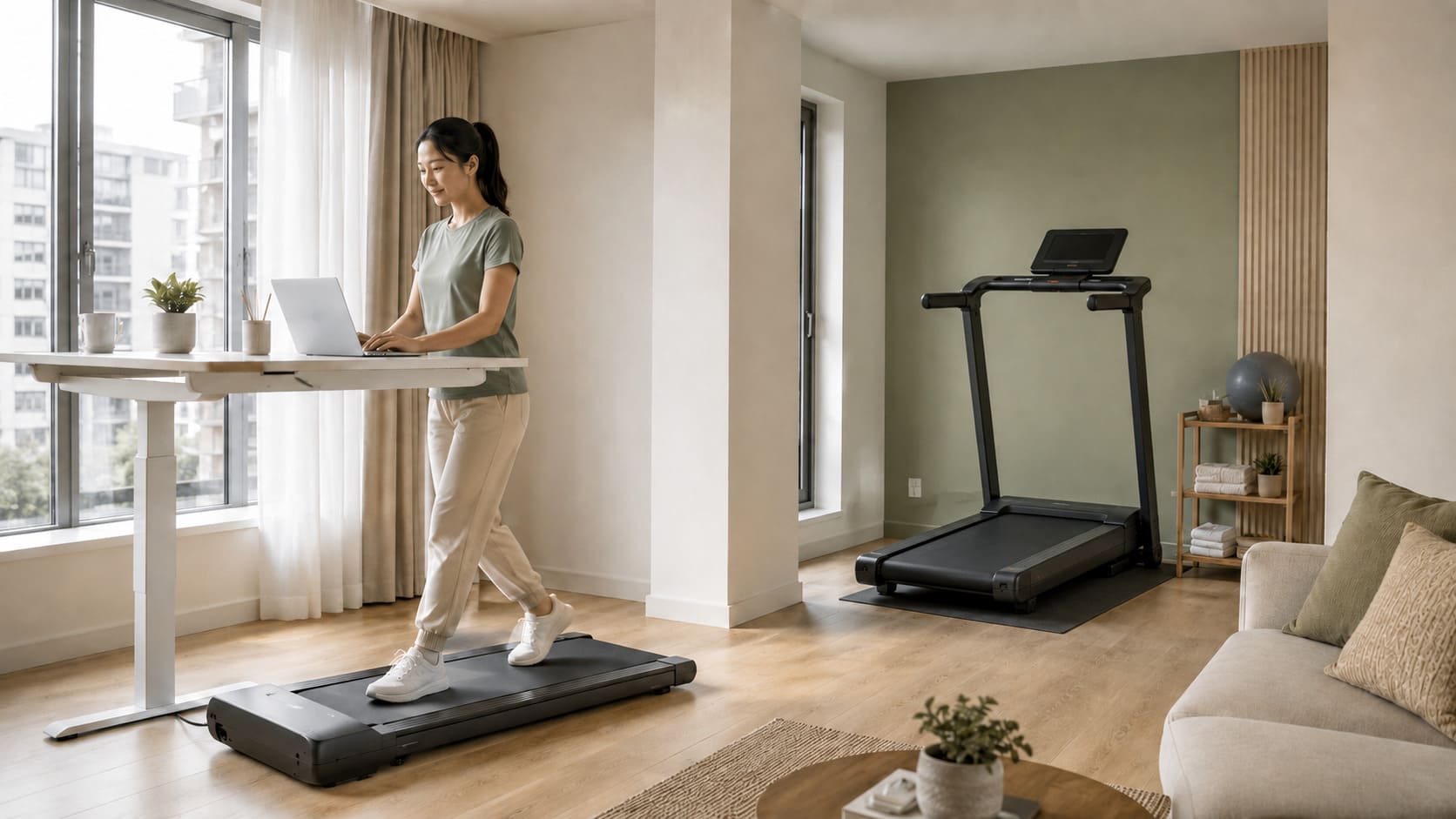
For a compact home, leave enough space to inspect and unfold the equipment safely. The home treadmill buying guide explains floor space, noise and electrical planning.
7. Keep a simple maintenance record
| Check | Record | Action trigger |
|---|---|---|
| Cleaning | Date and areas cleaned | Dust or sweat build-up |
| Belt and deck | Condition and approved care | Slipping, fraying or uneven tracking |
| Electrical | Cable, plug and behaviour | Heat, damage, smell or sudden stopping |
| Service | Technician and work completed | Manual interval or unusual performance |
If you are comparing equipment formats, read walking pad versus treadmill for a Malaysian home.
Frequently asked questions
How often should I lubricate a treadmill?
Follow the exact model instructions. Lubricant type and intervals vary, and some decks use different maintenance arrangements.
Can I adjust a treadmill belt myself?
Only perform the adjustment described in the manual using the stated method. Stop and seek service if the belt is damaged, continues to slip or will not track correctly.
Can I vacuum under the motor cover?
Do not remove powered covers unless the manufacturer explicitly permits the task and you can do it safely. Internal maintenance is better left to a suitable technician.
When should I stop using the treadmill?
Stop if speed changes unexpectedly, the belt slips or stops, the plug becomes hot, a burning smell appears, parts loosen or the machine produces a new severe noise.
Sources and further reading

Kelvin Chia
Active Living Contributor
Kelvin focuses on practical fitness equipment, safety, recovery and routines that remain easy to maintain. View the contributor information.