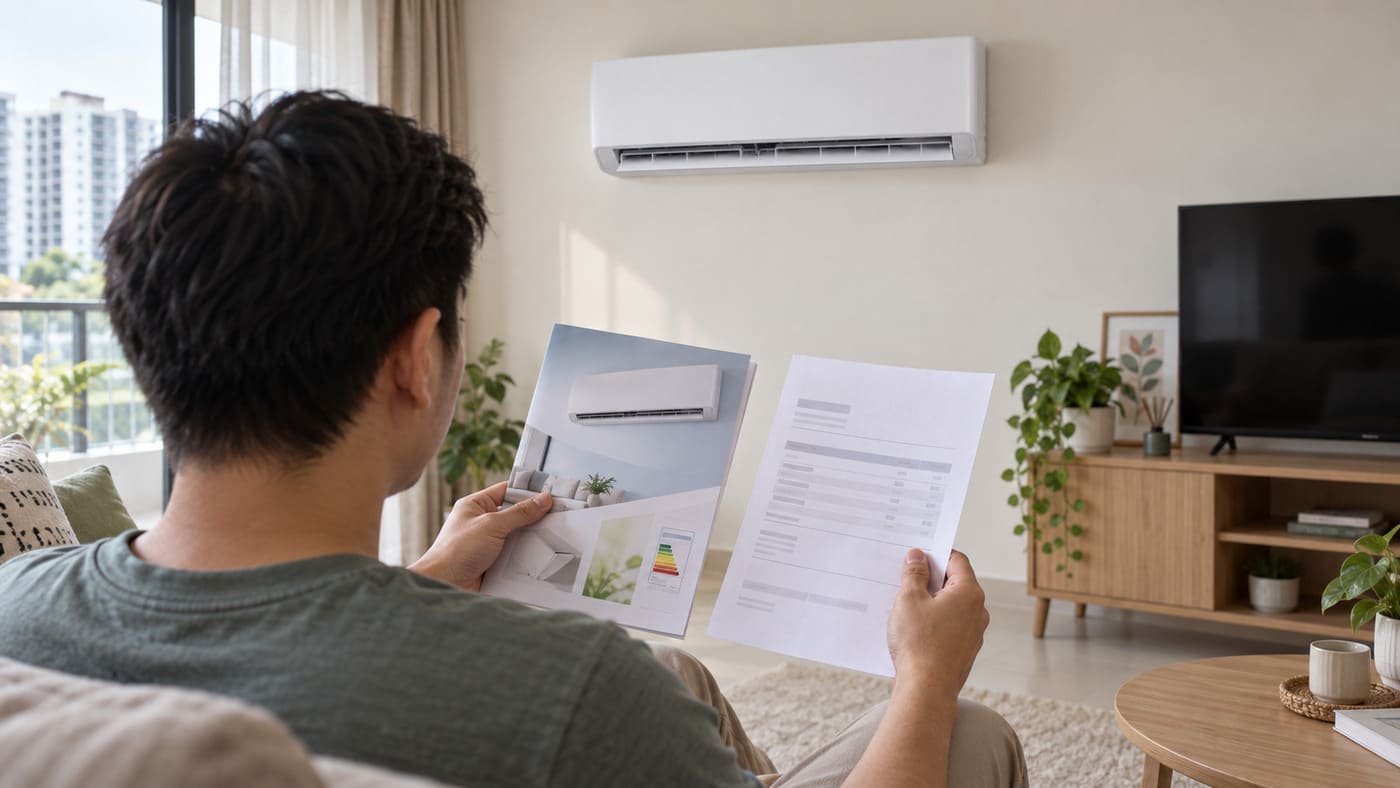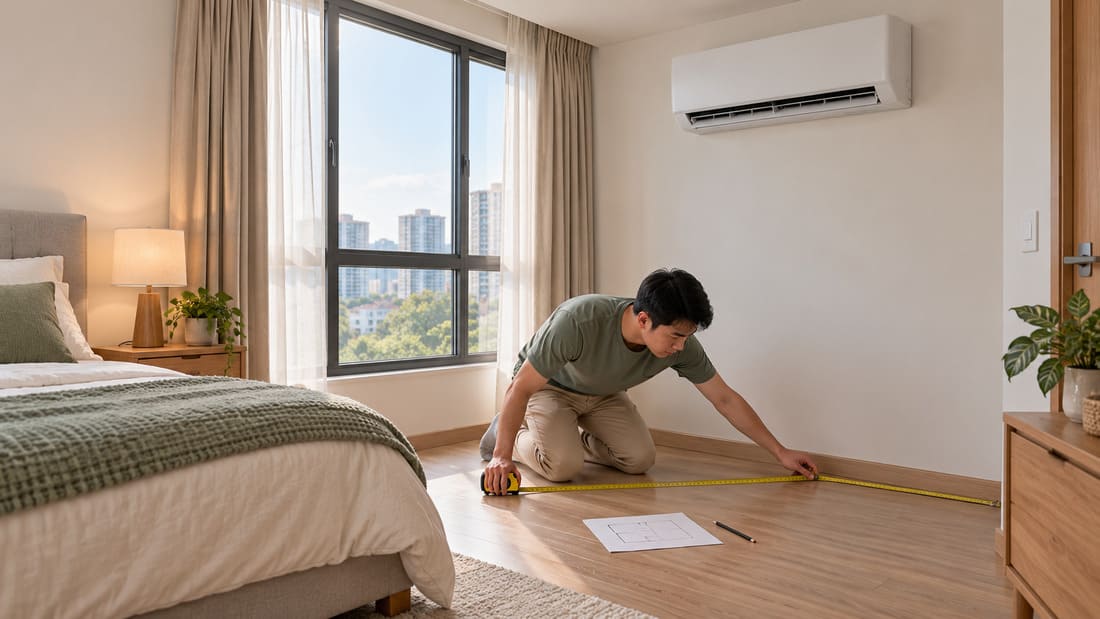
Measure the room’s length, width and ceiling height, then note sunlight, windows, occupancy and any connected open space. Ask the installer to recommend a cooling capacity in BTU/h or kW and explain the assumptions. Use the HP label to identify the product class, then check the exact model’s specifications.
HP, BTU/h and watts describe different things
Malaysian aircond listings commonly group units by horsepower, such as 1HP or 1.5HP. For a closer comparison, find the specification labelled cooling capacity. It is normally shown in BTU/h, kW, or both.
Cooling capacity describes the rate at which the system removes heat. Power input describes the electricity it uses under the stated conditions. Both can be expressed in watts, so read the row heading rather than comparing numbers in isolation.
As an illustrative example, a specification could show 2.6kW cooling capacity and 0.8kW electrical input. Those figures describe different quantities; they do not mean the unit consumes 2.6kW of electricity. They are example values, not a recommendation or a quotation for a particular model.
Do not convert a retail HP label directly into an electricity bill. For choosing a size, compare rated cooling capacity first. For comparing efficiency, use the appropriate energy information after you have established a suitable capacity.
Measure the area you actually want to cool
For a rectangular room, multiply length by width. A room measuring 3.6m by 4m has a floor area of 14.4m², approximately 155 sq ft. Record the ceiling height separately. At 2.8m high, its volume is about 40.3m³.
These measurements describe the room; they do not by themselves produce an HP recommendation. A high ceiling, a large window or an opening into another room can change the assessment.
For an L-shaped space, divide the floor plan into rectangles and add their areas without counting the overlap twice. Include the whole space that remains open during use. A living room connected to a dining area cannot be assessed as though the doorway were a closed wall.
Draw a simple plan showing doors, windows and the proposed indoor-unit position. Photographs help explain a layout, but send actual dimensions as well.
Tell the installer what makes the room hot
A site visit should establish how heat enters the room and how the room is used. Prepare the following details so competing quotations are based on the same brief.
| Detail | What to record |
|---|---|
| Room dimensions | Length, width, ceiling height and connected open areas. |
| Sun and glazing | Window sizes, afternoon sun, external shade and usual curtain use. |
| Roof and walls | Top-floor position, exposed walls and any known insulation. |
| People and equipment | Usual occupancy, computers and other heat-producing equipment. |
| Daily routine | Daytime or overnight use, frequently opened doors and preferred temperature. |
| Installation | Possible indoor and outdoor locations, airflow path and building restrictions. |
You do not need to turn these observations into a homemade heat-load formula. The point is to let the installer account for them rather than assuming that every bedroom of the same size behaves alike.
Use room-size charts as a starting point
A chart is useful only when its assumptions match the job. ENERGY STAR’s US room-air-conditioner chart, for example, states an 8-foot ceiling basis and includes adjustments for sunlight and occupancy. It is not a universal Malaysian split-aircond specification.
If a seller says “this HP covers your room”, ask which chart or calculation they used and what conditions it assumes. Check whether the recommendation includes your ceiling height, afternoon sun and open doorway.
For the 14.4m² example above, a shaded bedroom used at night and a top-floor study used on sunny afternoons deserve separate assessments. The floor area stays the same; the heat load and operating routine do not. This guide therefore does not assign one HP value to both rooms.
Why buying bigger is not always the answer
An undersized unit may struggle to maintain the desired temperature when the room’s cooling demand is high. But choosing a much larger unit “just in case” also needs justification. ENERGY STAR warns that oversized room units can cool too quickly to remove enough humidity.
Inverter models can vary their output, but that does not make sizing irrelevant. Ask the installer to consider the model’s rated capacity and its minimum-to-maximum operating range. Do not treat the maximum advertised figure as the normal output available under every condition.
If an existing aircond has recently stopped keeping up, arrange a service assessment before assuming you need more HP. Restricted airflow, maintenance issues or a change in how the space is used can require a different response from replacing the unit with a larger one.
Get a recommendation you can compare
Ask each installer to put the exact indoor and outdoor model numbers, rated cooling capacity and sizing assumptions on the quotation. A line that says only “1.5HP inverter” leaves too much open when comparing two offers.
Also ask where the indoor unit will go, how air will reach the occupied area, and whether the proposed outdoor position meets the manufacturer’s clearance requirements. Confirm the electrical supply, pipework, drainage and any condo-management conditions as part of the installation assessment.
Once the capacity is settled, compare efficiency using the aircond energy-rating guide. If the room is already cool but still feels sticky, the next question may be humidity control; our dry-mode versus dehumidifier guide explains that separate decision.
A useful request to send is: “My room is 3.6m × 4m with a 2.8m ceiling. Please assess the window exposure and room use, recommend a rated cooling capacity, and explain why the proposed model fits.” Replace the example dimensions with your own and attach the room plan.
Frequently asked questions
Is 1HP enough for every small bedroom?
No. Floor area is only one part of the assessment. Ceiling height, sunlight, glazing, occupancy and the way the room connects to other spaces can affect the required cooling capacity. Ask for an assessment of the actual room.
Does a 1.5HP aircond always use more electricity than a 1HP model?
The HP label alone does not determine electricity use. Electrical input, efficiency, operating time and how the unit responds to the room’s load all matter. Compare suitable models using their specifications rather than assuming a fixed bill from horsepower.
Sources and further reading
Sources checked on 11 October 2026.
- ENERGY STAR: room-air-conditioner sizing and chart assumptions
- US Department of Energy: room-air-conditioner purchasing guidance
- Panasonic Malaysia: air-conditioner selection considerations